
A true Greek salad is bold, simple, and full of sunshine. It’s the kind of salad you crave when you want something fresh and vibrant without turning it into a complicated project.
This recipe stays true to the classic style. No bottled dressing. No unnecessary add-ins. Just the ingredients that make Greek salad feel alive.
What Makes a Greek Salad “Authentic”
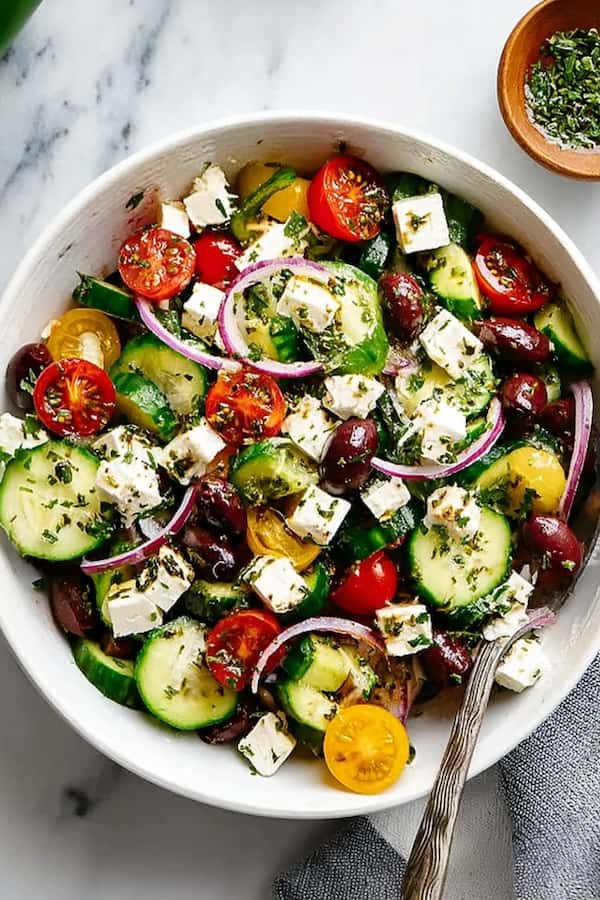
A real Greek salad (horiatiki) is built differently from the versions we’re used to in American restaurants. You won’t find lettuce — ever. The heart of the salad is tomatoes, cucumber, red onion, olives, and green pepper.
Everything is cut a little larger than usual. It’s more rustic, almost like something you’d throw together outdoors while the grill warms up.
The feta is not crumbled. Instead, you place a thick slab right on top. This is important — you get a little feta with each bite, and it becomes part of the dressing as you break pieces off.
Real Greek salads are simple, but simplicity demands fresh ingredients. When everything is crisp, cool, and flavorful, the salad becomes something special.
How I Learned to Make It the Right Way
For years I made Greek salad using crumbled feta, chopped vegetables, and a fast vinaigrette. It tasted fine, but it didn’t feel authentic.
The turning point was a conversation with a Greek friend who laughed when he saw shredded lettuce mixed into mine. He walked me through the real version one afternoon while we prepared dinner together.
He told me to slow down with the knife and make each vegetable cut intentionally. He insisted on good olive oil. And he drizzled everything with red wine vinegar instead of tossing it aggressively in a bowl.
The difference was huge. Suddenly the salad tasted bolder, fresher, and more balanced. Since then, I’ve never made it any other way.
Ingredients
Serves 3–4
- 3–4 ripe tomatoes, cut into large wedges
- 1 medium cucumber, peeled in stripes and sliced into thick rounds
- 1 small red onion, thinly sliced
- 1 green bell pepper, sliced into rings
- ¾ cup Kalamata olives
- 6–8 oz block of feta cheese
- 3 tablespoons extra virgin olive oil
- 1 tablespoon red wine vinegar
- ½ teaspoon dried oregano
- Pinch of salt (very small; feta is salty)
- Freshly ground black pepper
Prepare the Tomatoes
Cut the tomatoes into chunky wedges. If they’re very juicy, keep the juices — they add flavor to the salad. Tomatoes are the backbone of this dish, so pick ripe ones if you can.
Slice the Cucumber
Peel the cucumber in long stripes, leaving some of the skin on for color and texture. Slice it into thick rounds. The cucumber adds coolness and crunch, giving contrast to the olives and feta.
Add the Onion and Pepper
Slice the red onion thinly so it blends into the salad gently instead of overpowering it. The green pepper should be cut into rings or long strips. Its subtle bitterness balances the sweetness of the tomatoes.
Add the Olives
Kalamata olives are traditional. Their briny, deep flavor is essential and balances the freshness of the vegetables. Add them whole — no need to slice.
Top With the Feta
Place a thick block of feta right on top. Don’t crumble it. The warmth of the vegetables softens the edges, and each person breaks off pieces as they serve themselves.
This step makes the salad feel rustic and true to the original.
Drizzle, Don’t Toss
Pour the olive oil slowly over the salad. Follow with a drizzle of red wine vinegar. Dust lightly with dried oregano and crack some pepper over the top.
You don’t need to mix the salad vigorously. The ingredients blend naturally when served.
What Makes This Salad Special
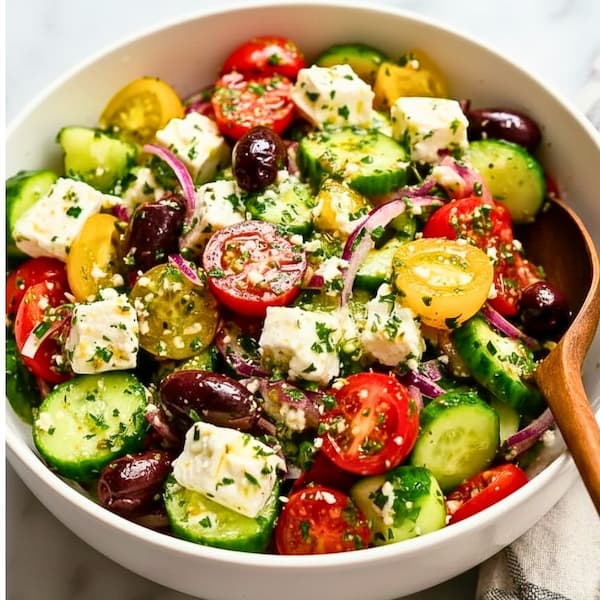
Three things:
Fresh ingredients
Greek salad isn’t the place for limp cucumbers or pale tomatoes. The flavor depends on quality.
Chunky cuts
Bigger pieces keep everything crisp and juicy.
The feta block
The texture and flavor impact is totally different from using crumbled cheese.
These simple details bring out the essence of the salad.
Optional Add-Ins (Non-Traditional but Delicious)
Capers
Adds tang and a little burst of salt.
Fresh Herbs
Dill or parsley can brighten the flavor without changing the character of the salad.
Lemon Juice
A small squeeze on top adds freshness but isn’t classic.
Crisp Lettuce
Not authentic — but if you want to stretch the salad, you can add a handful to the bottom.
How to Serve It
Greek salad pairs beautifully with grilled chicken, fish, roasted potatoes, and fresh bread. It’s also perfect on its own for a light lunch. I often serve it alongside pasta or roasted vegetables when I need extra color and freshness on the table.
It holds up well for picnics too. Just wait to add the olive oil and vinegar until right before serving.
Storage Notes
This salad is best enjoyed fresh. If you have leftovers, store them without the feta and dressing so the vegetables stay crisp.
Tomatoes soften overnight, but the flavors actually deepen, making the salad surprisingly tasty the next day.
Why Is There No Lettuce in Authentic Greek Salad?
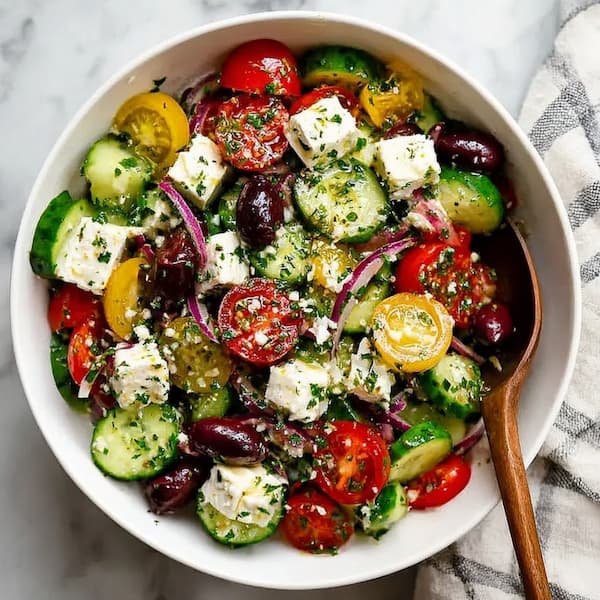
Traditional Greek salad (horiatiki) never uses lettuce. The dish is built entirely around ripe tomatoes, cucumbers, peppers, and onions. The freshness comes from the vegetables themselves, not from leafy greens. Adding lettuce is more of a Western adaptation.
What Kind of Feta Is Best for Greek Salad?
Sheep’s milk feta is the most traditional and has the richest flavor. It’s creamy, tangy, and holds its shape well. Cow’s milk feta works too, but it tends to be milder and a bit drier.
If you can, choose a block packed in brine — it stays moist and full of flavor.
Ingredients
Method
- Cut the tomatoes into chunky wedges. Peel the cucumber in long stripes, leaving some of the skin on for color and texture. Slice it into thick rounds.
- Slice the red onion thinly so it blends into the salad gently instead of overpowering it. Add Kalamata olives – no need to slice.
- Place a thick block of feta right on top. Don’t crumble it. Pour the olive oil slowly over the salad. Follow with a drizzle of red wine vinegar. Dust lightly with dried oregano and crack some pepper over the top.