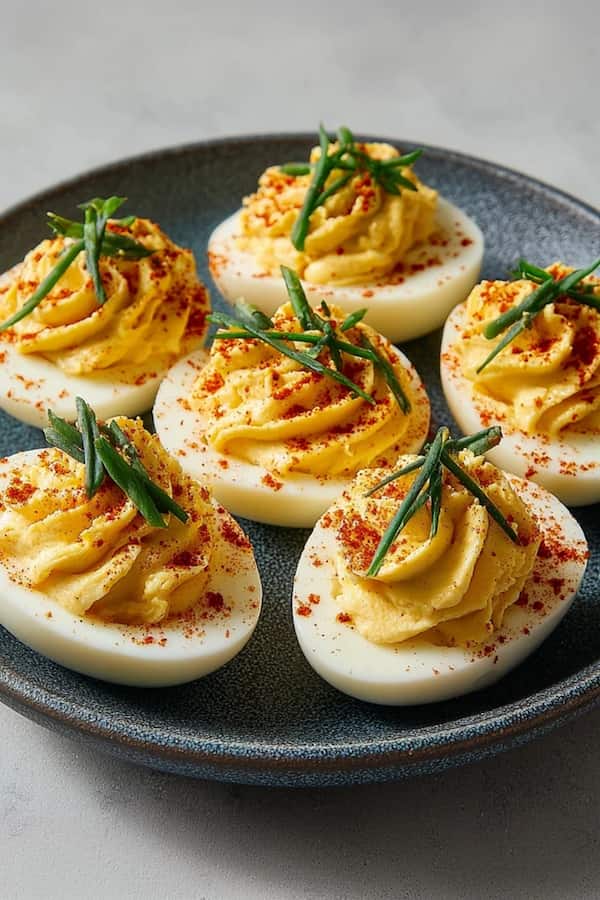
Classic deviled eggs are the centerpiece of every great picnic or holiday spread because they are simple, savory, and satisfying. This recipe moves away from the rubbery, bland versions found at grocery stores and focuses on a smooth, whipped filling with just the right amount of tang.
You can master this basic appetizer in very little time, and it always seems to be the first plate to disappear from the table.
Ingredients
This recipe makes 12 deviled egg halves, which serves 6 people as a standard appetizer.
- 6 large eggs (older eggs are easier to peel)
- 3 tablespoons mayonnaise (full-fat is best)
- 1 teaspoon Dijon mustard
- 1 teaspoon apple cider vinegar
- 1/4 teaspoon salt
- 1/4 teaspoon black pepper
- 1/2 teaspoon smoked paprika (for garnish)
- Fresh chives, finely chopped (optional garnish)
The Steam
The first step to a top-notch deviled egg is getting the cook right. Many people boil their eggs in bubbling water, which can lead to cracked shells and green rings around the yolks. A better way is to use a steamer basket or a gentle simmer.
When you cook the eggs gently, the whites stay tender instead of becoming tough. This provides a soft “cup” for your filling that doesn’t feel like rubber when you take a bite.
If you are using the traditional stovetop method, place your eggs in a single layer in a pot and cover them with an inch of cold water. Bring the water to a boil, then immediately turn off the heat and cover the pot with a lid.
Let them sit in the hot water for exactly 12 minutes. This “carry-over” heat cooks the yolks through to a bright yellow color without drying them out. It is a reliable technique that removes the guesswork from the process.
Cold Shock
As soon as your timer goes off, move the eggs into a bowl of ice water. This is the most important part of the process. The ice water stops the cooking immediately and shrinks the egg inside the shell, which makes the peeling process much smoother.
Let them soak for at least ten minutes. If the eggs are still warm when you peel them, the whites are more likely to tear, leaving you with lumpy, unattractive deviled eggs.
Clean Peel
Once the eggs are cold, tap them gently on the counter to crack the shells all over. I like to peel them under a thin stream of cool water. The water helps the shell slide off the delicate egg white without leaving any tiny shards behind.
Once they are all peeled, pat them dry with a paper towel. A dry egg is easier to slice and prevents the filling from sliding around later on.
Sharp Slice
Use a sharp, non-serrated knife to cut each egg in half lengthwise. Between every slice, wipe your knife blade with a damp cloth. This keeps the edges of the egg whites looking clean and prevents yellow yolk smudges from getting everywhere.
Gently squeeze the sides of the egg white to pop the yolk out and into a medium-sized mixing bowl. Set the empty whites on a clean serving platter.
Creamy Mash
Take a fork and mash the egg yolks until they look like fine yellow sand. There should be no large chunks left before you add any liquid. Add the mayonnaise, Dijon mustard, apple cider vinegar, salt, and pepper.
Use a small spatula or a whisk to cream everything together. You want to whip the mixture until it is completely smooth and light. This aeration is what gives the “deviled” filling its signature airy feel.
Pipe Load
You can spoon the filling into the whites, but for a professional look, use a piping bag or a simple plastic storage bag with the corner snipped off. Squeeze the filling into the center of each egg white, mounding it up slightly so it looks generous.
If you use a star-shaped tip on a piping bag, you get those beautiful ridges that catch the light and the paprika garnish. It only takes a minute longer but makes the dish look much more expensive.
Final Dust
The classic finishing touch is a light sprinkle of smoked paprika. Hold the spice jar high above the eggs so the powder falls evenly like red snow. This prevents you from getting a large clump of spice on just one egg.
If you want a bit of color and a fresh hit of flavor, sprinkle some finely chopped chives over the top right before serving. The green against the yellow and red makes the platter look very vibrant.
Better Filling
For a “top-notch” result, try using a small food processor to mix your filling. While a fork works fine, a food processor can turn the yolks and mayonnaise into a texture that is almost like mousse. It removes every single tiny lump and creates a very silky mouthfeel. If you are making a double or triple batch for a large party, this is also a huge time-saver.
Another tip is to taste your filling before you put it into the eggs. Different brands of mayonnaise and mustard have different levels of salt and acid. You might find that you want an extra drop of vinegar to make the flavor “pop” or a tiny bit more pepper for a kick.
Trust your palate. The best deviled eggs have a sharp, tangy finish that balances out the rich, fatty yolks.
Common Pitfalls
The most common mistake is using eggs that are too fresh. Fresh eggs have a membrane that sticks tightly to the shell, making them nearly impossible to peel cleanly. If you know you are making deviled eggs for an event, buy your carton a week in advance.
That extra time in the fridge allows the pH of the egg to change slightly, which is the secret to those shells that just slip right off in one or two pieces.
Another issue is putting the filling into the eggs too early. If you fill them and let them sit in the fridge for six hours, the filling can develop a “skin” on top and the paprika might bleed into the egg white.
For the best look, keep the whites in a sealed container and the filling in a separate bag. Pipe the filling into the eggs just before your guests arrive. This keeps everything looking fresh and bright.
Why Is My Deviled Egg Filling Too Runny?
A runny filling usually happens if you add too much mayonnaise or vinegar too quickly. It is always better to start with a little less than the recipe calls for and add more as you go. If you find yourself with a soup-like mixture, don’t worry.
You can thicken it up by mashing an extra hard-boiled egg yolk and folding it into the mix. If you don’t have an extra egg, a teaspoon of instant mashed potato flakes can also act as a flavorless thickener that saves the batch.
How Do I Transport Deviled Eggs Without A Mess?
Transporting these can be a nightmare because they like to slide around and flip over. The best trick is to use a specialized egg carrier with individual slots. If you don’t have one, you can put a layer of paper towels or a bed of fresh greens (like arugula or kale) on the bottom of a flat container.
The texture of the leaves or paper will grip the bottom of the egg whites and keep them from moving. Always wait to add the paprika garnish until you arrive at your destination so it doesn’t smear during the drive.
Ingredients
Method
- If you are using the traditional stovetop method, place your eggs in a single layer in a pot and cover them with an inch of cold water. Bring the water to a boil, then immediately turn off the heat and cover the pot with a lid.
- Let them sit in the hot water for exactly 12 minutes. This “carry-over” heat cooks the yolks through to a bright yellow color without drying them out.
- As soon as your timer goes off, move the eggs into a bowl of ice water. The ice water stops the cooking immediately and shrinks the egg inside the shell. Let them soak for at least ten minutes.
- Once the eggs are cold, tap them gently on the counter to crack the shells all over. I like to peel them under a thin stream of cool water.
- Use a sharp, non-serrated knife to cut each egg in half lengthwise. Between every slice, wipe your knife blade with a damp cloth.
- Gently squeeze the sides of the egg white to pop the yolk out and into a medium-sized mixing bowl. Set the empty whites on a clean serving platter.
- Take a fork and mash the egg yolks until they look like fine yellow sand. Add the mayonnaise, Dijon mustard, apple cider vinegar, salt, and pepper. Use a small spatula or a whisk to cream everything together.
- You can spoon the filling into the whites, but for a professional look, use a piping bag or a simple plastic storage bag with the corner snipped off. Squeeze the filling into the center of each egg white, mounding it up slightly so it looks generous.
- The classic finishing touch is a light sprinkle of smoked paprika