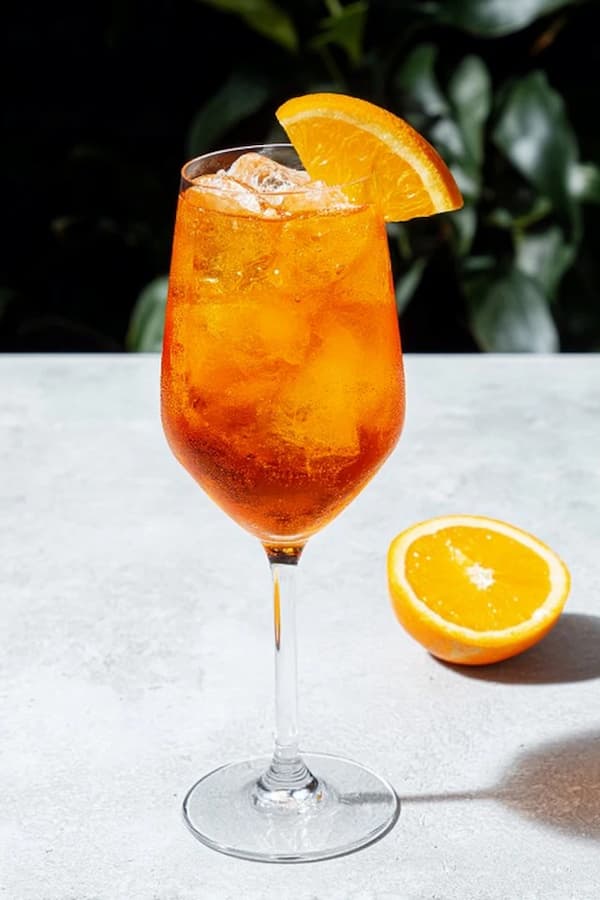
The Aperol Spritz is the ultimate sunset drink that brings a bright, bittersweet glow to any social gathering.
This cocktail is famous for its vibrant orange color and its ability to refresh the palate with a mix of citrus and bubbles. It is a reliable classic that is incredibly easy to build directly in the glass without any fancy equipment.
Ingredients
This recipe makes 1 serving, providing the perfect ratio for a single, refreshing glass.
- 3 ounces Prosecco (chilled)
- 2 ounces Aperol
- 1 ounce soda water (club soda)
- 1 large orange slice
- 1 cup large ice cubes
The Bitter
A top-notch Aperol Spritz starts with the signature liqueur that gives the drink its name. Aperol is a bright orange bitter with a complex flavor profile of rhubarb, cinchona, and gentian. It is much lower in alcohol than other spirits, making it an ideal choice for a light afternoon drink.
The flavor is a delicate balance of sweetness and herbal bitterness that pairs perfectly with the acidity of the wine.
When you use Aperol, you are tapping into a long-standing tradition of Italian aperitivos. It is designed to wake up the stomach before a meal. Because the flavor is so specific, there is no real substitute for Aperol in this recipe.
Using simple and direct ingredients ensures that the bright orange liquid remains the star of the show, providing that iconic “glow” that looks so beautiful on a food blog or in a photograph.
The Bubble
The quality of your Prosecco is the second pillar of a successful spritz. You do not need to buy the most expensive bottle, but you should look for one labeled “Brut” or “Extra Dry.”
A dry wine is essential because the Aperol itself is quite sweet. If you use a sweet dessert wine, the final cocktail will be cloying rather than refreshing.
The Prosecco provides the structure and the carbonation that lifts the heavier liqueur.
Make sure your wine is extremely cold before you open the bottle. Bubbles stay active much longer in cold liquid than in room-temperature wine.
If the Prosecco is warm, it will lose its “fizz” the moment it hits the glass, leaving you with a flat and unappealing drink. A professional-grade cocktail is all about maintaining that lively sparkle from the first sip to the last.
Glass Prep
For an authentic presentation, use a large, stemmed wine glass or a traditional balloon glass. The wide bowl of the glass allows the aromas of the orange and the herbs to reach your nose as you drink. Fill the glass to the very top with large, solid ice cubes.
Using large cubes is a professional trick because they have less surface area than crushed ice, which means they melt slower and won’t water down your drink.
If you want to go the extra mile, you can chill your glasses in the freezer for ten minutes before serving. A frosted glass keeps the drink colder for longer, especially if you are sitting outside in the sun.
This small detail is what makes your home bar feel like a top-notch Italian terrace. Once the glass is cold and full of ice, you are ready to start building the layers.
The Ratio
The secret to a perfect spritz is the “3-2-1” rule. This is a simple ratio that is easy to remember: three parts Prosecco, two parts Aperol, and one part soda water. Following this specific order is vital for the physics of the drink.
Start by pouring the Prosecco over the ice. By adding the wine first, you ensure that the bubbles are at the bottom, which helps the ingredients mix naturally as you pour the heavier liqueur on top.
Next, pour in the Aperol in a circular motion. You will see the orange color bleed down through the clear wine, creating a beautiful sunset effect.
Finally, add the splash of soda water. The soda water isn’t just a filler; it lightens the alcohol content and adds a different kind of “sharp” bubble that cuts through the richness of the sugar.
This layered approach creates a cohesive flavor without the need for aggressive stirring.
Orange Twist
No Aperol Spritz is complete without a fresh orange garnish. Take a large, round slice of a navel orange and tuck it into the side of the glass among the ice cubes. Some people prefer to use an orange “twist” or a peel, but a full slice allows some of the fresh juice to mingle with the drink as you sip.
The scent of the fresh citrus peel is the first thing you notice when you lift the glass.
If you want a more modern “top-notch” look, you can also add a green Castelvetrano olive on a pick. The saltiness of the olive provides an incredible contrast to the bitter orange liqueur.
This combination is very popular in Venice and adds a savory depth that makes the drink feel more sophisticated. Whether you choose fruit or olives, the garnish is the final touch that ties the whole presentation together.
Cold Serve
Give the drink one very gentle stir with a long spoon just to integrate the layers. Do not over-stir, or you will lose the carbonation you worked so hard to preserve. Serve the drink immediately while the glass is still sweating from the cold.
The Aperol Spritz is meant to be consumed fresh and bubbly, making it the perfect “welcome drink” for guests arriving at a party.
The visual appeal of this cocktail is a huge part of its popularity. The bright orange liquid against the clear ice and green garnish creates a vibrant contrast that stands out on any table.
Using simple language and clear steps helps your readers feel confident in recreating this professional-level cocktail at home. It is a refreshing, low-alcohol option that everyone can enjoy.
Better Fizz
To get a “top-notch” result, focus on the soda water. Use a freshly opened bottle of club soda or a high-quality sparkling mineral water. Avoid using “seltzer” if it has added flavors or a very soft bubble. You want a soda that has a “bite” to it.
The extra carbonation from the soda water is what keeps the drink feeling light and crisp even as the ice starts to melt.
Another tip is to avoid pouring the Aperol too quickly. If you pour it gently over a spoon, you can maintain the distinct layers for a few seconds before they naturally blend.
This makes for a great visual for your blog or social media. This attention to detail shows that you care about the craft of the cocktail as much as the flavor.
Common Pitfalls
The biggest mistake is using the wrong ratio. If you add too much Aperol, the drink becomes syrupy and too bitter. If you add too much wine, you lose the signature orange flavor. Stick to the 3-2-1 rule for the best balance.
Another issue is using small ice cubes. Small cubes melt within minutes, turning your vibrant cocktail into a watery, pale orange mess. Always use the largest cubes possible.
Finally, make sure you don’t skip the soda water. While it seems like a minor ingredient, it provides the essential “dilution” that opens up the botanicals in the Aperol. Without the soda, the drink can feel a bit heavy on the palate.
The splash of water makes the cocktail “breathable” and much easier to drink on a hot day.
Can I Use Something Other Than Prosecco?
While Prosecco is the traditional choice, you can use any dry sparkling wine, such as Cava or a domestic sparkling white wine. Just ensure it is a “Brut” style to keep the sugar levels low.
Avoid using Champagne, as the yeasty, bready notes of true Champagne can sometimes clash with the bright fruitiness of the Aperol. Prosecco is preferred because its light, floral, and apple-like notes are the perfect partner for the orange liqueur.
How Do I Make This For A Large Group?
If you are hosting a party, you can pre-measure the Aperol and Prosecco, but do not mix them until the last second. I recommend setting up a “Spritz Bar” where guests can build their own drinks using the 3-2-1 rule. Provide plenty of ice, pre-sliced oranges, and cold bottles of soda water.
This keeps the drinks as bubbly as possible and saves you from having to mix individual cocktails all night. Since there is no shaking involved, it is one of the easiest drinks for a large group to handle on their own.
Ingredients
Method
- Place your wine glass in the freezer for 10 minutes prior to serving. A frosted glass preserves the carbonation and keeps the drink crisp.
- Fillthe chilled glass to the very top with large, solid ice cubes. Avoidcrushed ice to prevent premature dilution.
- Pour the Prosecco over the icefirst. Starting with the wine ensures the bubbles are at the bottom, allowing theingredients to mix naturally via gravity.
- Pour the Aperol in a slow,circular motion. Watch for the "sunset effect" as the orangeliqueur bleeds through the wine.
- Topwith a splash of soda water. This adds a "sharp" bubble that cutsthrough the sweetness of the Aperol.
- Gentlytuck a round orange slice into the side of the glass. For a sophisticatedVenetian twist, add a Castelvetrano olive on a pick to provide a saltycontrast.
- Gentlytuck a round orange slice into the side of the glass. For a sophisticatedVenetian twist, add a Castelvetrano olive on a pick to provide a saltycontrast.