Hollandaise sauce is often seen as a difficult French classic, but it is actually quite simple to master with the right technique. This creamy, buttery sauce is the essential topping for Eggs Benedict and can elevate almost any vegetable dish.
It uses just a few basic ingredients to create a rich glaze that feels like a professional restaurant meal.
Ingredients
Yields: 4 servings (about 1 cup)
- 3 large egg yolks
- 1 tablespoon fresh lemon juice
- 1/2 cup unsalted butter (1 stick)
- 1/4 teaspoon salt
- 1 pinch cayenne pepper
- 1 teaspoon warm water (if needed)
Separate the Yolks
Start by cracking your eggs carefully over a small bowl. You need to separate the yolks from the whites completely, as any bit of egg white can cause the sauce to become lumpy or stringy when heated.
Place the three bright yellow yolks into a heat-proof glass or stainless steel bowl. You can save the leftover egg whites in the refrigerator for a high-protein omelet later in the week.
Using room temperature eggs is helpful, so try to take them out of the fridge about twenty minutes before you begin your cooking process.
Melt the Gold
Take your stick of unsalted butter and cut it into small, even cubes. Place the butter in a small saucepan over low heat or in a microwave-safe dish. Heat the butter until it is completely melted and starts to bubble very slightly.
You want the butter to be hot but not browned, as the heat from the butter is actually what will “cook” the egg yolks later on. If you use a microwave, cover the dish with a paper towel to prevent any messy splatters while the butter liquefies.
Prep the Bath
Since egg yolks are very sensitive to high heat, you should use a double boiler method to keep the temperature controlled. Fill a medium saucepan with about one or two inches of water and bring it to a very gentle simmer. Place your bowl containing the egg yolks on top of the saucepan, making sure the bottom of the bowl does not actually touch the hot water.
This indirect heat allows the yolks to warm up slowly without scrambling. If the water starts to boil too hard, turn the heat down immediately to avoid overheating the delicate base of your sauce.
Whisk the Acid
Add the fresh lemon juice and the salt directly into the bowl with the egg yolks. Use a wire whisk to blend them together until the mixture begins to look a bit frothy and turns a lighter shade of yellow.
The acid in the lemon juice is not just for flavor; it actually helps to stabilize the proteins in the egg yolks, making the sauce less likely to break or separate. Keep whisking steadily for about two minutes while the yolks sit over the gentle steam from the water below.
Stream the Fat
This is the most important part of the entire recipe. Remove the bowl from the heat for a moment and begin to pour the hot, melted butter into the yolks. You must pour the butter in a very thin, slow stream—almost drop by drop at first—while whisking vigorously with your other hand.
If you pour the butter too fast, the eggs will not be able to absorb the fat, and you will end up with a greasy mess instead of a smooth cream.
As you continue to whisk and add the butter, you will feel the sauce start to thicken and become heavy under your hand.
Adjust the Body
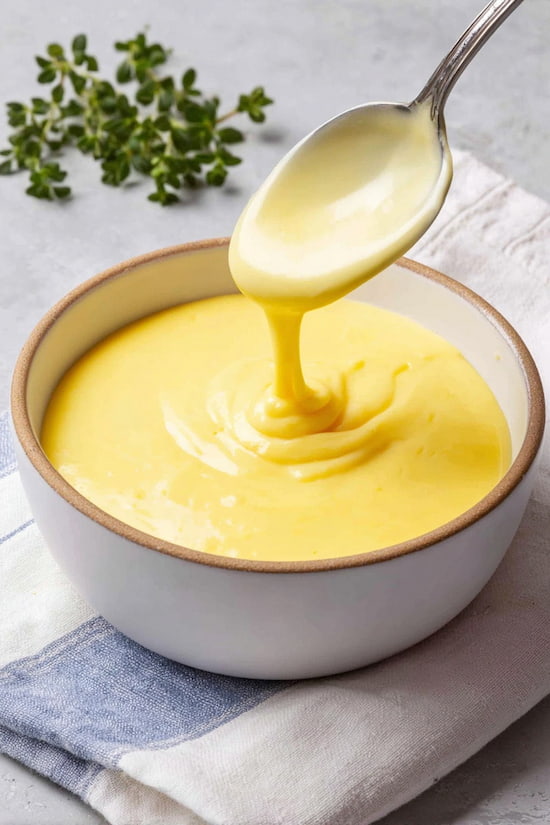
Once all the butter is incorporated, look at the consistency of your hollandaise. It should be thick enough to coat the back of a spoon but still pourable. If the sauce feels too thick or looks a bit like heavy paste, whisk in a single teaspoon of warm water to loosen it up.
This is also the time to add your pinch of cayenne pepper. The cayenne provides a very subtle back-of-the-throat heat that cuts through the richness of the butter without making the sauce spicy.
Taste the Balance
Dip a clean spoon into the sauce to check the seasoning. A perfect hollandaise should have a distinct buttery flavor followed by a bright, sharp hit of lemon. If it tastes a bit flat, add a tiny drop more lemon juice or a small pinch of salt.
Remember that the flavors will intensify slightly as the sauce sits, so be careful not to over-season at this stage. The sauce should be glossy, smooth, and a beautiful pale gold color.
Keep it Warm
Hollandaise is best served immediately, but if you aren’t quite ready for breakfast, you can keep it warm for a short time. Place the bowl in a warm spot on the back of your stove, or set it back over the saucepan of water (with the heat turned completely off).
Do not try to reheat the sauce on high heat later, as it will almost certainly break and turn back into oil and cooked egg bits. If it does separate, you can sometimes fix it by whisking in one more teaspoon of very warm water until it comes back together.
Tips to Make it Perfect
- Use Fresh Lemons: Bottled lemon juice often has a metallic aftertaste that can ruin the delicate balance of a butter sauce.
- Warm the Bowl: Warming your whisk and bowl slightly before starting can help the emulsion form more easily.
- Whisk Constantly: Do not stop moving the whisk until the butter is fully mixed in; the friction is part of what creates the creamy texture.
- Watch the Heat: If the bowl becomes too hot to touch with your bare hand, it is too hot for the eggs, and you should lift it off the steam for a few seconds.
What can I do if my hollandaise sauce breaks?
If your sauce separates and looks curdled, don’t throw it away. You can usually fix it by placing a fresh egg yolk in a clean bowl and very slowly whisking the broken sauce into that new yolk. The fresh yolk acts as a new emulsifier to bring the fats and proteins back together.
Another trick is to whisk in a tablespoon of boiling water very quickly; sometimes the sudden heat and moisture can snap the sauce back into a smooth state.
What are the best foods to serve with hollandaise?
While Eggs Benedict is the most famous choice, hollandaise is incredibly versatile. It is a classic pairing for steamed asparagus or roasted broccoli, as the creamy fat complements the earthy greens perfectly.
You can also spoon it over grilled salmon or poached white fish to add a layer of luxury to a simple seafood dinner.
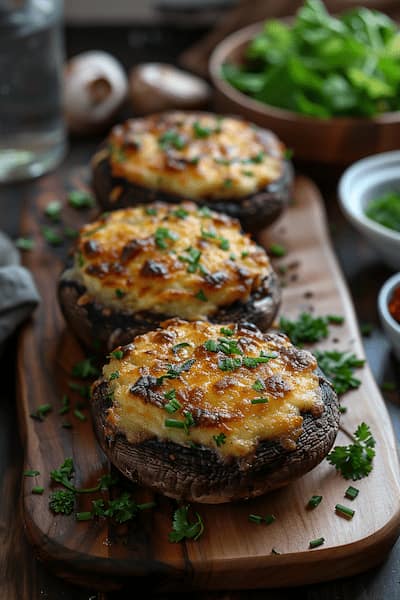
For a high-protein vegetarian meal, try serving it over a pile of sautéed mushrooms and spinach on top of a thick slice of toasted sourdough bread
Ingredients
Method
- Crack the eggs carefully and separate the yolks from the whites, placing the bright yellow yolks into a heat-proof bowl. You can set the whites aside in the refrigerator to use later for a high-protein omelet.
- Cut the unsalted butter into small cubes and heat it in a saucepan until it is completely melted and bubbling slightly. Ensure the butter is hot but not browned, as this heat is necessary to properly thicken the sauce.
- Place the bowl of yolks over a saucepan of gently simmering water to create a double boiler. Add the fresh lemon juice and salt, whisking constantly until the mixture becomes frothy and lightens in color.
- Remove the bowl from the heat and begin pouring the hot butter in a very thin, slow stream while whisking vigorously. This slow addition is the key to creating a stable, heavy emulsion that won’t separate into a greasy mess.
- Once all the butter is incorporated and the sauce is thick enough to coat a spoon, stir in a pinch of cayenne pepper. Serve this rich glaze immediately over your favorite high-protein vegetarian dishes.
Notes
- Use Fresh Lemons: Bottled lemon juice often has a metallic aftertaste that can ruin the delicate balance of a butter sauce.
- Warm the Bowl: Warming your whisk and bowl slightly before starting can help the emulsion form more easily.
- Whisk Constantly: Do not stop moving the whisk until the butter is fully mixed in; the friction is part of what creates the creamy texture.
- Watch the Heat: If the bowl becomes too hot to touch with your bare hand, it is too hot for the eggs, and you should lift it off the steam for a few seconds.