
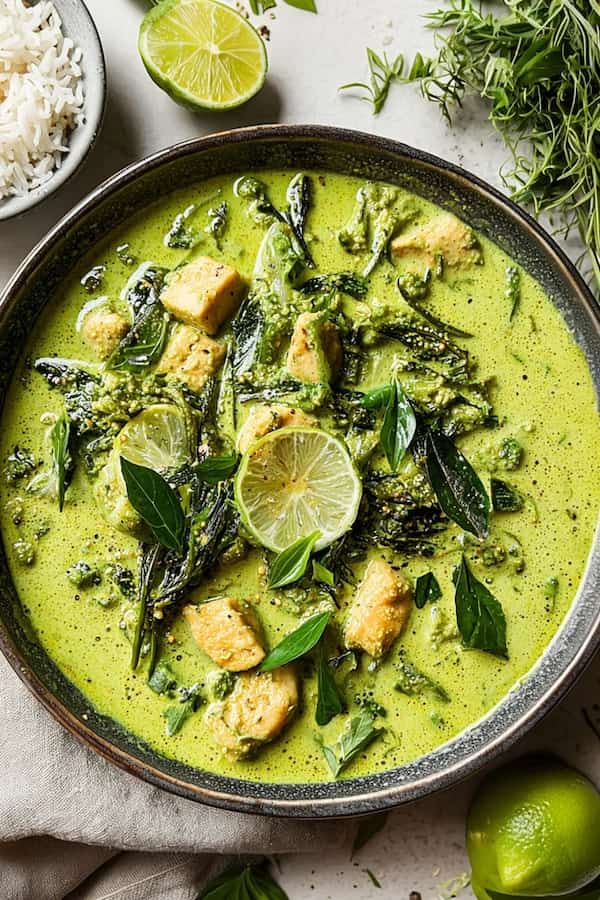
There are few things as comforting as a bowl of warm, fragrant green curry. The creamy coconut base, fresh vegetables, and bold Thai flavors come together in one beautiful, colorful dish. It’s rich yet fresh, spicy yet soothing — and best of all, it’s surprisingly easy to make at home.
The first time I made green curry from scratch, I was intimidated by the long list of ingredients. But once I got started, I realized how forgiving it actually is. Now it’s one of my favorite weeknight dinners — simple, vibrant, and always satisfying.
Why You’ll Love It
This vegetarian green curry is perfect for when you want something cozy yet fresh. It’s full of vegetables, protein, and that irresistible mix of coconut milk and curry paste that makes Thai food so addictive.
The best part? It’s all done in about 30 minutes. You can customize it with whatever veggies you have on hand, and it tastes even better the next day as the flavors deepen.
Whether you’re a curry lover or new to Thai cooking, this recipe will quickly become a regular on your dinner list.
Ingredients (Serves 4)
- 1 tablespoon coconut oil or vegetable oil
- 2–3 tablespoons green curry paste (adjust to taste)
- 1 can (13.5 oz) coconut milk (full fat for creaminess)
- 1 cup vegetable broth
- 1 small onion, sliced
- 2 cloves garlic, minced
- 1 teaspoon grated fresh ginger
- 1 red bell pepper, sliced
- 1 cup broccoli florets
- 1 cup zucchini, sliced
- ½ cup snap peas or green beans
- 1 cup firm tofu, cubed (or chickpeas for variation)
- 1 tablespoon soy sauce or tamari
- 1 tablespoon brown sugar or coconut sugar
- Juice of ½ lime
- Fresh basil or cilantro for garnish
Optional: sliced chili or crushed red pepper for heat
Start with the Base
Heat the coconut oil in a large skillet or saucepan over medium heat. Add the onion and sauté until it starts to soften, about 3–4 minutes. Stir in the garlic and ginger, cooking for another 30 seconds until fragrant.
Add the green curry paste and stir well to coat the aromatics. Let it cook for about a minute — this step is key because it helps release the oils and deepen the flavor. You’ll smell that warm, spicy aroma that makes green curry so distinct.
Add the Coconut Milk
Pour in the coconut milk and vegetable broth, whisking to combine. The sauce should look silky and slightly thick.
Bring it to a gentle simmer and add the soy sauce and brown sugar. This balances the spice and saltiness of the curry paste and gives the sauce that perfect harmony of flavors — creamy, sweet, and savory all at once.
Toss in the Vegetables
Add the bell pepper, zucchini, broccoli, and snap peas. Stir gently to coat them in the curry sauce.
Cover the pot and let everything simmer for about 8–10 minutes, or until the vegetables are tender but still vibrant in color. You don’t want them overcooked — part of the beauty of green curry is that mix of crisp and soft textures.
Add the Protein
Stir in the tofu cubes (or chickpeas if you’re using those). Let them warm through in the sauce for a few minutes.
If your tofu isn’t pre-cooked, you can pan-fry it in a little oil before adding it. This gives it a golden crust that holds up beautifully in the creamy sauce.
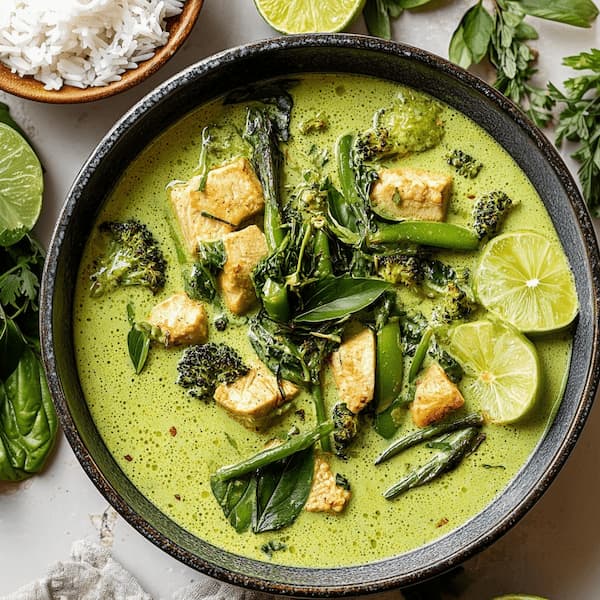
The combination of coconut milk, curry paste, and tofu creates a hearty base that feels rich without being heavy.
Finish with Freshness
Just before serving, squeeze in the lime juice and stir in a handful of fresh basil or cilantro. This brightens everything up and adds a layer of freshness that balances the creamy richness.
Taste and adjust seasoning — add more curry paste for spice, soy sauce for salt, or a touch of sugar if you want it mellower.
Serve and Enjoy
Serve the curry hot over bowls of steamed jasmine rice. The sauce soaks beautifully into the rice, turning every bite into a comforting mix of spice, creaminess, and freshness.
If you’re in the mood for something lighter, it’s also delicious with rice noodles or even cauliflower rice.
It’s one of those dishes that feels fancy but really isn’t — a restaurant-quality meal that’s easy enough for any night of the week.
Why This Recipe Works
This vegetarian green curry works because it’s balanced. The coconut milk brings creaminess, the curry paste adds heat and flavor, and the lime and herbs keep it bright and fresh.
It’s also versatile — you can use whatever vegetables are in season or sitting in your fridge. The flavors come together naturally, creating that perfect mix of sweet, savory, and spicy that Thai food is known for.
Tips for Perfect Green Curry
- Use full-fat coconut milk. It gives that rich, creamy texture that makes the sauce irresistible.
- Don’t rush the curry paste. Letting it cook for a minute before adding liquid builds deep flavor.
- Adjust spice gradually. Different curry pastes have different heat levels. Start small and add more as needed.
- Add delicate veggies last. Spinach, snap peas, or zucchini cook quickly and should go in near the end.
- Balance the flavors. Always taste before serving — you’re looking for creamy, spicy, and a hint of sweetness.
Variations to Try
- Thai Basil Green Curry: Add more fresh basil and a few extra lime leaves for strong herbal flavor.
- Curry with Noodles: Swap rice for rice noodles or soba for a fun twist.
- Protein Boost: Try tempeh or even lentils instead of tofu.
- Creamy Cashew Twist: Add a tablespoon of cashew butter for an extra nutty, silky finish.
Each version feels a little different, but they all share the same cozy, aromatic essence that makes Thai green curry such a favorite.
Storage and Reheating
Leftovers store well in the fridge for up to 4 days. The flavors deepen overnight, so it tastes even better the next day.
Reheat gently on the stove over low heat, adding a splash of broth or coconut milk if the sauce thickens too much. You can also freeze it for up to 2 months — thaw overnight before reheating.
Final Thoughts
This vegetarian green curry is one of those dishes that looks and tastes special but doesn’t demand much effort. It’s fresh, flavorful, and nourishing — exactly what a good homemade meal should be.
Once you try it, you’ll see how easy it is to bring those Thai flavors to your own kitchen. A bowl of this curry, some fluffy rice, and a squeeze of lime — that’s pure comfort.
Can I Use Store-Bought Curry Paste?
Absolutely. Most grocery stores carry Thai green curry paste in jars, and they work great. Just taste as you go — some brands are spicier than others, so you may need to adjust.
Can I Make It Without Coconut Milk?
Yes. You can replace it with cashew cream or almond milk for a lighter version. Just note that coconut milk gives the curry its signature flavor and texture, so the result will be a little different — but still delicious.
Ingredients
Method
- Heat the coconut oil in a large skillet or saucepan over medium heat. Add the onion and sauté until it starts to soften, about 3–4 minutes. Stir in the garlic and ginger, cooking for another 30 seconds until fragrant.
- Add the green curry paste and stir well to coat the aromatics. Let it cook for about a minute .
- Pour in the coconut milk and vegetable broth, whisking to combine. The sauce should look silky and slightly thick. Bring it to a gentle simmer and add the soy sauce and brown sugar.
- Add the bell pepper, zucchini, broccoli, and snap peas. Stir gently to coat them in the curry sauce. Cover the pot and let everything simmer for about 8–10 minutes, or until the vegetables are tender but still vibrant in color.
- Stir in the tofu cubes (or chickpeas if you’re using those). Let them warm through in the sauce for a few minutes. If your tofu isn’t pre-cooked, you can pan-fry it in a little oil before adding it. This gives it a golden crust that holds up beautifully in the creamy sauce.
- Just before serving, squeeze in the lime juice and stir in a handful of fresh basil or cilantro.
Notes
- Use full-fat coconut milk. It gives that rich, creamy texture that makes the sauce irresistible.
- Don’t rush the curry paste. Letting it cook for a minute before adding liquid builds deep flavor.
- Adjust spice gradually. Different curry pastes have different heat levels. Start small and add more as needed.
- Add delicate veggies last. Spinach, snap peas, or zucchini cook quickly and should go in near the end.
- Balance the flavors. Always taste before serving — you’re looking for creamy, spicy, and a hint of sweetness.