Baba ganoush is a Middle Eastern eggplant dip made by charring whole eggplant over an open flame or under a broiler, then mashing the smoky interior with tahini, lemon, garlic, and olive oil into a smooth, savory spread.
The char is what separates it from plain roasted eggplant dip — without it, you get something bland and watery rather than the deep, smoky flavor that makes this dip worth making.
It takes about an hour including the charring and draining time, but the active work is minimal and the result belongs on any mezze table alongside labneh, muhammara, and pita.
Ingredients
Serves: 6–8 as a dip (makes about 2 cups)
For the baba ganoush:
- 2 large eggplants (about 2 lbs total)
- 3 tablespoons tahini
- 3 tablespoons fresh lemon juice (about 1.5 lemons)
- 2 cloves garlic, finely grated
- 2 tablespoons olive oil, plus more to serve
- 1/2 teaspoon salt
- 1/4 teaspoon cumin
- 1/4 teaspoon smoked paprika
To serve:
- Extra olive oil drizzle
- Chopped fresh parsley
- Smoked paprika
- Red pepper flakes
- Warm pita or flatbread
- Sliced vegetables — cucumber, bell pepper, celery
Why You Must Try This Baba Ganoush Recipe
Baba ganoush is one of those dips where the process directly determines the result — you can’t shortcut the charring step and expect the same flavor. The black, blistered exterior of the eggplant imparts a smokiness to the flesh that no spice or liquid smoke can replicate in the same way.
When that charred flesh is combined with tahini, the dip takes on a nutty, bitter-edged depth that makes it taste far more complex than a short ingredient list suggests. The lemon keeps it bright, the garlic gives it backbone, and the whole thing comes together into something that’s simultaneously light and substantial. It’s naturally vegan, naturally gluten-free, and one of the most versatile dips in the Middle Eastern repertoire.
Char the Eggplant
If you have a gas stove, place the whole eggplants directly on the burner grates over high flame. Turn them with tongs every 3 to 4 minutes until the skin is charred and collapsed on all sides — about 12 to 15 minutes total. The eggplant will look like it’s destroyed from the outside and that’s correct.
If you don’t have a gas stove, place them on a baking sheet under a broiler at maximum heat for 25 to 30 minutes, turning once or twice, until the skin is dark and wrinkled and the eggplant collapses when pressed. The gas flame method gives a deeper smoke but the broiler is a workable alternative.
Pierce each eggplant once or twice with a fork before charring so steam can escape — without this they can split messily.
Steam, Then Drain
Once charred, transfer the eggplants to a bowl and cover tightly with plastic wrap or a plate. Leave for 15 minutes — the trapped steam loosens the skin and makes it easy to peel. After steaming, cut each eggplant in half and scoop out the flesh with a spoon, discarding the charred skin.
Place the flesh in a fine mesh sieve or colander set over a bowl and leave it to drain for 10 minutes. This draining step is important — eggplant holds a lot of liquid and if it goes directly into the dip it makes baba ganoush watery and diluted.
Press gently on the flesh to help remove more liquid. The drained flesh should look concentrated and slightly dry.
Mash and Season
Transfer the drained eggplant flesh to a large bowl. Mash it with a fork until it reaches your preferred texture — baba ganoush should have some texture remaining rather than being completely smooth. A rough, slightly chunky consistency is traditional and more interesting than a puree.
Add the tahini, lemon juice, grated garlic, olive oil, salt, cumin, and smoked paprika. Stir everything together until fully combined. Taste and adjust — it should taste smoky, tangy, and nutty with a clear eggplant flavor.
If the smoke flavor is mild, a small pinch of smoked paprika stirred through deepens it. If it tastes flat, more lemon juice usually fixes it before reaching for more salt.
Rest Before Serving
Cover the bowl and refrigerate for at least 30 minutes before serving. The flavors come together and deepen as the dip rests — garlic in particular becomes less sharp and more integrated after a rest period.
Baba ganoush made the day before always tastes better than baba ganoush made and served immediately. If time allows, make it a few hours ahead or the evening before. The dip will firm up slightly in the fridge — stir before serving and adjust consistency with a tablespoon of olive oil if it seems too thick.
Plate and Serve
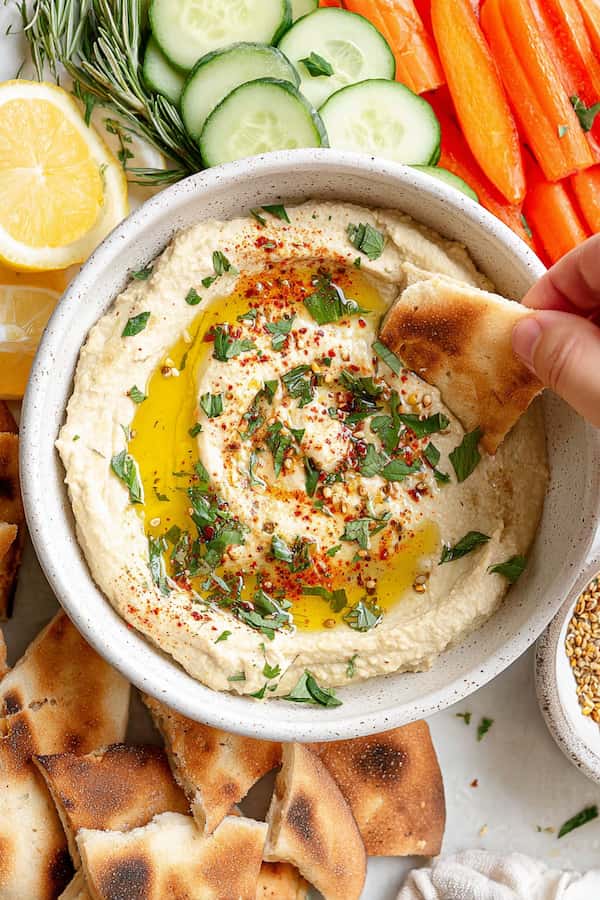
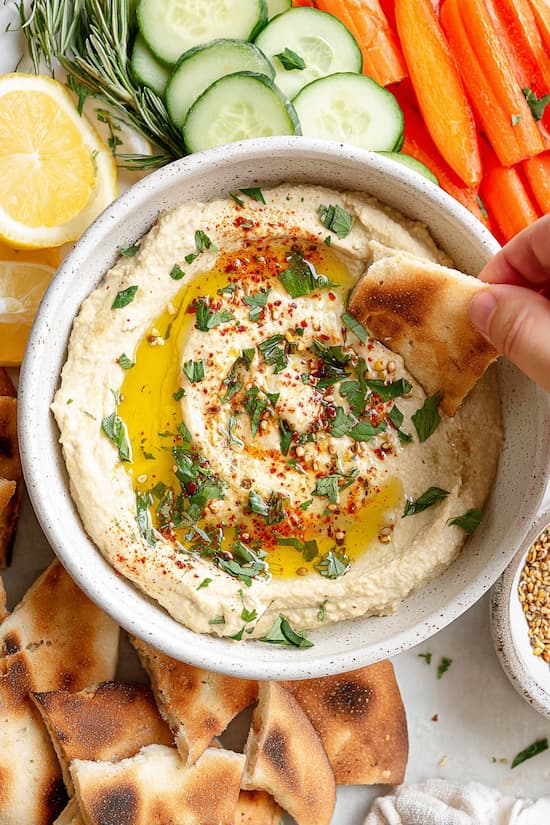
Spread the baba ganoush onto a wide plate or shallow bowl using the back of a spoon, creating a slight well in the center. Drizzle olive oil generously — don’t be conservative, the oil is part of the dish. Scatter fresh parsley, a pinch of smoked paprika, and red pepper flakes if using over the top.
Serve with warm pita, flatbread, or the socca chickpea flatbread from this site. It also works as part of a wider mezze table alongside muhammara, labneh, and manakish — the combination of different dips and breads at the table is how baba ganoush is traditionally eaten and how the individual components taste best together.
How To Make This Baba Ganoush Recipe Better
These changes improve the depth or change the direction of the dip:
Roast a head of garlic alongside the eggplant. Slice the top off a whole head of garlic, drizzle with oil, wrap in foil, and roast at 400°F for 35 minutes until the cloves are soft and golden. Squeeze the roasted cloves into the dip instead of raw garlic. Roasted garlic is sweeter and mellower — the dip becomes gentler and more suitable for people who find raw garlic too sharp.
Add pomegranate seeds and pomegranate molasses. Scatter a tablespoon of pomegranate seeds over the finished dip and drizzle a small amount of pomegranate molasses over the olive oil.
The sourness and sweetness of the pomegranate against the smoky eggplant is one of the best flavor combinations in Levantine cooking.
Stir in Greek yogurt. Add two tablespoons of full-fat Greek yogurt to the mashed eggplant with the other ingredients. It adds creaminess and tang and makes the dip slightly lighter in texture. This version is less traditional but works very well.
Add a charred pepper. Char one red bell pepper alongside the eggplant, peel and seed it, and mash it through the finished dip. It adds sweetness and a different kind of smokiness that makes the baba ganoush more complex.
Toast the cumin before adding. Dry-toast whole cumin seeds in a small pan for 60 to 90 seconds until fragrant, then grind and add to the dip. Freshly toasted cumin has a noticeably warmer, more aromatic quality than pre-ground cumin from a jar.
Storage
Store baba ganoush in an airtight container in the fridge for up to 4 days. Pour a thin layer of olive oil over the surface before sealing to prevent it from drying out.
Stir before serving and bring to room temperature for 15 minutes first — cold baba ganoush is denser and less flavorful than it is at room temperature. Don’t freeze it — the texture of the eggplant becomes grainy after freezing and thawing and the flavor suffers.
If you need to make it more than a day ahead, the charred and drained eggplant flesh can be refrigerated separately for up to 2 days before mixing with the other ingredients.
What Is the Difference Between Baba Ganoush and Mutabal?
The two names are often used interchangeably in the West but they refer to slightly different dishes in their countries of origin. Baba ganoush — from Lebanon and the broader Levant — is traditionally made without tahini and instead mixes the charred eggplant with tomatoes, pomegranate, onion, parsley, and olive oil.
Mutabal — the version more common in Syria and Jordan — is the eggplant-and-tahini combination that most people in the West call baba ganoush. The recipe in this post is technically mutabal by strict regional definition, but since baba ganoush is the term almost universally used in Western contexts to describe this dish, that’s the name used here.
Both are made from charred eggplant and are delicious in different ways — the version with tahini is richer and nuttier, the version without is fresher and lighter.
Can You Make Baba Ganoush Without an Open Flame?
Yes, using a broiler, but there is a difference in the result. An open gas flame chars the eggplant more intensely and unevenly — the direct heat creates deeper smoke pockets and the skin chars more completely, driving more smoky flavor into the flesh. A broiler produces a more even char that’s slightly less deep in flavor.
You can get closer to the flame result by placing the eggplant as close to the broiler element as your oven allows and rotating frequently. A grill works well as another alternative — high heat grill for 20 to 25 minutes, turning regularly, until fully charred.
Whatever method you use, the key is letting the skin char completely black before calling it done — stopping too early leaves the flesh undercooked and the smoke flavor underdeveloped.
Baba ganoush rewards patience more than most dips. The charring takes time, the draining takes time, the rest time before serving makes a difference. Do each step properly and you end up with a dip that people come back to repeatedly throughout the meal.
Ingredients
Method
- Pierce each eggplant once or twice with a fork. Gas stove method: place whole eggplants directly on the burner grates over high flame. Turn with tongs every 3–4 minutes until skin is charred and collapsed on all sides — about 12–15 minutes. Broiler method: place on a baking sheet under a broiler at maximum heat for 25–30 minutes, turning once or twice, until skin is dark and wrinkled and eggplant collapses when pressed.
- Transfer charred eggplants to a bowl and cover tightly with plastic wrap. Leave 15 minutes. Cut each in half and scoop out the flesh with a spoon, discarding the charred skin.
- Place flesh in a fine mesh sieve or colander over a bowl. Leave 10 minutes to drain. Press gently to remove more liquid. Do not skip this — excess liquid makes the dip watery.
- Transfer drained flesh to a large bowl. Mash with a fork to a rough, slightly chunky texture — not a smooth puree. Add tahini, lemon juice, grated garlic, olive oil, salt, cumin, and smoked paprika. Stir until fully combined. Taste and adjust — more lemon if flat, more smoked paprika if smoke is mild.
- Cover and refrigerate for at least 30 minutes before serving. The flavor improves significantly with resting time — make it several hours ahead or the day before for best results.
- Spread onto a wide plate. Drizzle generously with olive oil. Scatter fresh parsley, smoked paprika, and red pepper flakes on top. Serve with warm pita or flatbread.
Notes
- Pierce eggplant before charring — prevents messy splitting
- Char until the skin is completely black — stopping early leaves the flesh undercooked and the smoke underdeveloped
- Drain the flesh for at least 10 minutes — this step prevents a watery dip
- Mash with a fork, not a blender — traditional baba ganoush has texture, not a smooth puree
- Make ahead: dip improves after resting overnight in the fridge
- Store with a thin layer of olive oil over the surface to prevent drying out
- Keeps in the fridge for up to 4 days — do not freeze
- Add pomegranate seeds and a drizzle of pomegranate molasses for a traditional Levantine finish