
Some sauces just wake everything up. Buffalo sauce is one of those. It’s spicy, tangy, buttery, and somehow makes even the simplest food taste fun and a little bit addictive.
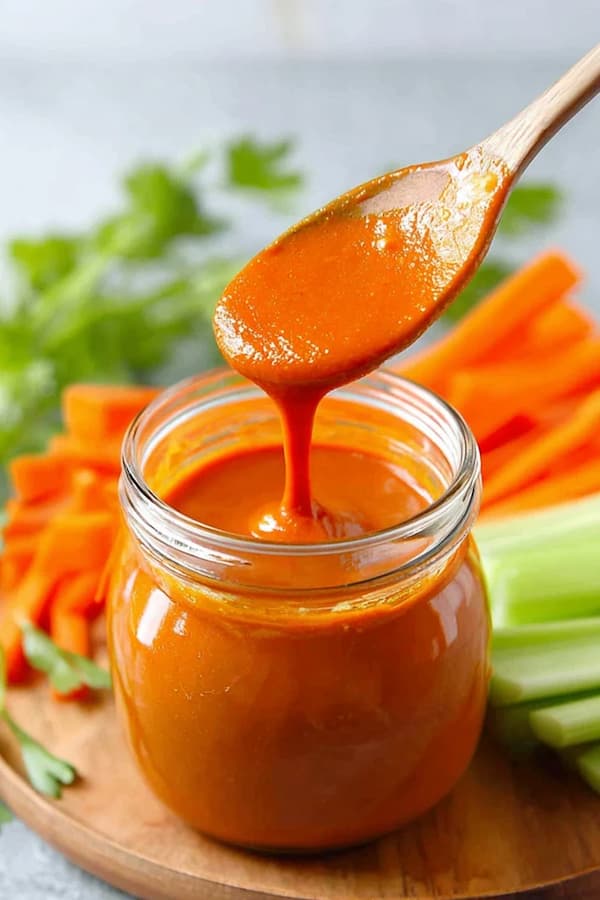
Why Homemade Buffalo Sauce Hits Different
Once you make buffalo sauce at home, the bottled versions start to taste a bit flat. The homemade version is brighter, fresher, and you can control everything—heat, tang, salt, and butteriness. You’re not stuck with “one flavor fits all”; you can make your version.
I like this sauce because it’s fast. You don’t need a blender, special tools, or anything fancy. Just a small pot, a few basic ingredients, a whisk, and about 10 minutes.
The result is a glossy, smooth sauce you can pour over wings, cauliflower bites, grilled chicken, wraps, sandwiches—even eggs and fries if you’re like me and put hot sauce on everything.
What Makes This Buffalo Sauce So Good
Classic buffalo sauce is really just two things working together: hot sauce and butter. But the details matter. A tiny bit of sweetness takes the harsh edge off the heat. A splash of vinegar brightens the flavor. Garlic powder and a few simple seasonings bring depth so it doesn’t taste like straight hot sauce.
This version leans toward that classic, bar-style buffalo flavor, but it’s not harsh. It’s smooth, rich, and clings nicely to whatever you toss it with. You can easily make it milder or hotter depending on your taste.
Ingredients
Makes About 1 Cup
- ½ cup hot sauce (like Frank’s-style cayenne pepper sauce)
- ½ cup unsalted butter (1 stick), cut into pieces
- 1 tablespoon white vinegar or apple cider vinegar
- 1 teaspoon Worcestershire sauce
- ½ teaspoon garlic powder
- ¼ teaspoon onion powder (optional)
- ½ teaspoon sugar or honey (optional, but smooths the flavor)
- Pinch of salt, to taste
- Pinch of black pepper, to taste
This makes enough to coat about 1–1.5 pounds of wings or cauliflower bites, or to use as a generous dipping sauce for 3–4 people (8 “servings” if you think of it as a condiment).
Melt the Butter Gently
Add the butter pieces to a small saucepan.
Set the pan over low heat and let the butter melt slowly.
You don’t want the butter sizzling or browning here—just melting into a smooth pool. Browning the butter gives a nutty flavor, which is nice in some recipes, but classic buffalo sauce is usually made with gently melted butter so the flavor stays clean and the texture stays silky.
Once the butter is fully melted, turn the heat down to the lowest setting.
Add the Hot Sauce
Pour the hot sauce into the saucepan with the melted butter.
Whisk right away until the mixture looks fully combined and smooth. At this stage, the sauce will look a bit thin and bright orange-red. That’s exactly what you want.
You’ll notice the color change slightly as the butter and hot sauce fully emulsify—it becomes a softer, more rounded shade instead of a sharp, neon red.
Build Flavor with Vinegar and Worcestershire
Add the vinegar and Worcestershire sauce to the pan.
Whisk again and let the mixture heat gently for a minute or two. You don’t want it boiling—just warm enough that all the flavors start to come together.
The vinegar brightens the sauce and gives it that tangy bite you expect from buffalo. Worcestershire adds a little depth and umami so the sauce doesn’t taste too thin or one-note.
Taste a drop carefully (it will be hot): you should already feel a balance of heat, tang, and richness.
Season with Garlic, Sugar, and Spices
Stir in the garlic powder, onion powder (if using), sugar or honey, and a pinch of salt and black pepper.
Whisk until everything is fully dissolved and the sauce looks glossy. The sugar or honey doesn’t make the sauce sweet—it simply rounds out the edges and softens any sharpness from the vinegar and hot sauce.
Let the sauce sit over very low heat for another minute, stirring now and then. This helps the flavors settle and blend.
Taste again and adjust:
- Want more tang? Add a tiny splash of vinegar.
- Want more heat? Add a little more hot sauce.
- Want it smoother and richer? Add a small knob of butter and whisk it in.
Let It Thicken Slightly Off the Heat
Turn off the heat and let the buffalo sauce sit in the warm pan for a few minutes. As it cools slightly, it thickens just a bit and turns even glossier.
You can use it right away, or let it cool more if you’re planning to bottle or store it. If using immediately on wings or cauliflower, you want it warm and pourable.
Toss with Wings, Cauliflower, or Anything You Love
Now comes the fun part.
To use as a coating:
- Add freshly baked, air-fried, or fried chicken wings (or cauliflower bites) to a large bowl.
- Pour warm buffalo sauce over the top.
- Toss well until everything is evenly coated and shiny.
Serve with celery sticks, carrot sticks, ranch, blue cheese dressing, or whatever you like.
You can also:
- Drizzle it over chicken wraps or tacos
- Stir a spoonful into mayo or yogurt for a quick buffalo dip
- Toss cooked shrimp in it
- Pour over roasted potatoes or fries
- Use it in buffalo chicken sandwiches or sliders
Once you have a jar of this in the fridge, you start to see a lot of possibilities.
Store It for Later
Let the buffalo sauce cool to room temperature, then pour it into a clean jar or bottle with a lid.
Store in the refrigerator for up to 1–2 weeks.
When you want to use it again, you’ll notice it may firm up slightly because of the butter. That’s normal. Just:
- Warm it gently in a saucepan over low heat, or
- Microwave it in short bursts, whisking between each, until smooth again.
Don’t boil it—too much heat can split the sauce or make the butter separate.
Adjusting Heat, Richness, and Flavor
This recipe is easy to tweak:
- Less spicy:
- Use a milder hot sauce, or
- Add more butter and a touch more sugar or honey.
- More spicy:
- Add extra hot sauce, or
- Stir in a pinch of cayenne pepper or a few drops of a hotter sauce.
- Tangier:
- Add a bit more vinegar or a splash of lemon juice.
- Richer:
- Melt in another tablespoon of butter at the end.
Because the ingredient list is short, small changes have a big effect. Taste as you go and adjust until it feels right for you.
Simple Ways to Use Leftover Buffalo Sauce
If you’ve made a batch and have some left, here are easy ideas:
- Stir into shredded chicken for buffalo chicken sandwiches or quesadillas.
- Mix with Greek yogurt for a high-protein buffalo dip.
- Drizzle over grain bowls or salads for a spicy kick.
- Toss roasted chickpeas or tofu in it.
- Stir a spoonful into mac and cheese for a buffalo twist.
It’s one of those sauces that can turn very basic food into something that tastes like a deliberate, exciting meal.
Can I Make Buffalo Sauce Without Butter?
Yes. If you want a dairy-free version, you can use a neutral oil (like avocado oil) or vegan butter. The texture will be slightly different—oil-based versions are a little thinner and less creamy—but still very tasty.
You may want to add a tiny bit more sugar or a splash of extra hot sauce to balance the flavor, depending on the butter substitute you use.
Why Did My Buffalo Sauce Separate or Look Oily?
Separation usually happens if the sauce gets too hot or is reheated aggressively. High heat can cause the butter to split away from the hot sauce. To fix it, remove from the heat and whisk vigorously.
Sometimes adding a small splash of warm water or extra hot sauce and whisking helps bring it back together. Next time, keep the heat low and warm just until smooth and combined, not boiling.