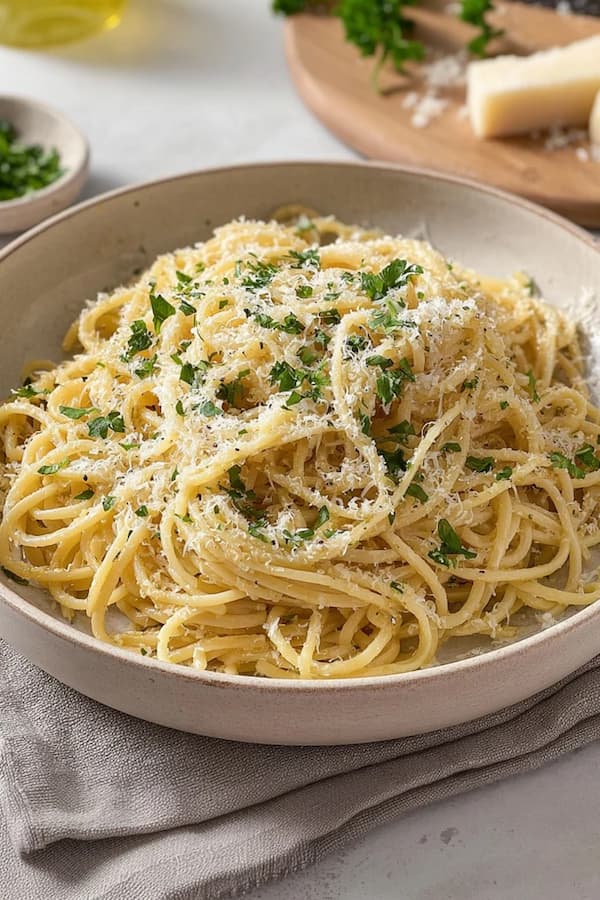
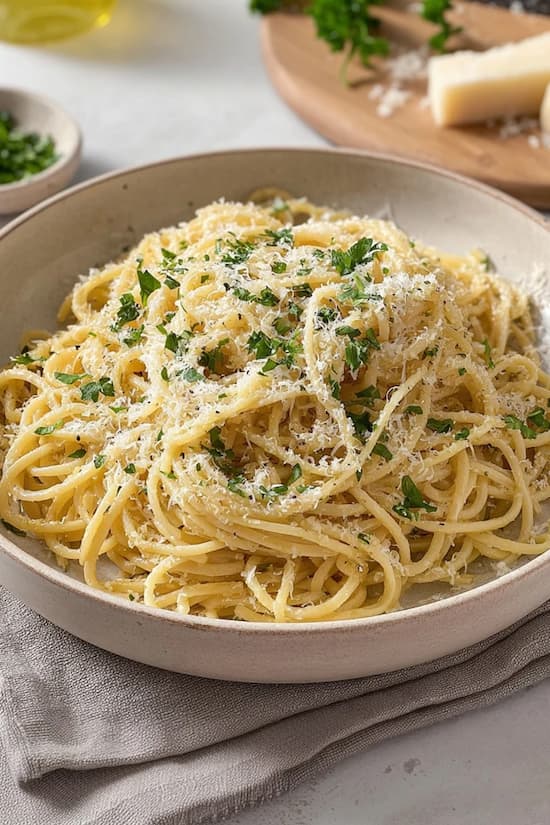
Garlic parmesan butter noodles are the ultimate comfort food for those nights when you want a warm meal but don’t have the energy for a complex project.
This dish relies on the perfect marriage of salty cheese and mellow, sautéed garlic to turn a simple box of pasta into something elegant.
It is a reliable, fast recipe that works just as well as a side dish or a main course for the whole family.
Ingredients
This recipe makes 4 servings, making it a great choice for a quick family dinner or a couple of days of easy leftovers.
- 1 pound (16 ounces) dry pasta (fettuccine, linguine, or egg noodles work best)
- 1/2 cup (1 stick) unsalted butter
- 4 cloves garlic, minced
- 1/2 cup freshly grated Parmesan cheese
- 1/4 cup heavy cream (optional, for extra silkiness)
- 1/2 teaspoon salt
- 1/2 teaspoon black pepper
- 2 tablespoons fresh parsley, chopped
- 1/2 cup reserved pasta water
The Butter
The soul of this “top-notch” dish is the butter. While it might seem like a simple fat, the way you treat the butter dictates the entire flavor of the noodles. You want to melt it slowly over low heat so it doesn’t burn or separate too quickly.
This slow melt creates a rich, velvety coating that sticks to the pasta much better than olive oil ever could.
I recommend using unsalted butter so you can control the salt level yourself. Parmesan cheese is naturally very salty, so using salted butter can often push the dish over the edge into being unpleasantly seasoned.
By starting with a neutral, high-quality butter, you allow the nutty aroma of the garlic and the sharp tang of the cheese to take center stage. It is a small choice that results in a much more balanced and professional-tasting meal.
Water Boil
Fill a large pot with water and add a generous tablespoon of salt. Bring it to a rolling boil. Add your pasta and cook it according to the package directions, but aim for “al dente,” which means the noodle still has a slight firmness when you bite into it.
If you overcook the pasta here, it will turn into mush when you toss it with the hot butter sauce later.
Starch Save
Before you drain the pasta, take a measuring cup and scoop out about a cup of the boiling pasta water. This cloudy, starchy liquid is the secret to a professional sauce.
Most home cooks pour this down the drain, but it is actually what helps the butter and cheese bind to the noodles. Once you have your water saved, drain the rest of the pasta and set it aside.
Garlic Infuse
In the same pot you used for the pasta, melt the stick of butter over medium-low heat. Add the minced garlic and a pinch of salt.
Cook the garlic for about two minutes, stirring constantly. You are not looking to brown the garlic; you just want it to become soft and fragrant. If the garlic turns brown or black, it will taste bitter, and you will have to start the sauce over.
Sauce Build
If you are using heavy cream for a richer version, pour it into the butter and garlic now. Whisk it together and let it simmer for one minute.
If you are skipping the cream, simply move on to the next step. Add half of your reserved pasta water to the butter. This creates an emulsion, which is a fancy way of saying the fat and water join together to make a creamy liquid.
Noodle Toss
Add the cooked noodles back into the pot with the garlic butter. Use tongs to toss the pasta thoroughly so every strand is coated.
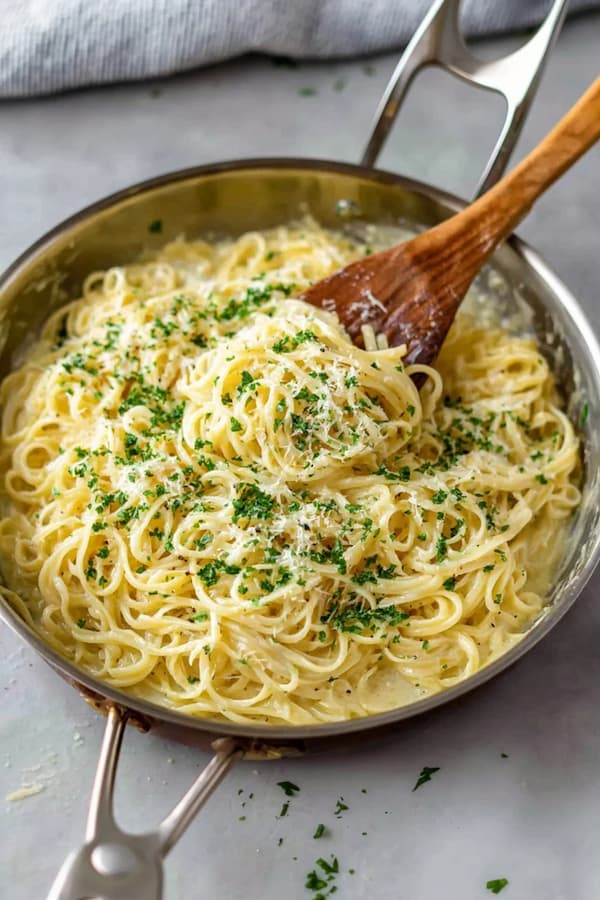
While the noodles are still hot, sprinkle in the Parmesan cheese and the black pepper. The residual heat from the pasta will melt the cheese into the butter, creating a thick, glossy sauce that clings to the noodles.
Final Polish
If the noodles look a little dry or the cheese is clumping, add a few more splashes of the reserved pasta water. This will loosen the sauce and make it silky again. Stir in the fresh parsley at the very end to keep its color bright and its flavor fresh.
Serve the noodles immediately in warm bowls, perhaps with an extra dusting of cheese on top for good measure.
Better Emulsion
To get a “top-notch” sauce, the temperature of the cheese matters. If you use pre-shredded cheese from a green can or a plastic bag, it contains anti-caking agents like potato starch.
These agents prevent the cheese from melting smoothly and can make your sauce feel gritty. For the best result, buy a wedge of Parmesan and grate it yourself using the fine side of a grater.
Self-grated cheese melts almost instantly into the butter and pasta water. It creates a smooth, uniform coating that feels luxurious on the tongue.
This is the biggest difference between a “basic” butter noodle and a “restaurant-style” garlic parmesan dish. The extra two minutes spent grating the cheese is the best investment you can make for this recipe.
Common Pitfalls
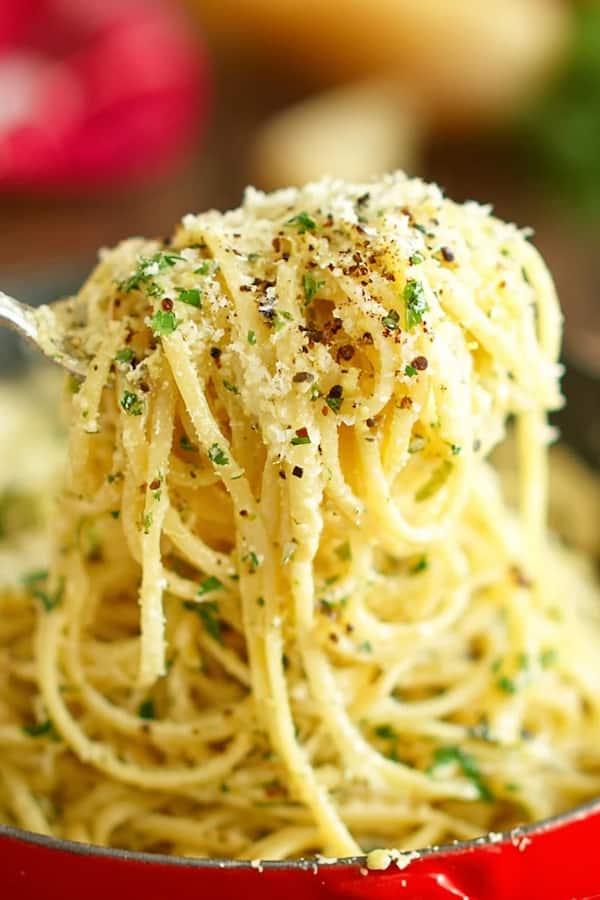
The most frequent mistake is letting the pasta sit in the colander for too long after draining. If the noodles get cold and stick together, they won’t absorb the sauce properly.
You want to move the pasta directly from the strainer back into the butter while it is still steaming hot. This ensures the starch on the surface of the noodle is active and ready to bond with the fat.
Another issue is the heat level. If the pot is too hot when you add the cheese, the proteins in the Parmesan can seize up and turn into rubbery clumps.
Always turn the heat down to low or even off completely before you toss in the cheese. The goal is to melt the cheese gently with the heat already present in the noodles and the butter.
Can I Add Protein To This Dish?
Absolutely. Garlic parmesan noodles are a perfect base for many different proteins. Sliced grilled chicken, sautéed shrimp, or even crispy bacon bits work perfectly.
If you want to keep it vegetarian, you can toss in some roasted broccoli or sautéed spinach. The butter and garlic flavor profile is neutral enough that it won’t clash with most meats or vegetables, making it a great “clean out the fridge” meal.
What Is The Best Pasta Shape To Use?
While you can use any pasta, long and flat noodles like fettuccine or linguine are the gold standard for butter sauces. The wide surface area of these noodles allows them to hold onto more of the garlic butter and cheese.
If you prefer short pasta, penne or fusilli are good choices because the sauce gets trapped inside the tubes or the spirals.
Egg noodles are also a classic choice, as they have a soft, rich flavor that complements the butter perfectly.
Ingredients
Method
- Fill a large pot with water and add a generous tablespoon of salt. Bring it to a rolling boil. Add your pasta and cook it according to the package directions, but aim for “al dente,” which means the noodle still has a slight firmness when you bite into it.
- Before you drain the pasta, take a measuring cup and scoop out about a cup of the boiling pasta water.
- In the same pot you used for the pasta, melt the stick of butter over medium-low heat. Add the minced garlic and a pinch of salt. Cook the garlic for about two minutes, stirring constantly.
- If you are using heavy cream for a richer version, pour it into the butter and garlic now. Whisk it together and let it simmer for one minute.
- If you are skipping the cream, simply move on to the next step. Add half of your reserved pasta water to the butter.
- Add the cooked noodles back into the pot with the garlic butter. Use tongs to toss the pasta thoroughly so every strand is coated.
- While the noodles are still hot, sprinkle in the Parmesan cheese and the black pepper
- If the noodles look a little dry or the cheese is clumping, add a few more splashes of the reserved pasta water. This will loosen the sauce and make it silky again. Stir in the fresh parsley at the very end to keep its color bright and its flavor fresh.
- Serve the noodles immediately in warm bowls, perhaps with an extra dusting of cheese on top for good measure.