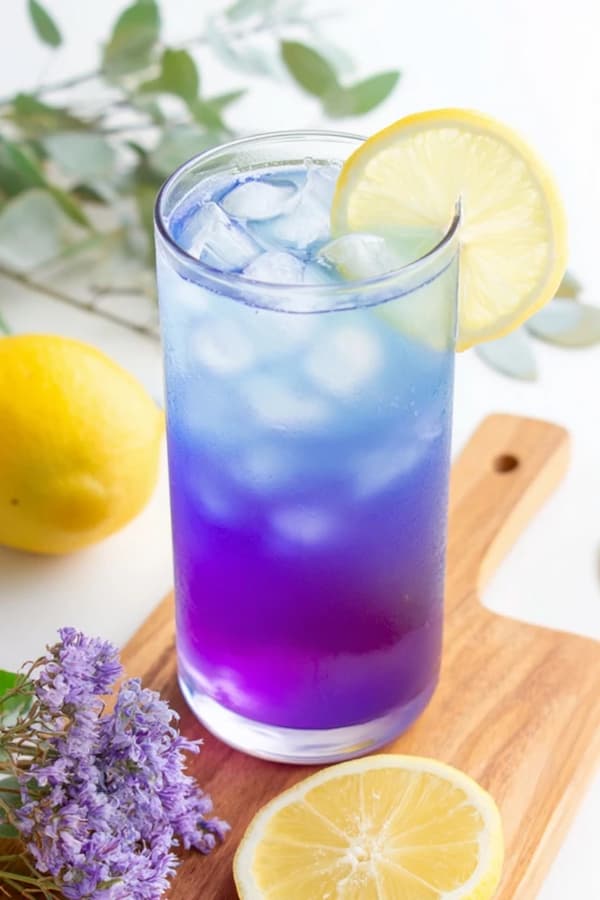
Butterfly pea flower lemonade is a magical drink that changes color right before your eyes, moving from a deep blue to a bright purple.
This natural phenomenon happens because the flowers are sensitive to acidity, making it a perfect science experiment you can actually drink.
It is a refreshing, caffeine-free beverage that looks incredibly sophisticated but is actually very easy to make at home.
Ingredients
Yields: 4 servings
- 2 tablespoons dried butterfly pea flowers
- 2 cups boiling water
- 1/2 cup fresh lemon juice (about 3-4 large lemons)
- 1/2 cup granulated sugar or honey
- 2 cups cold water
- 2 cups ice cubes
- Fresh mint leaves and lemon slices for garnish
Steep the Flowers
Start by placing your dried butterfly pea flowers into a heat-proof glass pitcher or a large jar. Pour the two cups of boiling water directly over the dried petals and let them sit for at least ten minutes. You will see the water turn an intense, dark blue almost immediately.
As the flowers steep, they release their natural pigments and a very mild, earthy flavor that is similar to a light green tea. Once the ten minutes are up, use a fine-mesh strainer to remove the flowers and discard them, leaving you with a beautiful blue liquid base.
Dissolve the Sweetener
While your blue tea is still hot, add your sugar or honey to the pitcher. Use a long spoon to stir the mixture until you can no longer see any crystals at the bottom. Adding the sweetener while the water is hot ensures that it dissolves completely, so you don’t end up with a gritty drink.
If you prefer a more natural option, you can use agave nectar or maple syrup, but keep in mind that darker syrups might slightly dull the bright blue color of the tea.
Cool the Base
Add the two cups of cold water to your blue tea mixture to bring the temperature down. You don’t want to add the lemon juice while the tea is still steaming hot, or it might change the flavor slightly. Give the mixture a quick stir and place the pitcher in the refrigerator for about twenty minutes. This cooling period is important because the “magic” color change looks much more dramatic when the liquids are chilled and poured over fresh ice.
Squeeze the Citrus
Take your fresh lemons and roll them firmly on the counter with your palm to loosen the juices. Cut them in half and squeeze them into a small separate glass or jar until you have half a cup of juice. Be sure to strain out any seeds or large bits of pulp.
This clear, yellow liquid is the “activator” for your drink. The citric acid in the lemon juice is what reacts with the pH-sensitive antioxidants in the butterfly pea flowers to create that famous purple transformation.
Prepare the Glasses
Grab four tall glasses and fill them to the brim with ice cubes. If you want to make the drink look even more professional, you can use some of the blue tea to make blue ice cubes in advance. This prevents the drink from becoming watered down as the ice melts.
Place a thin slice of lemon and a sprig of fresh mint inside each glass before you start pouring. Having everything ready beforehand makes the final presentation much smoother for your guests.
Pour the Blue
Carefully pour the sweetened blue tea into each glass, filling them about three-quarters of the way to the top. At this stage, the drink will look like a deep, mysterious ocean blue. This is the perfect time to bring the glasses to the table if you are serving friends.
Half the fun of this recipe is watching the reaction happen in real-time, so you want to save the final step for the very last second before drinking.
Trigger the Change
Slowly pour a small amount of the fresh lemon juice into each glass of blue tea. As the yellow juice hits the blue liquid, you will see swirls of bright pink and purple start to form. The more lemon juice you add, the more the color will shift toward a magenta hue.
Use a straw or a long spoon to give each glass a gentle stir so the colors blend into a uniform, vibrant purple. It is a simple chemical reaction that never fails to impress everyone in the room.
Adjust the Flavor
Take a small sip of your finished lemonade to check the balance. If it feels too tart, you can stir in a tiny bit more sugar or honey. If you want it to be more refreshing, add a splash of sparkling water or club soda for some bubbles.
The final drink should be crisp, cold, and perfectly sweet with a floral undertone that isn’t too overpowering. Serve it immediately while the ice is still solid and the colors are at their brightest.
Tips to Make it Perfect
- Use Filtered Water: Using filtered water for the tea helps keep the blue color clear and bright rather than cloudy.
- Fresh Lemons Only: Avoid the bottled juice; the fresh scent of real lemons makes a huge difference in such a simple recipe.
- Control the Heat: Don’t boil the flowers for too long; a simple ten-minute steep is enough to get the color without any bitterness.
- Layer the Drink: If you pour the lemon juice very slowly over the back of a spoon, you can create a beautiful layered effect with blue on top and purple on the bottom.
Why does butterfly pea flower change color?
The butterfly pea flower contains a high concentration of pigments called anthocyanins. These are the same natural compounds found in blueberries and red cabbage. These pigments are very sensitive to pH levels, which means they change their structure when they come into contact with something acidic.
When you add lemon juice, which is highly acidic, it lowers the pH of the tea and causes the molecules to reflect light differently, shifting the color from blue to purple or even pink.
Can I make this lemonade ahead of time?
You can definitely prepare the blue tea base and the lemon juice separately up to two days in advance. Keep both liquids in sealed jars in the refrigerator until you are ready to serve. However, do not mix the lemon juice into the blue tea until the moment you want to drink it.
If you mix them early, the color will turn purple immediately in the pitcher, and you will miss out on the fun visual experience of the transformation in each glass.
Ingredients
Method
- Place the dried butterfly pea flowers in a heat-proof pitcher and pour in the boiling water. Let the petals steep for 10 minutes until the liquid turns a deep, dark blue, then strain the flowers out.
- While the blue tea is still hot, stir in your sugar or honey until it is completely dissolved. This ensures your lemonade is perfectly smooth without any grainy texture at the bottom of the glass
- Add the cold water to the pitcher and place it in the fridge to chill. While the base cools, squeeze your fresh lemons into a separate container, ensuring you remove all seeds and pulp from the juice.
- Fill your serving glasses to the top with ice cubes and add a few fresh mint leaves or lemon slices for extra fragrance. Pour the chilled blue tea into each glass, filling them about three-quarters of the way up.
- Slowly pour the fresh lemon juice over the blue tea in each glass. Watch as the color instantly shifts from blue to a vibrant purple, then give it a gentle stir and serve immediately to your guests.
Notes
- Use Filtered Water: Using filtered water for the tea helps keep the blue color clear and bright rather than cloudy.
- Fresh Lemons Only: Avoid the bottled juice; the fresh scent of real lemons makes a huge difference in such a simple recipe.
- Control the Heat: Don’t boil the flowers for too long; a simple ten-minute steep is enough to get the color without any bitterness.
- Layer the Drink: If you pour the lemon juice very slowly over the back of a spoon, you can create a beautiful layered effect with blue on top and purple on the bottom.