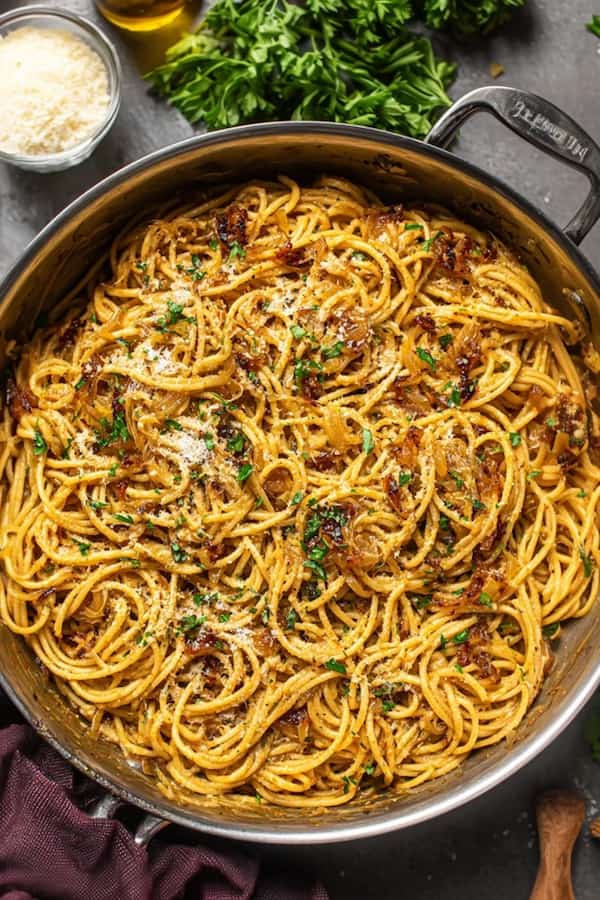
Caramelized onion pasta is a deeply comforting meal that turns a few humble pantry staples into something truly elegant. The slow-cooked onions melt into a sweet, savory sauce that clings perfectly to every strand of noodles.
It is a slow-process dish that rewards your patience with a complex flavor you simply cannot get from a jar.
Ingredients
Yields: 4 generous servings
- 1 pound long pasta (like linguine or fettuccine)
- 3 large yellow onions, thinly sliced
- 4 tablespoons unsalted butter
- 2 tablespoons extra virgin olive oil
- 3 cloves garlic, minced
- 1/2 cup dry white wine (or vegetable broth)
- 1/2 cup freshly grated Parmesan cheese
- 1/4 cup heavy cream (optional)
- 1 tablespoon balsamic vinegar
- 1/2 teaspoon salt
- 1/2 teaspoon black pepper
- 1/2 teaspoon dried thyme
- Fresh parsley for garnish
Slice the Onions
Start by peeling your onions and cutting them in half from the root to the stem. Place the flat side down on your cutting board and slice them into very thin half-moons.
You want the slices to be as uniform as possible so they cook at the same rate. Don’t be alarmed by the massive pile of raw onions on your board; they will shrink down to a fraction of their size once they hit the heat and lose their moisture.
Melt the Fat
Place a large, heavy-bottomed skillet or a Dutch oven over medium heat. Add the butter and the olive oil, allowing the butter to melt and mingle with the oil until the mixture starts to foam slightly.
The oil helps prevent the butter from burning, while the butter provides that rich, nutty flavor essential for caramelization. Once the pan is hot, toss in the sliced onions and use a wooden spoon to coat them thoroughly in the fat.
Soften the Batch
For the first ten minutes, keep the heat at a medium level and stir the onions frequently. You want them to soften and turn translucent without developing too much color right away. During this phase, the onions release their natural sugars and water.
Sprinkle in your salt now, as it helps draw out the moisture faster. If the onions look like they are starting to dry out or stick to the bottom of the pan, you can add a tiny splash of water to keep things moving.
Slow the Heat
Turn the heat down to medium-low and settle in for the long haul. True caramelization takes time and cannot be rushed with high heat, which would only result in burnt, bitter edges. Stir the onions every five to seven minutes for the next thirty to forty minutes.
You will watch them transform from pale white to a soft gold, and finally to a deep, jammy mahogany color. This slow browning process is where all the deep, savory-sweet flavor of the dish is born.
Boil the Water
While the onions finish their transformation, bring a large pot of salted water to a rolling boil. Add your pasta and cook it for about one or two minutes less than the package directions suggest.
You want the noodles to be slightly undercooked, or “al dente,” because they will finish cooking directly in the sauce. Before you drain the pasta, scoop out at least one full cup of the starchy pasta water. This cloudy water is the secret ingredient that helps bind the sauce to the noodles.
Deglaze the Pan
Once the onions are dark and jammy, add the minced garlic and dried thyme to the skillet. Cook for just one minute until you can smell the garlic. Pour in the white wine or broth and use your wooden spoon to scrape up all the brown bits stuck to the bottom of the pan.
Those bits, known as “fond,” are packed with concentrated flavor. Let the liquid simmer for a few minutes until it has reduced by half and the sharp smell of alcohol has disappeared.
Finish the Base
Stir in the balsamic vinegar and the black pepper. The vinegar provides a necessary hit of acidity that cuts through the sweetness of the onions and the richness of the butter. If you want a creamier version of this dish, stir in the heavy cream now and let it come to a very gentle simmer.
The sauce should look thick, dark, and incredibly fragrant. Turn the heat to low so the sauce stays warm while you prep the final toss.
Toss the Pasta
Add the cooked noodles directly into the skillet with the caramelized onions. Pour in half of your reserved pasta water and half of the grated Parmesan cheese. Use tongs to lift and swirl the pasta so every strand is coated in the onion mixture.
If the pasta looks dry, add more of the starchy water and the rest of the cheese. The starch and the fat will emulsify into a glossy, silky sauce that sticks to the pasta perfectly.
Garnish and Serve
Give the pasta one final taste to see if it needs more salt or pepper. Turn off the heat and transfer the pasta to warm bowls. Sprinkle a generous amount of fresh parsley over the top to add a bit of brightness and color to the deep brown dish.
Serve it immediately while it is hot and the sauce is at its creamiest. This is a rich meal, so it pairs beautifully with a simple green side salad to balance out the flavors.
Tips to Make it Perfect
- Be Patient: Do not try to speed up the onions; if you burn them, the sauce will be bitter and you will have to start over.
- Save the Water: Always keep more pasta water than you think you need; it is the only way to get that restaurant-quality glossy finish.
- Fresh Cheese: Grate your Parmesan by hand; pre-shredded cheese is coated in starch and won’t melt into the sauce properly.
- Heavy Pan: Use a heavy skillet like cast iron or stainless steel for the most even heat distribution during the long onion cook.
Can I add other vegetables to this pasta?
While the onions are the star, you can definitely add other ingredients to beef up the meal. Sautéed mushrooms are a classic pairing that adds a wonderful earthy flavor to the sweetness of the onions.
You could also stir in a few handfuls of fresh baby spinach at the very end; the residual heat from the pasta will wilt the leaves in seconds. If you want a bit of crunch, toasted walnuts or pine nuts sprinkled on top before serving add a great texture contrast to the soft noodles.
What is the best way to reheat leftovers?
Caramelized onion pasta stores well in the fridge for about three days, but it tends to thicken up significantly as it sits. To reheat it, place the pasta in a skillet over medium-low heat and add a splash of water or broth.
Stir gently as it warms up to help the sauce loosen and become creamy again. Avoid using high heat or the microwave if possible, as this can cause the oil in the sauce to separate and make the dish feel greasy.
Ingredients
Method
- Start by peeling your onions and cutting them in half from the root to the stem. Place the flat side down on your cutting board and slice them into very thin half-moons.
- Place a large, heavy-bottomed skillet or a Dutch oven over medium heat. Add the butter and the olive oil, allowing the butter to melt and mingle with the oil until the mixture starts to foam slightly. Once the pan is hot, toss in the sliced onions and use a wooden spoon to coat them thoroughly in the fat.
- For the first ten minutes, keep the heat at a medium level and stir the onions frequently. You want them to soften and turn translucent without developing too much color right away. Sprinkle in your salt now, as it helps draw out the moisture faster.
- Turn the heat down to medium-low and settle in for the long haul. True caramelization takes time and cannot be rushed with high heat, which would only result in burnt, bitter edges. Stir the onions every five to seven minutes for the next thirty to forty minutes.
- Bring a large pot of salted water to a rolling boil. Add your pasta and cook it for about one or two minutes less than the package directions suggest. Before you drain the pasta, scoop out at least one full cup of the starchy pasta water.
- Once the onions are dark and jammy, add the minced garlic and dried thyme to the skillet. Cook for just one minute until you can smell the garlic. Pour in the white wine or broth and use your wooden spoon to scrape up all the brown bits stuck to the bottom of the pan.
- Let the liquid simmer for a few minutes until it has reduced by half and the sharp smell of alcohol has disappeared. Stir in the balsamic vinegar and the black pepper. If you want a creamier version of this dish, stir in the heavy cream now and let it come to a very gentle simmer.
- Add the cooked noodles directly into the skillet with the caramelized onions. Pour in half of your reserved pasta water and half of the grated Parmesan cheese. Use tongs to lift and swirl the pasta so every strand is coated in the onion mixture. Give the pasta one final taste to see if it needs more salt or pepper.
Notes
- Be Patient: Do not try to speed up the onions; if you burn them, the sauce will be bitter and you will have to start over.
- Save the Water: Always keep more pasta water than you think you need; it is the only way to get that restaurant-quality glossy finish.
- Fresh Cheese: Grate your Parmesan by hand; pre-shredded cheese is coated in starch and won’t melt into the sauce properly.
- Heavy Pan: Use a heavy skillet like cast iron or stainless steel for the most even heat distribution during the long onion cook.