Making your own enchilada sauce at home is a simple way to take your Mexican-inspired dinners to a whole new level of flavor. This recipe uses basic pantry staples to create a sauce that is much richer and more vibrant than anything you will find in a tin at the grocery store.
It only takes about fifteen minutes to prepare, meaning you can whip it up while you get your other ingredients ready for the oven.
Ingredients
Yields: 8 servings (about 2 cups)
- 1/4 cup neutral oil (like vegetable or canola oil)
- 1/4 cup all-purpose flour
- 3 tablespoons chili powder
- 1/2 teaspoon garlic powder
- 1/2 teaspoon onion powder
- 1/2 teaspoon dried oregano
- 1/4 teaspoon ground cumin
- 1/4 teaspoon salt
- 2 tablespoons tomato paste
- 2 cups vegetable broth
- 1 teaspoon apple cider vinegar
Heat the Oil
Start by placing a medium-sized saucepan over medium heat. Pour in your neutral oil and let it warm up for about a minute. You want the oil to be hot enough that it shimmers, but not so hot that it starts to smoke.
Using a neutral oil is important here because it allows the spices to be the main flavor without adding any heavy olive or coconut notes to the base of your sauce.
Create the Roux
Once the oil is hot, whisk in the all-purpose flour. This mixture of fat and flour is called a roux, and it is what gives the enchilada sauce its thick, velvety body. Keep whisking constantly for about two minutes.
You are looking for the flour to cook slightly so it loses its raw taste, but you don’t want it to turn dark brown. The mixture should look bubbly and have a slightly nutty aroma before you move on to the next step.
Bloom the Spices
Add the chili powder, garlic powder, onion powder, oregano, cumin, and salt directly into the oil and flour mixture. Stir everything together for about thirty seconds to one minute.
This process is known as “blooming” the spices, which helps release their essential oils and deepens their flavor. Be very careful during this step, as dried spices can burn quickly. If the mixture starts to smell scorched, move the pan off the heat immediately.
Stir the Paste
Add the tomato paste to the spiced roux and stir it in well. The tomato paste adds a hidden layer of umami and a beautiful dark red color to the finished sauce.
It might look a bit thick and clumpy at this point, but that is perfectly normal. Make sure the paste is fully incorporated with the oil and spices so that there are no bright red streaks left in the darker spice mixture.
Pour the Liquid
Slowly pour in the vegetable broth while whisking vigorously with your other hand. It is best to add the liquid in small splashes at first to prevent lumps from forming in your flour base.
Once about half of the broth is in and the mixture is smooth, you can pour in the rest of the liquid. Switch from a whisk to a wooden spoon to make sure you are scraping the bottom and corners of the pan so nothing sticks or burns.
Simmer the Sauce
Bring the sauce up to a gentle simmer over medium-high heat. Once it starts to bubble, turn the heat down to low. Let the sauce cook uncovered for about eight to ten minutes.
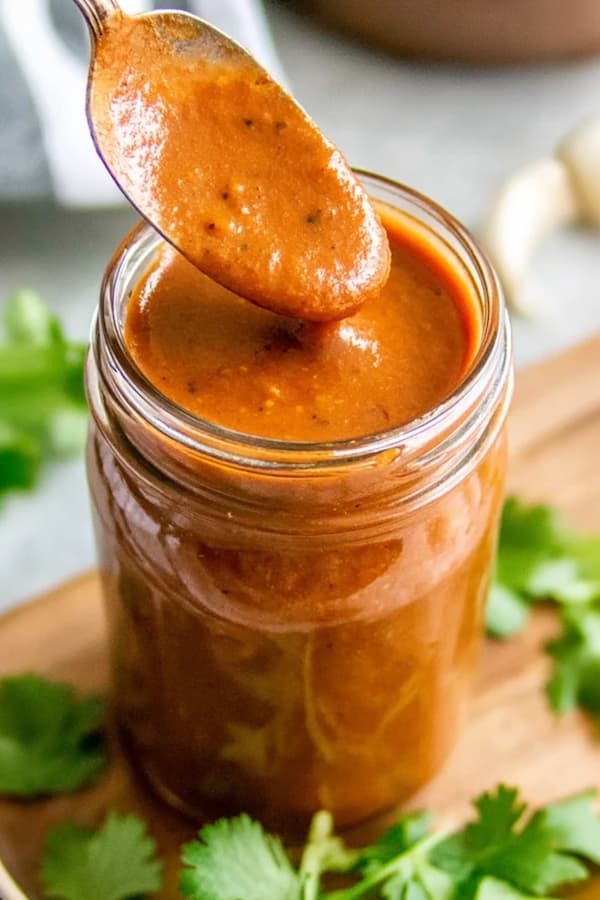
As it simmers, the flour will hydrate and the liquid will reduce, resulting in a sauce that is thick enough to coat the back of a spoon. It should look glossy and smooth, with a deep brick-red color that smells incredible.
Balance the Tang
Right before you take the pan off the stove, stir in the apple cider vinegar. This tiny amount of acid is a secret trick that brightens all the heavy, earthy spices and makes the sauce taste fresh.
If you don’t have apple cider vinegar, a squeeze of lime juice or a splash of white vinegar will work just as well. Give the sauce one final taste to see if it needs an extra pinch of salt to suit your preference.
Let it Cool
Remove the pan from the heat and let the sauce sit for a few minutes. As it cools down slightly, it will continue to thicken into a perfect consistency for pouring over tortillas.
If you aren’t using the sauce right away, you can pour it into a glass jar and keep it in the fridge. It actually tastes even better the next day after the flavors have had more time to meld together.
Tips to Make it Perfect
- Whisk Constantly: Do not walk away from the stove during the first few steps; the flour and spices can go from perfect to burnt in just a few seconds.
- Check Your Chili: Not all chili powders are the same; make sure you are using a mild American-style chili powder blend rather than pure ground cayenne pepper, or the sauce will be too spicy to eat.
- Smooth it Out: If you do end up with a few lumps, don’t worry. You can pour the finished sauce through a fine-mesh strainer or give it a quick spin with an immersion blender.
- Broth Quality: Use a high-quality vegetable broth, as this makes up the bulk of the liquid and provides a lot of the underlying savory flavor.
Can I make this enchilada sauce gluten-free?
You can easily make this recipe gluten-free by swapping the all-purpose flour for a gluten-free all-purpose flour blend. Another option is to use cornstarch instead of flour, but you have to change the method slightly.
If using cornstarch, do not add it to the oil at the beginning. Instead, mix the cornstarch with a little bit of cold broth to make a slurry and whisk it into the simmering sauce at the very end until it thickens.
How long does homemade enchilada sauce last?
This sauce keeps very well in the refrigerator for up to five to seven days if stored in an airtight container. It is a great item to meal prep on a Sunday if you plan on having Mexican food later in the week. You can also freeze this sauce for up to three months.
Just make sure to leave a little bit of space at the top of your container or freezer bag, as the liquid will expand slightly as it freezes.
Ingredients
Method
- Start by placing a medium-sized saucepan over medium heat. Pour in your neutral oil and let it warm up for about a minute. Once the oil is hot, whisk in the all-purpose flour. This mixture of fat and flour is called a roux, and it is what gives the enchilada sauce its thick, velvety body. Keep whisking constantly for about two minutes.
- You are looking for the flour to cook slightly so it loses its raw taste, but you don’t want it to turn dark brown.
- Add the chili powder, garlic powder, onion powder, oregano, cumin, and salt directly into the oil and flour mixture. Stir everything together for about thirty seconds to one minute. If the mixture starts to smell scorched, move the pan off the heat immediately.
- Add the tomato paste to the spiced roux and stir it in well. The tomato paste adds a hidden layer of umami and a beautiful dark red color to the finished sauce.
- Slowly pour in the vegetable broth while whisking vigorously with your other hand. It is best to add the liquid in small splashes at first to prevent lumps from forming in your flour base. Once about half of the broth is in and the mixture is smooth, you can pour in the rest of the liquid.
- Bring the sauce up to a gentle simmer over medium-high heat. Once it starts to bubble, turn the heat down to low. Let the sauce cook uncovered for about eight to ten minutes.
- Right before you take the pan off the stove, stir in the apple cider vinegar. This tiny amount of acid is a secret trick that brightens all the heavy, earthy spices and makes the sauce taste fresh.
- Remove the pan from the heat and let the sauce sit for a few minutes. As it cools down slightly, it will continue to thicken into a perfect consistency for pouring over tortillas.
Notes
- Whisk Constantly: Do not walk away from the stove during the first few steps; the flour and spices can go from perfect to burnt in just a few seconds.
- Check Your Chili: Not all chili powders are the same; make sure you are using a mild American-style chili powder blend rather than pure ground cayenne pepper, or the sauce will be too spicy to eat.
- Smooth it Out: If you do end up with a few lumps, don’t worry. You can pour the finished sauce through a fine-mesh strainer or give it a quick spin with an immersion blender.
- Broth Quality: Use a high-quality vegetable broth, as this makes up the bulk of the liquid and provides a lot of the underlying savory flavor.