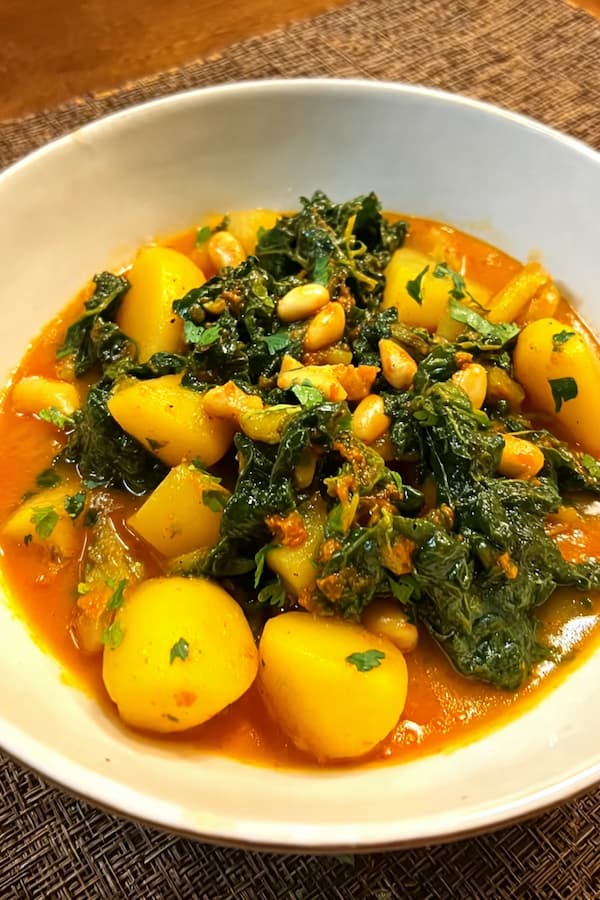
This gochujang potato stew is a one-pot weeknight meal built around potatoes, white beans, kale, and a broth made bold with gochujang paste and soy sauce.
The heat from the gochujang builds slowly rather than hitting all at once, and the potatoes soak up the spiced broth as they cook — making every spoonful more flavorful than the last.
It’s the kind of stew that tastes like it took longer than 35 minutes to make.
Ingredients
Serves: 4
For the stew:
- 1.5 lbs (about 700g) yellow or gold potatoes, cut into bite-sized chunks
- 1 can (15 oz) white beans, drained and rinsed
- 3 cups kale, stems removed and roughly chopped
- 1 medium yellow onion, diced
- 4 cloves garlic, minced
- 1 tablespoon fresh ginger, grated
- 2 tablespoons gochujang paste (adjust to heat preference)
- 1 tablespoon soy sauce
- 1 tablespoon sesame oil
- 1 tablespoon neutral oil (for cooking)
- 3 cups vegetable broth
- 1 cup water
- 1 teaspoon rice vinegar
- 1/2 teaspoon smoked paprika
- 1/2 teaspoon onion powder
- Salt and black pepper to taste
To serve:
- Cooked rice or crusty bread
- Sesame seeds
- Sliced spring onions
- A drizzle of sesame oil
- Plain yogurt or sour cream (optional, to cool the heat)
Why You Must Try This Gochujang Potato Stew Recipe
Gochujang is a Korean fermented chili paste that brings heat, sweetness, and a slight tang all at once — it’s not interchangeable with regular chili paste or sriracha. When it goes into a broth with garlic, ginger, and soy sauce, it creates something with far more depth than the ingredient count suggests.
Potatoes are the right vehicle for this kind of broth because they absorb it fully as they cook, turning each chunk into something savory all the way through.
The white beans add protein and make the stew filling enough to serve as a main course without needing anything else alongside it.
Build the Flavor Base
Heat the neutral oil in a large pot or Dutch oven over medium heat. Add the diced onion and cook for 5 to 6 minutes until soft and translucent. Add the garlic and ginger and cook for another 2 minutes, stirring frequently.
The ginger is doing real work here — it adds a subtle heat and brightness that differentiates this stew from a standard vegetable broth situation. Add the smoked paprika and onion powder and stir for 30 seconds. Now add the gochujang paste and stir it into the aromatics, letting it cook for about a minute.
Cooking the gochujang briefly in the oil before adding liquid deepens its flavor and takes off some of the raw fermented edge.
Add Potatoes and Broth
Add the potato chunks to the pot and stir them through the gochujang base so they pick up some color and flavor before the liquid goes in. Pour in the vegetable broth and water.
Add the soy sauce and stir to combine. Bring the pot to a boil over medium-high heat, then reduce to a steady simmer. Cook uncovered for 15 to 18 minutes until the potatoes are completely tender when pierced with a fork. Don’t rush this stage — undercooked potatoes in a stew are one of those things that ruins an otherwise good dish.
Taste the broth while the potatoes cook and adjust the soy sauce or gochujang if it needs more salt or heat.
Beans and Kale Go In Last
Once the potatoes are cooked through, add the drained white beans and stir them through the broth. Let them simmer for 3 to 4 minutes so they absorb some of the surrounding flavor rather than just sitting in it.
Add the chopped kale on top and press it down into the liquid. Cover the pot and let the kale steam and wilt for 3 minutes. Remove the lid and stir everything together. The kale should be wilted but still have some texture — it goes from bright green to olive quickly if you overcook it, so watch the timing.
Stir in the rice vinegar and sesame oil at the very end, off the heat.
Taste and Finish
Before serving, taste the stew one more time. Gochujang varies in heat level between brands, so your stew may need adjusting. If the heat is too strong, a teaspoon of honey or a small spoonful of plain yogurt stirred through softens it.
If it needs more depth, a few more drops of soy sauce or another small spoonful of sesame oil usually does it. The rice vinegar added at the end is doing important work — it lifts the whole broth and keeps the gochujang from tasting flat or overly heavy.
If the stew has thickened more than you’d like, add a splash more water and stir.
Serve It Right
Ladle into bowls and finish with a drizzle of sesame oil, a scatter of sesame seeds, and sliced spring onions. Serve with rice on the side for a complete meal or with crusty bread for something more casual.
A small spoonful of plain yogurt or sour cream on top cools the heat and adds a creamy contrast to the spiced broth — worth offering even if not everyone uses it.
This stew is good immediately and better the next day, once the potatoes have had time to absorb more of the broth overnight.
How To Make This Gochujang Potato Stew Recipe Better
These additions take the stew in a slightly different direction each time:
Add a tablespoon of miso paste. Stir white or red miso into the broth with the soy sauce. It adds another layer of fermented depth that works naturally alongside gochujang and makes the broth taste richer without making it heavier.
Use coconut milk instead of some of the water. Replace one cup of water with a can of coconut milk. It makes the broth creamier and slightly sweeter, which mellows the gochujang heat and gives the whole stew a more South Asian direction.
Add a soft boiled egg on top. Halve a soft-boiled egg and rest it in the bowl just before serving. The yolk breaks into the broth and adds richness. It’s a small addition that makes the bowl feel more complete as a meal.
Swap kale for bok choy. Baby bok choy halved and added in the last 3 minutes cooks faster than kale and has a milder, slightly sweeter flavor. It stays more tender and works well if you want less bitterness in the finished stew.
Top with crispy tofu. Press and cube firm tofu, toss in a little soy sauce and sesame oil, and pan-fry until golden on all sides. Add it to the top of each bowl just before serving. It adds protein, texture, and makes the stew more substantial for bigger appetites.
Storage
Store leftover stew in an airtight container in the fridge for up to 4 days. The potatoes will absorb more broth as it sits and the stew will thicken overnight — add a splash of water or vegetable broth when reheating on the stovetop and stir over medium-low heat until warmed through.
The flavor deepens after a day in the fridge, which makes this a solid meal prep option. Freeze for up to 2 months — the potatoes change texture slightly after freezing but remain edible. The kale holds up better through freezing than you might expect.
What Does Gochujang Taste Like?
Gochujang is a Korean fermented chili paste made from red chili powder, glutinous rice, fermented soybeans, and salt. The flavor is a combination of heat, sweetness, and a deep savory quality that comes from the fermentation.
It’s spicier than sriracha but less sharp, and the sweetness is present but not dominant. The fermented note gives it an umami depth that regular chili paste doesn’t have. Heat levels vary by brand — mild gochujang is labeled as such and is a good starting point if you’re new to it.
A tablespoon goes a long way in a broth-based dish, so start with less than the recipe calls for if you’re unsure of your heat tolerance and adjust from there.
Can You Make This Stew Without Gochujang?
You can, but the dish will be fundamentally different. Gochujang is the defining ingredient — the fermented depth, sweetness, and specific heat it brings can’t be replicated exactly by anything else.
If you don’t have it, the closest substitute is a mix of one tablespoon of sriracha, half a teaspoon of white miso, and half a teaspoon of tomato paste.
It’s not identical but it approximates the balance of heat, sweetness, and savory depth. Doenjang, which is Korean fermented soybean paste, combined with a small amount of chili flakes is another option if you have Korean ingredients on hand.
Gochujang is widely available in Asian grocery stores and increasingly in most large supermarkets — it’s worth tracking down for this recipe.
Gochujang potato stew is one of those recipes that becomes a regular once you’ve made it once. It’s fast, filling, uses mostly pantry ingredients, and the gochujang does most of the flavor work for you. Make it on a weeknight and you’ll have leftovers worth looking forward to the next day.
Ingredients
Method
- Heat neutral oil in a large pot over medium heat. Add onion and cook 5–6 minutes until soft. Add garlic and ginger and cook 2 minutes. Add smoked paprika and onion powder and stir 30 seconds. Add gochujang paste and cook 1 minute, stirring into the aromatics.
- Add potato chunks and stir to coat in the gochujang base. Pour in vegetable broth, water, and soy sauce. Bring to a boil then reduce to a steady simmer. Cook uncovered for 15–18 minutes until potatoes are completely tender when pierced with a fork.
- Stir in drained white beans and simmer 3–4 minutes. Add chopped kale, press into the liquid, and cover. Cook 3 minutes until wilted. Remove lid, stir to combine.
- Stir in rice vinegar and sesame oil off the heat. Taste and adjust — add more soy sauce for salt, more gochujang for heat, or a teaspoon of honey to reduce heat. Add a splash of water if the stew has thickened too much.
- Ladle into bowls. Top with sesame seeds, spring onions, and a drizzle of sesame oil. Serve with rice or bread and a spoonful of yogurt on the side for those who want to cool the heat.
Notes
- Gochujang heat varies by brand — start with 1 tablespoon and add more after tasting
- Cook gochujang in the oil before adding liquid to deepen the flavor
- Rice vinegar added at the end is essential — it lifts the whole broth
- Flavor improves significantly overnight — great for meal prep
- Add a tablespoon of white miso with the soy sauce for extra depth
- Keeps in the fridge for up to 4 days — reheat with a splash of water or broth
- Freezes well for up to 2 months