Building a Buddha bowl is more than just making a meal; it is about creating a balance of textures and nutrients in a single dish.
This recipe focuses on high-protein staples that keep you full and energized throughout a busy day. It is a flexible, vibrant meal that looks as good as it tastes.
Ingredients
This recipe makes 2 servings, which is perfect for a healthy date night or for setting aside a pre-made lunch for tomorrow.
- 1 cup cooked quinoa
- 1 can (15 ounces) chickpeas, drained and rinsed
- 1 block (14 ounces) firm tofu or 1 cup cubed feta cheese
- 2 handfuls fresh baby spinach
- 1 large avocado, sliced
- 1/2 cup shredded carrots
- 1/2 cup shredded cabbage
- 1/2 cup sliced cucumber
- 1/4 cup pumpkin seeds (pepitas)
- 2 tablespoons tahini
- 1 tablespoon lemon juice
- 1 tablespoon maple syrup or honey
- 1 tablespoon soy sauce (if using tofu)
- 2 tablespoons olive oil
- Salt and pepper to taste
The Balance
The core of a “top-notch” Buddha bowl is the ratio of grain to green to protein. You want a base that provides slow-burning energy, which is why we use quinoa. Unlike rice, quinoa is a complete protein, meaning it contains all the amino acids your body needs.
When you pair this with chickpeas and your choice of tofu or cheese, you are creating a powerhouse of a meal that supports muscle recovery and keeps your blood sugar stable.
Texture plays a huge role here as well. A bowl that is all soft ingredients can feel a bit boring. By roasting the chickpeas until they are crunchy and adding raw shredded carrots and pumpkin seeds, you create a varied eating experience.
Every bite should offer something different, from the creamy avocado to the earthy tahini dressing. This variety is what makes a bowl feel like a restaurant-quality dish rather than just a pile of leftovers.
Grain Base
Start by cooking your quinoa if you don’t have some already prepped. Use a two-to-one ratio of water to dry quinoa. Bring it to a boil, then cover and simmer on low for 15 minutes.
Once the water is absorbed, remove the pot from the heat and let it sit with the lid on for five minutes. Fluff it with a fork. This ensures the grains are light and separate rather than clumpy or mushy.
Protein Prep
If you are using tofu, press it between paper towels for ten minutes to remove excess moisture. Cut it into small cubes and toss them in a little soy sauce and olive oil. If you prefer cheese, cube some fresh feta or halloumi.
For the chickpeas, pat them very dry—moisture is the enemy of crunch. Toss the chickpeas with a drizzle of oil and a pinch of salt.
Hot Sear
Place the tofu and chickpeas on a baking sheet. Roast them at 400°F for about 20 minutes. You want the chickpeas to be slightly popping and the tofu to have golden, crispy edges.
If you are using halloumi cheese instead of tofu, you can pan-fry the slices in a dry skillet for two minutes per side until they develop a beautiful brown crust. This heat adds a savory depth to the bowl.
Creamy Whisk
While the proteins are roasting, make your tahini dressing. In a small jar, combine the tahini, lemon juice, maple syrup, and a splash of warm water. Whisk it vigorously until it becomes a smooth, pourable consistency.
Tahini can be stubborn at first and might “seize” or look chunky, but just keep adding a teaspoon of water at a time and whisking until it turns into a pale, creamy sauce.
Green Foundation
Divide the fresh baby spinach between two large bowls. Place a generous scoop of the warm quinoa on top of the spinach.
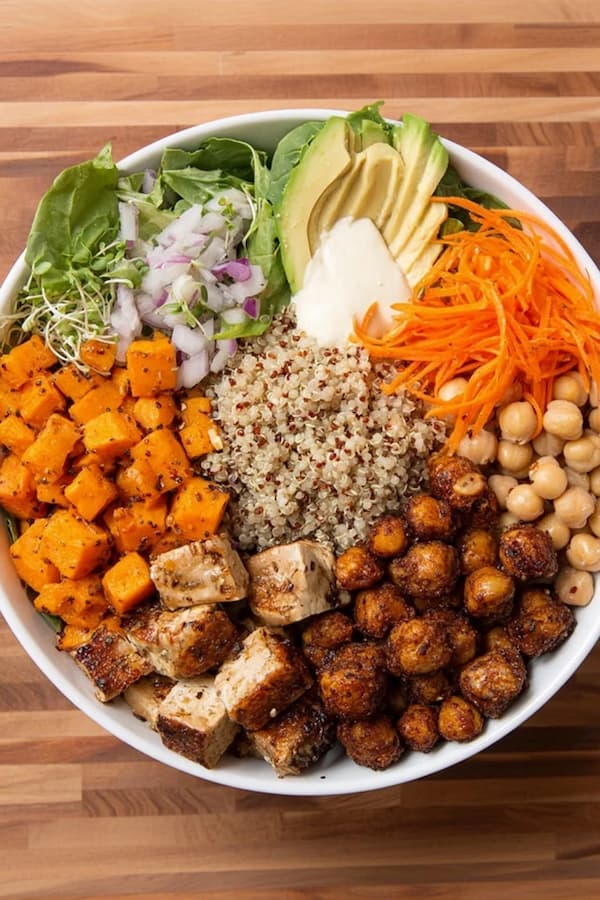
The heat from the quinoa will slightly wilt the greens, making them easier to eat while keeping their fresh flavor. Arrange the shredded carrots, cabbage, cucumber slices, and avocado in separate sections around the edges of the bowl.
The Assembly
Add your roasted chickpeas and tofu (or cheese) to the center. Drizzle the tahini dressing over everything in a zigzag pattern.
Finally, sprinkle the pumpkin seeds over the top for one last layer of crunch. Serve the bowl immediately while the roasted elements are still warm and the avocado is fresh.
Better Bowls
To make this bowl even more professional, try “massaging” your spinach. If you find raw spinach a bit too bulky, toss it with a teaspoon of lemon juice and a tiny pinch of salt for a minute before putting it in the bowl.
This breaks down the fibers and makes it much more tender. It also ensures the greens are seasoned, so you aren’t just eating plain leaves at the bottom of the bowl.
Another tip is to play with the temperature. A truly great Buddha bowl often mixes warm components (like the quinoa and tofu) with cold, crisp ones (like the cucumber and carrots). This contrast makes the meal feel more complex and satisfying.
If you have extra time, you can even quick-pickle the cucumbers in a bit of rice vinegar for ten minutes to add a sharp, bright note to the dish.
Common Pitfalls
The biggest mistake is not seasoning the individual layers. Many people wait until the end to add salt, but it is better to lightly season the quinoa, the chickpeas, and the vegetables as you go.
This builds a “top-notch” flavor profile that tastes seasoned all the way through. Don’t rely solely on the dressing to do all the heavy lifting.
Another issue is the tahini quality. Not all tahini is created equal. Some brands can be very bitter or have a dry, chalky texture. Look for tahini that is made from toasted sesame seeds and has a smooth, pourable consistency in the jar. If yours is too bitter, a tiny extra drop of maple syrup in the dressing can usually balance it out perfectly.
Can I Use Different Grains In This Bowl?
Yes, this recipe is extremely adaptable. If you don’t have quinoa, you can use brown rice, farro, or even couscous. Each grain brings a different texture; farro is chewy and nutty, while couscous is light and fluffy. If you are looking to keep the protein high but want to skip the grains entirely, you can use cauliflower rice or simply double up on the spinach and chickpeas. The key is to have a base that can soak up the delicious tahini dressing.
How Do I Keep The Avocado From Turning Brown?
Avocados oxidize and turn brown quickly once they are sliced. If you are making these bowls for meal prep, don’t slice the avocado until right before you are ready to eat.
If you must slice it ahead of time, squeeze a generous amount of fresh lemon or lime juice over the green flesh and press some plastic wrap directly against the surface of the fruit to keep air out.
The acid in the citrus slows down the browning process, keeping your bowl looking vibrant and appetizing for several hours.
Ingredients
Method
- Start by cooking your quinoa if you don’t have some already prepped. Use a two-to-one ratio of water to dry quinoa. Bring it to a boil, then cover and simmer on low for 15 minutes.
- Once the water is absorbed, remove the pot from the heat and let it sit with the lid on for five minutes. Fluff it with a fork.
- If you are using tofu, press it between paper towels for ten minutes to remove excess moisture. Cut it into small cubes and toss them in a little soy sauce and olive oil. If you prefer cheese, cube some fresh feta or halloumi.
- For the chickpeas, pat them very dry—moisture is the enemy of crunch. Toss the chickpeas with a drizzle of oil and a pinch of salt.
- Place the tofu and chickpeas on a baking sheet. Roast them at 400°F for about 20 minutes. You want the chickpeas to be slightly popping and the tofu to have golden, crispy edges.
- If you are using halloumi cheese instead of tofu, you can pan-fry the slices in a dry skillet for two minutes per side until they develop a beautiful brown crust.
- While the proteins are roasting, make your tahini dressing. In a small jar, combine the tahini, lemon juice, maple syrup, and a splash of warm water. Whisk it vigorously until it becomes a smooth, pourable consistency.
- Divide the fresh baby spinach between two large bowls. Place a generous scoop of the warm quinoa on top of the spinach.
- Arrange the shredded carrots, cabbage, cucumber slices, and avocado in separate sections around the edges of the bowl. Add your roasted chickpeas and tofu (or cheese) to the center. Drizzle the tahini dressing over everything in a zigzag pattern.
- Finally, sprinkle the pumpkin seeds over the top for one last layer of crunch.