Homemade pizza sauce is the secret to turning a standard kitchen dinner into a professional pizzeria experience right in your own home. This thick and savory red sauce relies on a few high-quality pantry staples to create a bold flavor that complements any topping.
It is a naturally vegetarian base that takes less than fifteen minutes to prepare and beats any store-bought jar in both taste and texture.
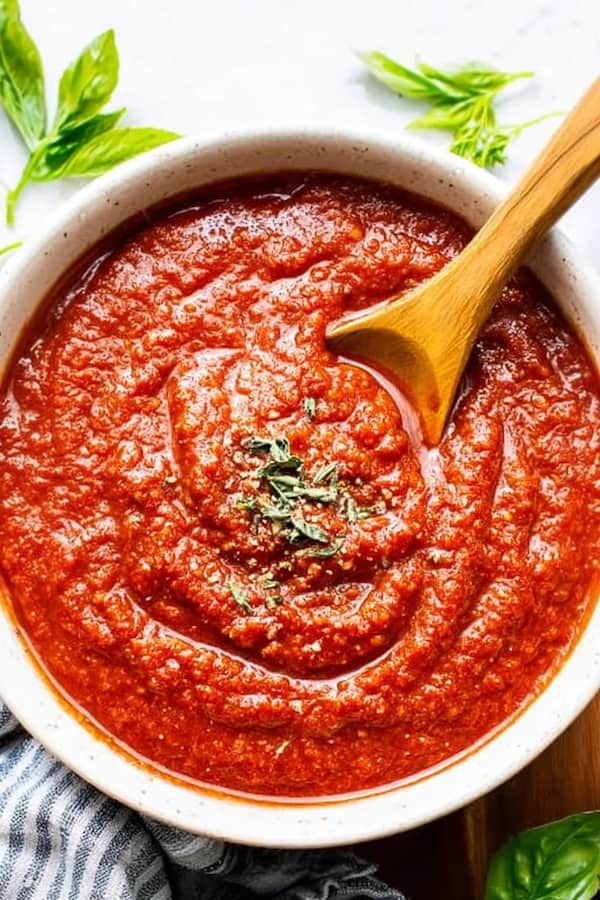
Ingredients
Yields: enough for 4 large pizzas
- 1 can (28 oz) whole peeled San Marzano tomatoes
- 2 tablespoons extra virgin olive oil
- 3 cloves garlic, finely minced
- 1 teaspoon dried oregano
- 1/2 teaspoon dried basil
- 1/2 teaspoon onion powder
- 1/2 teaspoon sea salt
- 1/4 teaspoon black pepper
- 1/4 teaspoon red pepper flakes (optional)
- 1 teaspoon granulated sugar or honey
- 1 tablespoon tomato paste (for thickness)
Why You Must Try This Homemade Pizza Sauce Recipe
You should try this recipe because it gives you complete control over the sugar and salt content of your meal, which is often hidden in massive amounts in commercial sauces.
Most canned sauces are cooked twice—once at the factory and again on your pizza—which can make the tomatoes taste metallic or overly sour.
By starting with high-quality whole tomatoes and doing a quick simmer yourself, you preserve the bright, fresh acidity of the fruit. This is a top-notch vegetarian staple that stores perfectly in the fridge, making it a brilliant choice for those who love to meal prep their Friday night pizza dough in advance.
Crush the Fruit
Start by opening your can of whole peeled tomatoes and pouring the contents into a medium-sized bowl. The best way to get a professional texture is to use your clean hands to crush the tomatoes into a chunky pulp.
If you prefer a completely smooth sauce, you can use an immersion blender for about ten seconds, but leaving some small bits of fruit provides a much better “bite” on the finished pizza. Avoid using a high-speed blender for too long, as it can incorporate too much air into the sauce, turning it a pale orange color instead of a deep, rich red.
Sauté the Garlic
Place a small saucepan over medium-low heat and add your extra virgin olive oil. Once the oil is warm and shimmering, stir in your minced garlic. You only want to cook the garlic for about sixty seconds until it smells fragrant and turns a pale golden color.
Be very careful not to let it brown or burn, as burnt garlic will make your entire batch of sauce taste bitter and sharp. This quick infusion of the oil ensures that the garlic flavor is evenly distributed throughout the tomatoes rather than sitting in raw chunks.
Bloom the Herbs
Add your dried oregano, basil, onion powder, and red pepper flakes directly into the warm oil with the garlic. Stir them for about thirty seconds before adding any liquid. This technique is called “blooming,” and it helps to wake up the dried herbs by releasing their natural oils into the fat.
It makes the herbs much more aromatic and flavorful than if you simply stirred them into the cold tomatoes at the end. The kitchen will start to smell like a real Italian deli the moment the oregano hits the warm olive oil.
Simmer the Mix
Pour your crushed tomatoes into the saucepan with the oil and herbs. Add the salt, black pepper, and your choice of sugar or honey.
The sweetener isn’t there to make the sauce taste like candy; it is meant to balance out the natural acidity of the tomatoes, especially if you aren’t using peak-season fresh fruit.
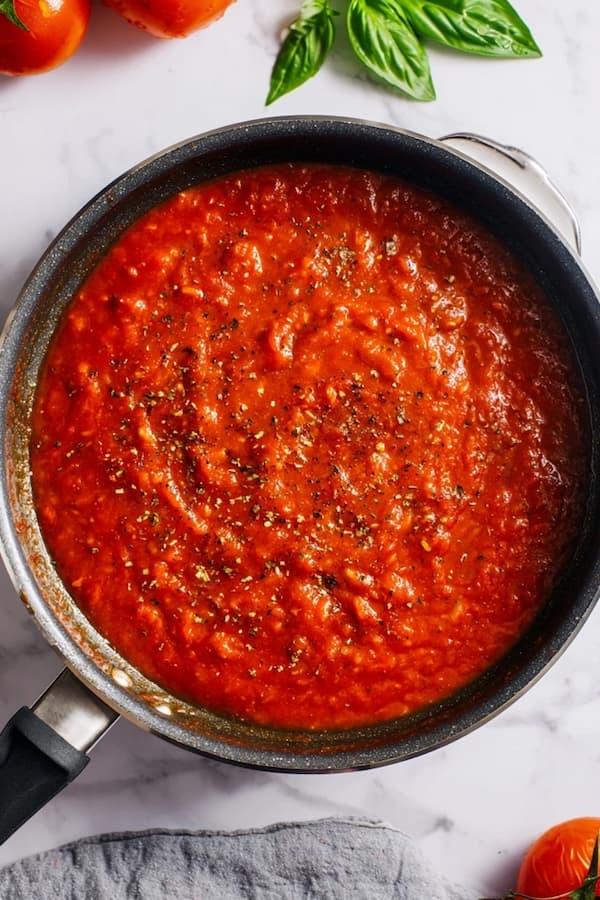
Turn the heat up to medium until the sauce starts to bubble gently, then immediately turn it back down to low. You want a very slow simmer that just barely moves the surface of the sauce.
Thicken the Base
If you notice that your sauce looks a little too watery, stir in the tablespoon of tomato paste. This concentrated paste acts as a natural thickener and deepens the red color of the sauce.
A thick sauce is essential for a great pizza because it prevents the dough from getting soggy while it is in the oven. Let the sauce simmer uncovered for about ten to fifteen minutes.
This short cooking time is enough to meld the flavors together without losing the fresh, bright taste of the tomatoes.
Adjust the Salt
Take a small spoon and taste your sauce. This is the most important part of being a good home cook. Depending on the brand of canned tomatoes you used, you might need a tiny bit more salt or another pinch of sugar.
If the sauce feels a bit flat, a tiny splash of balsamic vinegar can sometimes provide the perfect “pop” of flavor. Once you are happy with the taste, remove the saucepan from the heat and let it cool completely.
Cool the Sauce
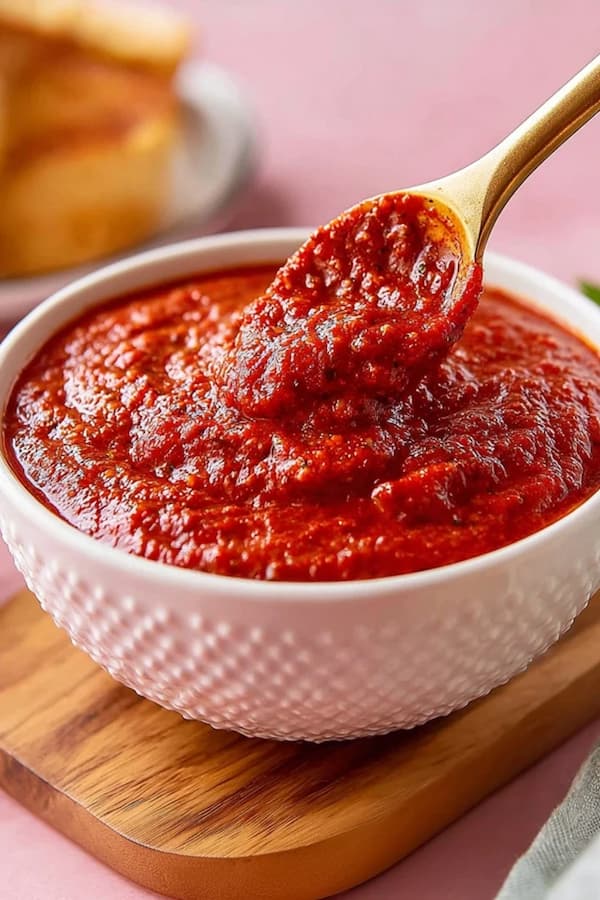
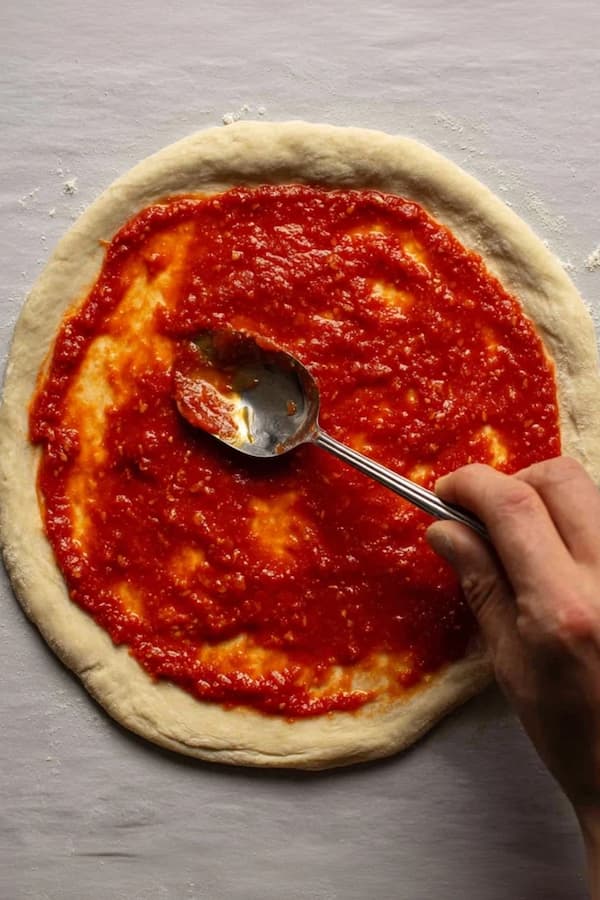
Never put hot pizza sauce directly onto raw dough. The heat from the sauce will start to cook the yeast and soften the gluten prematurely, leading to a gummy, undercooked crust. Transfer the sauce to a glass jar or a bowl and let it reach room temperature before you start building your pizza.
If you are in a rush, you can place the bowl in a larger container of ice water to speed up the cooling process. This sauce actually tastes even better the next day after the herbs have had more time to infuse.
How To Make This Homemade Pizza Sauce Better
- Use San Marzano: These tomatoes are grown in volcanic soil and have fewer seeds and a sweeter flavor than standard varieties.
- Fresh Basil Finish: If you have fresh basil, stir in a handful of chopped leaves only after the sauce has finished simmering.
- Parmesan Rind: Drop a small piece of Parmesan cheese rind into the sauce while it simmers for a hidden layer of salty, umami flavor.
- Olive Oil Quality: Use the best “finishing” olive oil you have; since the sauce isn’t cooked for long, the flavor of the oil really shines.
Can I freeze this sauce for later use?
Yes, this pizza sauce freezes incredibly well and maintains its flavor for up to three months. The best way to do this is to pour the cooled sauce into small freezer-safe jars or even large silicone ice cube trays. Freezing it in smaller portions means you only have to thaw exactly what you need for one or two pizzas at a time.
When you are ready to use it, let it thaw in the fridge overnight or place the jar in a bowl of warm water for an hour. Give it a good stir before spreading it on your dough to recombine any liquids that may have separated.
Why should I use whole tomatoes instead of crushed?
Professional chefs almost always prefer whole peeled tomatoes because they are generally made from higher-quality fruit. When factories process tomatoes, the best, firmest ones are kept whole, while the ones with bruises or imperfections are often turned into crushed or pureed products.
By crushing the whole tomatoes yourself, you get a much fresher flavor and a better texture. It also allows you to control exactly how chunky or smooth you want your final sauce to be, which is a luxury you don’t get with pre-crushed cans.
Ingredients
Method
- Pour the whole peeled San Marzano tomatoes into a bowl and crush them by hand or with a potato masher. This manual technique is a top-notch way to achieve a professional, rustic texture that holds up better on a high-protein vegetarian pizza than a thin, watery puree.
- Warm the extra virgin olive oil in a saucepan over medium-low heat. Add the minced garlic and sauté for just 60 seconds. You want it to be fragrant and pale gold; avoid browning it, as burnt garlic will ruin the bright, fresh profile of your homemade sauce.
- Stir the dried oregano, basil, onion powder, and red pepper flakes into the warm oil for 30 seconds. This “blooming” process is a professional secret that wakes up the dried herbs, releasing their essential oils into the fat for a much deeper flavor.
- Add the crushed tomatoes, salt, black pepper, and sugar to the pan. Bring it to a very gentle bubble, then turn the heat to low. This slow simmer allows the flavors to meld together without overcooking the tomatoes, preserving their natural sweetness.
- Stir in the tomato paste to give the sauce a sturdy, spreadable body. Simmer uncovered for 10 to 15 minutes. A thick sauce is essential for preventing a soggy crust, especially if you are using a high-moisture vegetarian cheese like fresh mozzarella.
- Remove the sauce from the heat and let it cool completely before spreading it on your dough. Using room-temperature sauce prevents the yeast in your pizza dough from activating too early, ensuring a crisp, professional-style bake every time.
Notes
- Use San Marzano: These tomatoes are grown in volcanic soil and have fewer seeds and a sweeter flavor than standard varieties.
- Fresh Basil Finish: If you have fresh basil, stir in a handful of chopped leaves only after the sauce has finished simmering.
- Parmesan Rind: Drop a small piece of Parmesan cheese rind into the sauce while it simmers for a hidden layer of salty, umami flavor.
- Olive Oil Quality: Use the best “finishing” olive oil you have; since the sauce isn’t cooked for long, the flavor of the oil really shines.