Some nights you don’t need a complicated dinner. You just need a pot of tomato sauce that smells like comfort.
This pomodoro sauce is bright, simple, and the kind of thing you’ll want to keep in your back pocket forever.
Why Pomodoro Always Wins
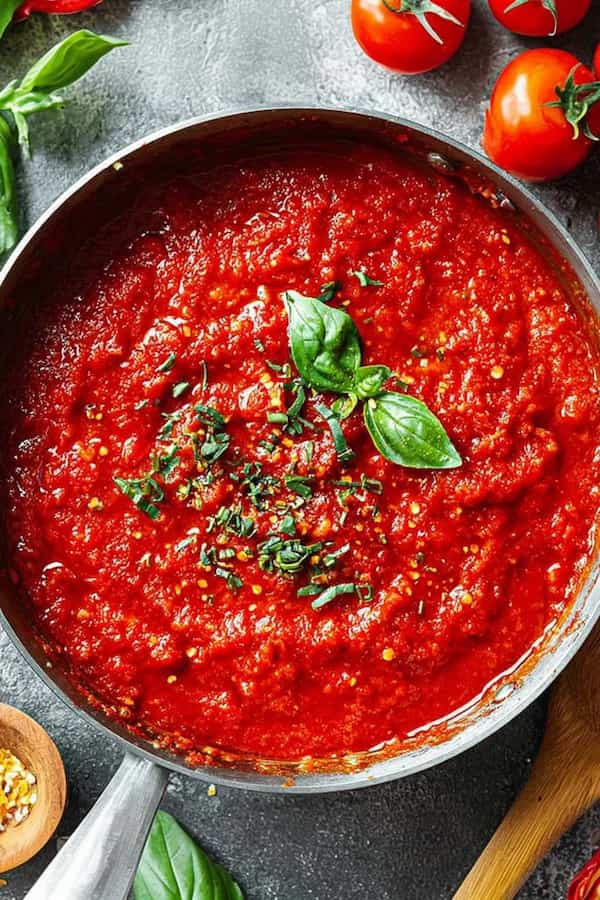
Pomodoro sauce is basically the “clean and classic” tomato sauce. It’s not heavy, it’s not overloaded with spices, and it doesn’t simmer all day. The goal is fresh tomato flavor with a silky finish—perfect for pasta, meatballs, chicken parmesan, or even as a dipping sauce for warm bread.
What makes pomodoro special is the balance: sweet tomatoes, a little garlic, good olive oil, and basil at the end so it stays fragrant. It’s simple enough for a Tuesday, but good enough that you’d serve it to guests without thinking twice.
And once you make it once, you’ll notice something: you start craving it. Not “tomato sauce” in general—this one specifically.
Ingredients
Serves 4
- 2 tablespoons extra virgin olive oil
- 1 small onion, finely chopped (optional, but adds gentle sweetness)
- 4 garlic cloves, minced or thinly sliced
- 800 g (28 oz) canned whole peeled tomatoes (San Marzano-style if possible)
- 1 teaspoon salt (plus more to taste)
- ½ teaspoon black pepper
- 1 teaspoon sugar (optional, only if tomatoes are very acidic)
- 10–12 fresh basil leaves, torn
- 1 tablespoon butter (optional, for a silky finish)
- Pinch of red pepper flakes (optional)
Choose the Right Tomatoes
If you want pomodoro sauce that tastes restaurant-level with minimal effort, start with good tomatoes. Canned whole peeled tomatoes are the easiest path, and they usually taste more consistent than off-season fresh tomatoes.
Whole tomatoes are ideal because they tend to taste less processed than pre-crushed. You’ll crush them yourself in the pot, which gives you that fresh texture without turning the sauce into puree.
Open the can and pour everything into a bowl. Use your hands to gently crush the tomatoes, or crush them with a spoon. Don’t worry about making it perfectly smooth—pomodoro sauce should feel soft and natural, not like ketchup.
Warm the Olive Oil
Set a medium saucepan or deep skillet over medium heat. Add the olive oil and let it warm for about 30 seconds.
You’re not trying to fry anything aggressively. You just want the oil warm enough to carry flavor. A calm heat gives you a sweeter, smoother sauce.
Add Onion (Optional, But Worth It)
If you’re using onion, add it now. Cook for 4–5 minutes, stirring often, until it becomes soft and slightly translucent.
This step adds a mild sweetness and rounds out the sauce. It’s not mandatory, and if you want a sharper, more garlic-forward pomodoro, you can skip it. But when I have an onion around, I use it.
Add Garlic Without Burning It
Add the garlic to the pan (and red pepper flakes if you like a little heat). Stir for about 30–60 seconds.
Watch closely here. Garlic turns bitter fast if it browns too much. The goal is fragrant garlic, not toasted garlic. If you smell that warm garlicky aroma, you’re ready for the next step.
Add Tomatoes and Start the Simmer
Carefully pour the crushed tomatoes and all their juices into the pot. Stir well, scraping up anything sticking to the bottom.
Add salt and black pepper. Bring the sauce to a gentle simmer. Once it starts bubbling lightly, lower the heat to medium-low.
Now let it simmer uncovered for about 20–30 minutes. Stir every few minutes. The sauce will thicken, darken slightly, and turn glossy.
If it starts splattering, partially cover the pot with a lid (leave it slightly open). Tomato sauce loves to pop—this is normal.
Taste and Adjust
After about 15 minutes, taste the sauce. Tomatoes can vary a lot. Some are sweet and mellow, others are sharp and acidic.
Here’s how to adjust without overthinking it:
- Too acidic? Add 1 teaspoon sugar and stir. Taste again after a few minutes.
- Too flat? Add a pinch more salt. Salt brings tomato flavor forward.
- Too thick? Add a small splash of water (or pasta water if you have it).
- Too thin? Simmer a little longer, uncovered.
Keep it simple. Pomodoro should taste clean and tomato-forward, not heavily seasoned.
Finish with Basil
Turn off the heat. Add the torn basil leaves and stir them in.
Adding basil at the end matters. If it cooks too long, it loses that fresh, sweet aroma. When you stir it in off-heat, the sauce smells bright and garden-fresh.
If you like, add the tablespoon of butter here too. It’s optional, but it gives the sauce a smooth, silky finish and softens any sharp edges.
Blend or Keep It Rustic
Pomodoro sauce can be smooth or slightly chunky—it’s your choice.
- If you like it rustic, you’re done.
- If you like it smoother, use an immersion blender for just a few quick pulses.
- If you want it very smooth, blend it longer (but don’t overdo it or it can turn airy).
Most of the time, I keep it mostly rustic. It feels more homemade, and it clings beautifully to pasta.
Toss with Pasta the Right Way
Pomodoro sauce shines when you finish the pasta in the sauce.
Cook pasta in salted water until just al dente. Before draining, save about ½ cup of pasta water.
Add the drained pasta directly into the pot of sauce. Toss for 1–2 minutes over low heat, adding a splash of pasta water as needed. This helps the sauce coat the noodles instead of pooling at the bottom of the bowl.
Finish with grated Parmesan, extra basil, and a drizzle of olive oil. Simple. Perfect.
How to Store It
Let the sauce cool, then store it in an airtight container.
- Fridge: up to 4–5 days
- Freezer: up to 3 months
If freezing, portion it into smaller containers so you can thaw only what you need. Pomodoro is one of the best “future you” gifts you can make—having it ready makes dinner feel effortless.
Common Mistakes to Avoid
Pomodoro is easy, but a few small mistakes can change the flavor:
- Burning the garlic: keep heat moderate and move quickly once it turns fragrant.
- Skipping salt: tomatoes need salt to taste like tomatoes.
- Overcooking basil: stir it in at the end for the freshest aroma.
- Boiling too hard: a gentle simmer creates a smoother sauce and better flavor.
If your sauce ever tastes “fine but not amazing,” it’s usually a salt issue, a tomato quality issue, or it just needs a few more minutes to simmer and thicken.
Can I Make Pomodoro Sauce Without Onion?
Yes, absolutely. Many classic versions are garlic + tomatoes + basil, and that’s it. Without onion, the sauce tastes a bit sharper and cleaner, with the garlic more noticeable.
If you skip onion and your tomatoes are a little acidic, you may want a tiny pinch of sugar or an extra drizzle of olive oil at the end to round it out.
What’s the Difference Between Pomodoro and Marinara?
They’re similar, but the vibe is different. Pomodoro is usually simpler and fresher—tomato-forward, lightly seasoned, often finished with basil and olive oil. Marinara tends to be more “savory” and can include more herbs and sometimes longer simmering, depending on the recipe.
If marinara feels like a bold pizza-sauce cousin, pomodoro feels like the clean pasta-sauce version you can eat all week without getting tired of it.