
Tabbouleh is the ultimate herb salad that brings a burst of freshness to any dinner table. It is a staple across the Levant, known for its bright green color and its sharp, lemony zing.
While many people think of it as a grain salad, a true version is actually an herb salad with just a tiny bit of grain for texture.
The Basket
This recipe serves 6 people as a side dish or 4 people as a light, refreshing lunch.
- 2 large bunches of flat-leaf Italian parsley (about 3 cups finely chopped)
- 1/2 cup fresh mint leaves
- 1/2 cup fine bulgur wheat (look for #1 grade)
- 3 medium firm tomatoes, diced very small
- 1 bunch of green onions, sliced thin
- 1/2 cup extra virgin olive oil
- 1/2 cup fresh lemon juice (about 2 to 3 lemons)
- 1/2 teaspoon ground allspice
- 1 teaspoon salt
- 1/2 teaspoon black pepper
- Romaine lettuce leaves for serving
The Philosophy
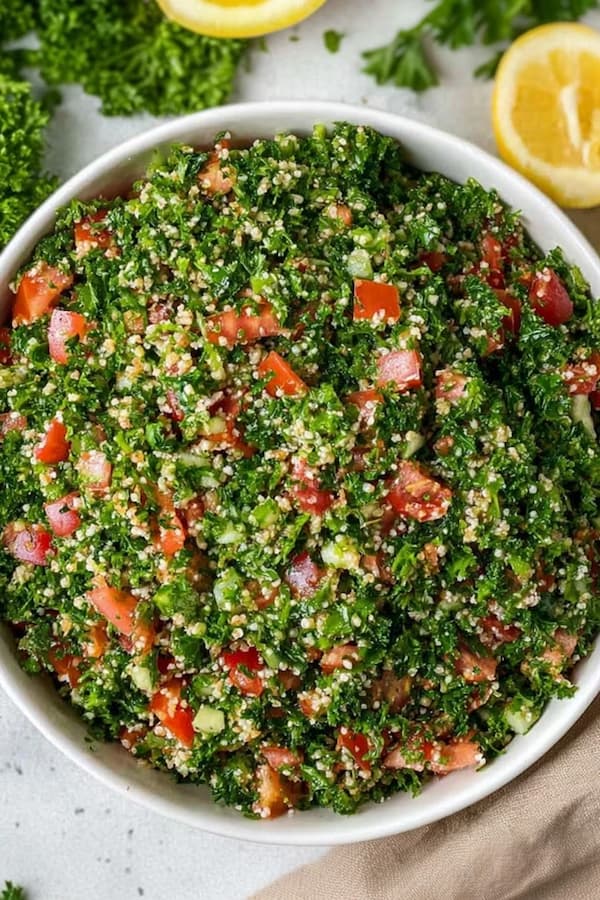
Tabbouleh is misunderstood in many parts of the world. If you go to a grocery store, you often see a bowl full of beige bulgur wheat with a few flecks of green. A top-notch, authentic tabbouleh is the exact opposite.
It should be a mountain of green parsley with tiny white specks of wheat scattered throughout. It is a dish that celebrates the garden.
The magic of this salad is in the knife work. Because you are eating raw herbs and vegetables, the way you cut them determines how the flavors hit your tongue. You want everything to be tiny and uniform.
This allows the dressing to coat every single piece, ensuring that no one bite is too overwhelming. It takes a bit of patience, but the result is a salad that feels light and elegant.
Grain Soak
Start with your bulgur wheat. Since we are using fine bulgur (#1), you do not actually need to cook it on the stove. Place the dry wheat in a small bowl and pour your lemon juice over it. Let it sit for about 20 minutes.
The wheat will drink up the lemon juice, softening the grain while flavoring it from the inside out. This is a much better method than soaking it in water, as it keeps the salad from becoming watery.
Tomato Prep
Dice your tomatoes as small as you can. Once they are chopped, put them in a colander over a bowl or the sink. Sprinkle them with a tiny bit of salt. This helps draw out the excess juice. If you put watery tomatoes straight into the salad, the parsley will get soggy and the salad will lose its crispness.
Let the tomatoes drain for about 10 minutes while you work on the herbs.
Parsley Work
This is the most important step. Wash your parsley thoroughly and make sure it is completely dry. If the parsley is wet, it will turn into a green paste when you chop it. Remove the thick stems and gather the leaves into a tight bundle.
Use a very sharp knife to slice through the bundle as finely as possible. Do not use a food processor.
A machine will bruise the leaves and make the salad taste bitter. You want clean, sharp cuts.
Mint Punch
Treat the mint the same way as the parsley. Pull the leaves off the stems and stack them on top of each other. Roll them up like a cigar and slice them into tiny ribbons. Mint oxidizes quickly, meaning it turns black if handled too much.
Chop it right before you are ready to mix the salad to keep that bright green color and fresh scent.
Spice Blend
In a small jar, whisk together your olive oil, allspice, salt, and pepper. The allspice is a secret ingredient in traditional Lebanese cooking. It adds a warm, earthy depth that balances the sharp acidity of the lemon.
If you don’t have allspice, a tiny pinch of cinnamon and cloves can work in a pinch, but the single spice is better for a clean flavor.
The Assembly
Find your largest mixing bowl. Toss in the chopped parsley, mint, green onions, and the drained tomatoes. Add the soaked bulgur wheat (which should have absorbed all the lemon juice by now). Pour the dressing over the top.
Use two large spoons to toss the salad gently. You don’t want to mash the herbs; you just want to coat them. Taste it and add more salt or lemon if you think it needs more “pop.”
Better Texture
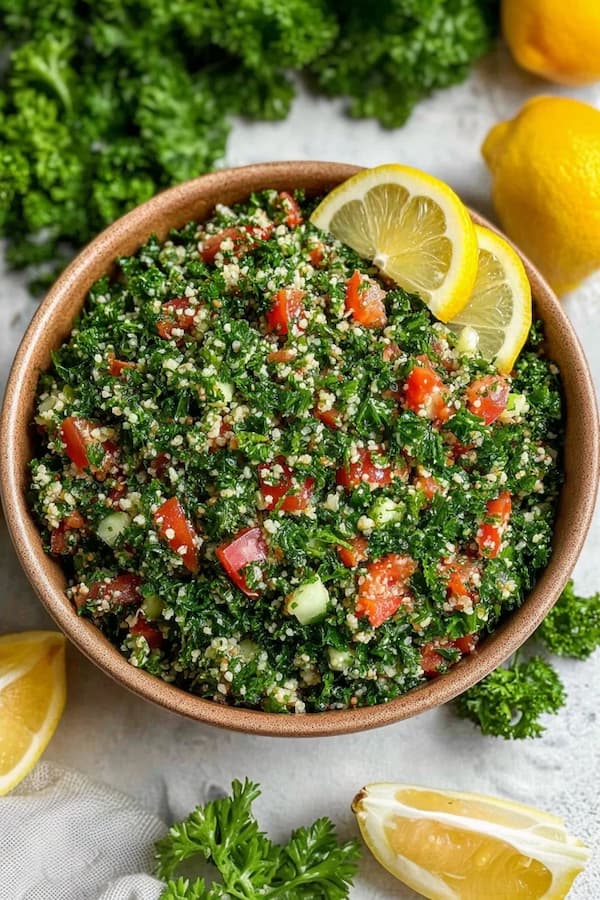
The secret to a world-class tabbouleh is the dryness of the ingredients. I cannot stress this enough: dry your parsley like your life depends on it. Use a salad spinner if you have one, or lay the leaves out on a clean kitchen towel for an hour before chopping.
If the herbs are dry, the oil and lemon juice will cling to them. If they are wet, the dressing will just slide off and pool at the bottom of the bowl.
Another tip is to use firm tomatoes. Roma tomatoes or plum tomatoes are great because they have more “meat” and less watery seeds.
If you use heirloom or beefsteak tomatoes, you must be very diligent about draining them, or the salad will turn into a cold soup by the time you serve it.
Smart Swaps
If you are following a gluten-free diet, you can still enjoy this salad. Replace the bulgur wheat with hemp seeds or finely chopped cauliflower rice. While it won’t be traditional, it still provides that little bit of texture needed to balance the herbs.
Some people like to add cucumber to their tabbouleh. While not everyone agrees on this, a very finely diced Persian cucumber can add a nice crunch. If you choose to add it, treat it like the tomato—dice it small and let it drain so it doesn’t add too much liquid to the bowl.
Common Pitfalls
The biggest mistake is using the wrong kind of parsley. You must use flat-leaf (Italian) parsley. Curly parsley has a very different texture that can feel like eating grass in a salad this size. Flat-leaf parsley is softer, sweeter, and much easier to chop into the tiny pieces required for a proper tabbouleh.
The second mistake is serving it immediately. Tabbouleh actually benefits from sitting in the fridge for about 30 minutes before you eat it. This gives the bulgur wheat one last chance to soften and allows the flavors of the garlic (from the onions), lemon, and herbs to marry.
However, do not leave it for more than a few hours, or the acid in the lemon will start to turn the parsley a dull olive-green color.
Can I Use Couscous Instead Of Bulgur Wheat?
While couscous looks similar, it is actually a tiny pasta, not a whole grain. It has a different texture that can get a bit gummy when mixed with a lot of lemon juice and oil. If you absolutely cannot find bulgur, you can use couscous, but you should cook it according to the package first and let it cool completely.
Bulgur is preferred because it has a nutty, earthy taste and a firm “snap” that holds up much better against the moisture of the vegetables.
Why Does My Tabbouleh Taste Bitter?
Bitterness usually comes from two things: dull knives or old parsley. If your knife is not sharp, it crushes the cells of the parsley instead of slicing them. This releases chlorophyll in a way that can taste metallic or bitter. Always sharpen your knife before you start. Additionally, make sure you are not including the thick, woody stems of the parsley.
The stems contain much more of that bitter flavor than the leaves. Use only the leaves and the very tender tops of the stems for the best flavor.
Final Thoughts
Tabbouleh is the kind of dish that makes you feel good while you are eating it. It is packed with vitamins and has a clean, sharp flavor that wakes up your palate. It is the perfect partner for grilled meats, hummus, or warm pita bread.
Taking the time to chop everything by hand is a bit of a kitchen meditation. There is something rewarding about turning a few bunches of herbs into a beautiful, vibrant salad. It shows that you don’t need expensive proteins or complex techniques to make a “top-notch” dish. You just need fresh ingredients and a little bit of focus.
Ingredients
Method
- Start with your bulgur wheat. Since we are using fine bulgur (#1), you do not actually need to cook it on the stove. Place the dry wheat in a small bowl and pour your lemon juice over it. Let it sit for about 20 minutes.
- Dice your tomatoes as small as you can. Once they are chopped, put them in a colander over a bowl or the sink. Sprinkle them with a tiny bit of salt. This helps draw out the excess juice.
- Let the tomatoes drain for about 10 minutes while you work on the herbs.
- Wash your parsley thoroughly and make sure it is completely dry. If the parsley is wet, it will turn into a green paste when you chop it. Remove the thick stems and gather the leaves into a tight bundle. Use a very sharp knife to slice through the bundle as finely as possible.
- Treat the mint the same way as the parsley. Pull the leaves off the stems and stack them on top of each other. Roll them up like a cigar and slice them into tiny ribbons. Chop it right before you are ready to mix the salad to keep that bright green color and fresh scent.
- In a small jar, whisk together your olive oil, allspice, salt, and pepper.
- Find your largest mixing bowl. Toss in the chopped parsley, mint, green onions, and the drained tomatoes. Add the soaked bulgur wheat (which should have absorbed all the lemon juice by now). Pour the dressing over the top. Use two large spoons to toss the salad gently.