
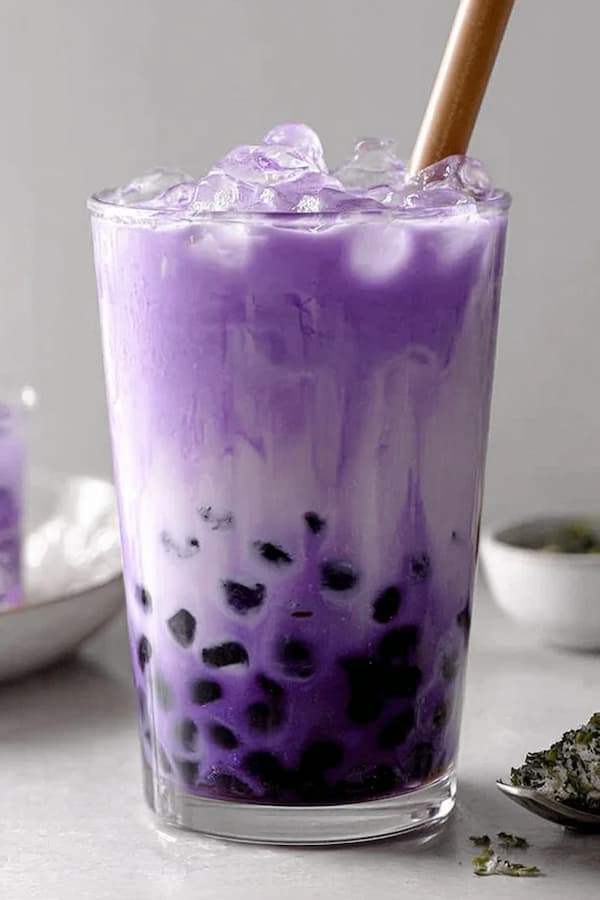
Taro milk tea is a drink that has taken the world by storm because of its beautiful purple color and its unique, biscuity flavor.
While many shops use a processed powder to make it, the best version is made at home using real taro root for a creamy and natural texture. It is a sweet, comforting beverage that feels like a snack and a drink all in one.
Ingredients
This recipe makes 2 large servings, perfect for sharing with a friend or saving one for later in the afternoon.
- 1 cup fresh taro root, peeled and diced into small cubes
- 2 bags of black tea (or 1 tablespoon of loose-leaf black tea)
- 2 cups water
- 1/2 cup whole milk (or oat milk for a dairy-free version)
- 3 tablespoons sweetened condensed milk (adjust for your sweetness preference)
- 1/2 cup cooked tapioca pearls (boba)
- Ice cubes
The Root
Taro is a starchy root vegetable that is a staple in many cultures. On its own, it has a very mild, nutty flavor that reminds many people of a mix between a potato and a vanilla bean. The texture is what makes it special; when it is cooked and blended, it becomes incredibly smooth and thick.
This provides the “body” of the milk tea without needing to add artificial thickeners.
One thing to know is that real taro is actually white or very pale grey with tiny purple flecks. The bright neon purple you see in some tea shops is usually from food coloring.
If you want that deep purple look at home, you can boil a small piece of purple sweet potato along with the taro. It adds a natural pigment without changing the flavor of your drink.
Steam Soft
Place your diced taro cubes into a steamer basket over boiling water. If you do not have a steamer, you can boil them in a pot of water until they are fork-tender.
This usually takes about 15 to 20 minutes. You want the taro to be so soft that it almost falls apart when you touch it. If it is still firm in the middle, your drink will have grainy lumps, which is not what we want for a smooth milk tea.
Strong Brew
While the taro is cooking, boil your two cups of water and steep the black tea. You want to leave the tea bags in for at least five to seven minutes.
Usually, you don’t steep tea that long because it gets bitter, but because we are adding heavy milk and starchy taro, we need a very strong tea base.
Once it is brewed, remove the bags and let the tea cool down to room temperature.
Blend Smooth
Put your cooked, warm taro into a blender. Add the sweetened condensed milk and the 1/2 cup of regular milk.
Blend on high until the mixture looks like a thin purple pudding. If it is too thick to move in the blender, add a splash of your brewed tea to help it along.
This “taro paste” is the heart of the drink. By blending it while warm, the condensed milk melts in perfectly.
Pearl Prep
If you are using boba, cook them according to the package instructions. Most dried boba take about five minutes in boiling water. Once they are soft and chewy, drain them and toss them in a little bit of brown sugar or honey.
This prevents them from sticking together and adds a little burst of sweetness when you suck them up through the straw.
Final Mix
In a large pitcher or cocktail shaker, combine your blended taro mix and the cooled black tea. Stir or shake it vigorously.
You will see the tea and the taro paste marry into a creamy, light purple liquid. If you like your drink very cold, you can shake it with ice, but I prefer to pour it over fresh ice in the glass so the drink doesn’t get watered down too quickly.
The Build
Place a generous spoonful of boba at the bottom of two tall glasses. Fill the glasses with ice cubes about halfway up. Pour the taro milk tea over the ice.
Give it a quick stir with a long spoon or a wide boba straw. You can top it with a little bit of extra milk if you want a marbled look, or just drink it as it is.
Better Body
To get a “top-notch” texture, some people like to strain their blended taro through a fine-mesh sieve. This removes any tiny fibers that the blender might have missed. It is an extra step, but it makes the tea feel much more professional and silkier on the tongue.
If you use a high-powered blender, you can probably skip this.
Also, consider the tea you use. While standard black tea is the most common, Earl Grey adds a nice floral note that goes surprisingly well with the nuttiness of the taro.
If you want a caffeine-free version, you can leave the tea out entirely and just make a “taro milk,” which is very popular for kids.
Common Pitfalls
- The most common mistake is not sweetening the taro enough. Taro is very starchy, and starch tends to soak up sugar.
- If you only sweeten the liquid, the taro itself can taste a bit bland. By blending the sweetened condensed milk directly into the root, you ensure that the flavor is consistent throughout the entire glass.
- Another issue is using taro that hasn’t been peeled deeply enough. The skin of the taro is hairy and tough, and there is a layer just under the skin that can be quite fibrous.
- Make sure you peel away all the brown skin and the first layer of flesh until you see the clean, white-and-purple interior. This ensures your paste is as smooth as possible.
Why Is My Fresh Taro Irritating My Hands?
Taro root contains small crystals called calcium oxalate. For some people, touching raw taro can cause a dry, itchy sensation on the skin. This is perfectly normal and goes away once the taro is cooked.
To avoid this, you can wear gloves while peeling and dicing the root. If you don’t have gloves, just try to wash your hands with soap and warm water immediately after you finish the prep work.
Once the taro is steamed or boiled, it is completely safe to handle and eat.
Can I Use Taro Powder Instead Of Real Root?
You can use powder, but the experience is very different. Powdered mixes usually contain a lot of non-dairy creamer, sugar, and purple food coloring.
While it is faster, it lacks the earthy, rich flavor of the real vegetable. If you do use powder, follow the instructions on the bag, but try adding a little bit of real milk or cream to give it a better mouthfeel.
However, once you try the version made with real taro, you will likely find it hard to go back to the instant versions.