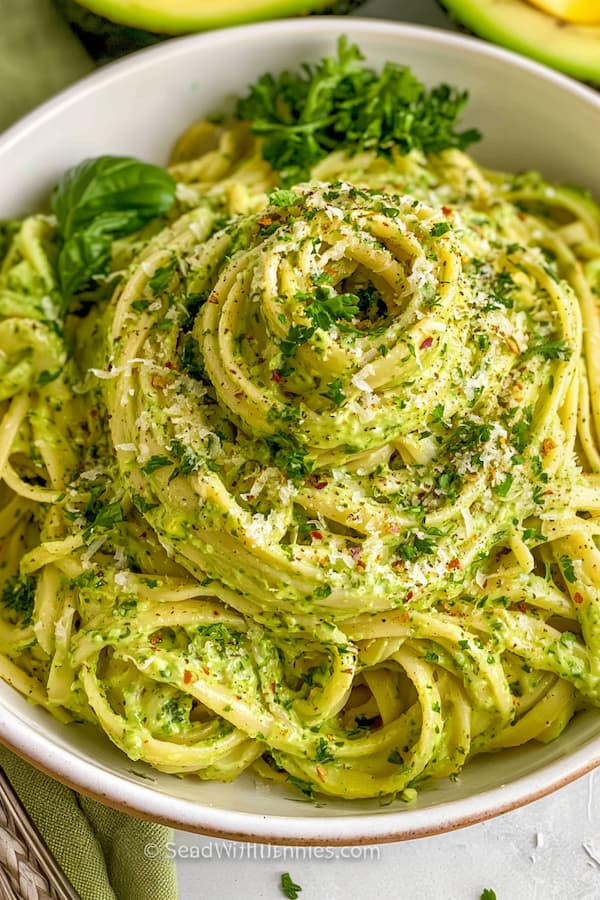
Creamy avocado pasta is a no-cook sauce made by blending ripe avocado with garlic, lemon, olive oil, and fresh basil, then tossing it with hot pasta so the heat warms the sauce rather than cooking it.
It comes together in the time it takes to boil the pasta — about 12 minutes start to finish — and the result is something far more satisfying than it has any right to be for that amount of effort.
It’s a weeknight dinner that works without a stove, without dairy, and without anything that requires more than a blender and a pot.
Ingredients
Serves: 4
For the pasta:
- 12 oz spaghetti, linguine, or fettuccine
- Salt for pasta water
For the avocado sauce:
- 2 large ripe avocados, halved and pitted
- 2 cloves garlic, roughly chopped
- 1/3 cup fresh basil leaves, packed
- 3 tablespoons fresh lemon juice (about 1 large lemon)
- 1 teaspoon lemon zest
- 3 tablespoons olive oil
- 1/4 cup reserved pasta water (plus more as needed)
- 1/2 teaspoon salt
- 1/4 teaspoon black pepper
- 1/4 teaspoon red pepper flakes (optional)
To finish:
- Extra lemon juice
- Grated parmesan or nutritional yeast (for a vegan version)
- Fresh basil leaves
- Cherry tomatoes, halved (optional)
- Red pepper flakes
- Cracked black pepper
Why You Must Try This Creamy Avocado Pasta Recipe
Avocado pasta gets dismissed as a social media recipe that doesn’t hold up in real life — and that’s often fair when it’s made without thinking about the balance. The version that works is one where the lemon juice does enough to keep the sauce bright, the garlic gives it backbone, and the pasta water creates the right consistency for the sauce to cling to the noodles rather than sitting in a puddle at the bottom of the bowl.
This recipe is built around those details. It’s dairy-free, ready faster than almost any other pasta sauce, and tastes genuinely good rather than just healthy.
The avocado becomes the fat that holds the sauce together in the same way butter or cream would in a traditional pasta sauce.
Start the Pasta First
Bring a large pot of well-salted water to a boil and cook the pasta according to package directions until al dente. Before draining, scoop out at least half a cup of pasta water — you’ll need it for the sauce.
Don’t skip this step or substitute regular water. Pasta water is starchy from the cooking process, which helps the sauce emulsify and cling to the noodles as you toss everything together.
The sauce itself takes less than two minutes to blend, so timing it to finish just as the pasta is draining is easy.
Blend the Sauce
Add the avocado flesh, garlic, basil, lemon juice, lemon zest, olive oil, salt, pepper, and red pepper flakes if using to a blender or food processor. Start with 1/4 cup of hot pasta water and blend on high until completely smooth.
The pasta water goes in warm, which helps the sauce come together and also warms it slightly so it doesn’t cool the pasta down too much when you toss them together. If the sauce is thicker than you’d like, add more pasta water a tablespoon at a time.
Taste before tossing — the sauce should be bright, garlicky, and well-seasoned on its own.
Toss While Hot
Drain the pasta and immediately add it back to the warm pot. Pour the avocado sauce over the hot pasta and toss quickly and thoroughly with tongs until every strand is coated. Work fast — the heat from the pasta is what loosens the sauce and helps it distribute evenly. If the sauce feels too thick as you toss, add another splash of pasta water.
The finished pasta should look glossy and evenly green, with the sauce clinging to the noodles rather than pooling at the bottom. Serve immediately — avocado pasta is a dish that needs to go from pot to table without delay.
Finish and Plate
Divide the pasta into bowls and add your finishing touches while it’s still hot. A squeeze of extra lemon juice over each bowl keeps the avocado from browning and brightens the whole dish. Grated parmesan adds a salty, savory note — nutritional yeast works well as a vegan alternative.
Scatter fresh basil leaves, a pinch of red pepper flakes, and cracked black pepper over the top. Halved cherry tomatoes added on top at this stage are a good addition — the acidity of raw tomato works well against the richness of the avocado sauce and the contrast in texture is noticeable.
How To Make This Creamy Avocado Pasta Recipe Better
Small changes shift this pasta significantly:
Add toasted pine nuts. Scatter a tablespoon of toasted pine nuts over each bowl before serving. They add crunch and a mild nuttiness that contrasts with the smooth avocado sauce and makes the dish feel more considered.
Use lime instead of lemon. Swapping lemon for lime juice and zest moves the flavor profile closer to guacamole — it pairs well if you’re adding chili flakes, cherry tomatoes, and cilantro instead of basil.
Add blanched peas. Stir a cup of frozen peas into the pasta water for the last minute of cooking, drain them with the pasta, and toss them through with the avocado sauce. The sweetness of the peas works well with the lemon and garlic.
Stir in white beans. A can of drained cannellini beans added to the tossed pasta makes the dish substantially more filling and adds protein. They absorb the sauce in the same way the pasta does and blend seamlessly into the bowl.
Top with a soft-boiled egg. Halve a soft-boiled egg and rest it on top of each bowl. The yolk breaks into the sauce and adds richness that makes the pasta more satisfying as a standalone meal.
Storage
Avocado pasta doesn’t store well once assembled — the avocado continues to oxidize even when coated with lemon juice, and the pasta absorbs the sauce overnight and becomes dry.
If you want to make elements ahead, store the sauce separately in an airtight container with plastic wrap pressed directly onto the surface to limit browning — it keeps for up to a day. Cook the pasta fresh and toss with the refrigerated sauce warmed slightly with a splash of pasta water.
The sauce alone doesn’t freeze well because of the avocado. For the best result, make this dish fresh and eat it immediately.
Why Does Avocado Pasta Turn Brown?
Avocado browns through oxidation — a chemical reaction that happens when the flesh is exposed to air. Blending the avocado breaks open more cells and increases the surface area exposed to oxygen, which speeds up browning compared to a whole or roughly mashed avocado.
The lemon juice in this recipe slows the process by lowering the pH around the cut avocado flesh, but it doesn’t stop it entirely.
The best way to manage browning is to make the sauce immediately before serving and eat the pasta right away. If you’re serving a group and making it slightly ahead, a squeeze of extra lemon juice stirred through the sauce before tossing helps.
The sauce may darken slightly within 20 to 30 minutes but the flavor remains the same — browning is a visual issue, not a taste one.
What Pasta Shape Works Best With Avocado Sauce?
Long pasta shapes work best — spaghetti, linguine, and fettuccine are the top choices because they wrap around the sauce as you toss them and hold a good coating on each strand. The avocado sauce is smooth and creamy rather than chunky, so it needs a shape that can carry a coating rather than something with ridges or tubes designed to hold chunky sauces.
Short pasta like penne or rigatoni is less suitable here — the sauce slides off the outside rather than coating evenly. If you want a shorter pasta, orecchiette is a reasonable option since its cup shape holds creamy sauces well.
Avoid very thin pasta like angel hair — it clumps together quickly when tossed with a thick sauce and the texture becomes difficult to eat.
Creamy avocado pasta is faster than most weeknight dinners and more satisfying than its ingredient list suggests. The key is getting the balance right — enough lemon to keep it bright, enough pasta water to make it saucy, and enough speed to get it from pot to table while everything is still warm.
Ingredients
Method
- Bring a large pot of well-salted water to a boil. Cook pasta until al dente according to package directions. Before draining, scoop out at least 1/2 cup of pasta water. Drain the pasta and return to the warm pot.
- Add avocado flesh, garlic, basil, lemon juice, lemon zest, olive oil, salt, pepper, and red pepper flakes to a blender or food processor. Add 1/4 cup hot pasta water and blend on high until completely smooth. Add more pasta water a tablespoon at a time if too thick. Taste and adjust seasoning.
- Pour avocado sauce over hot drained pasta immediately. Toss quickly with tongs until every strand is evenly coated. Add a splash more pasta water if the sauce feels too thick as you toss.
- Divide into bowls. Add a squeeze of lemon juice, grated parmesan or nutritional yeast, fresh basil, cherry tomatoes if using, red pepper flakes, and cracked black pepper. Serve immediately.
Notes
- Reserve pasta water before draining — it emulsifies the sauce and helps it cling to the noodles
- Use hot pasta water in the blender — it warms the sauce and helps it blend smoothly
- Toss immediately after draining — the heat from the pasta loosens the sauce and distributes it evenly
- Squeeze lemon over each bowl before serving to slow browning
- Sauce keeps separately in the fridge for up to 1 day — press plastic wrap directly onto the surface
- Best eaten immediately — avocado pasta browns and dries out quickly once assembled
- For a vegan version: use nutritional yeast instead of parmesan
- Add toasted pine nuts or blanched peas for extra texture and flavor