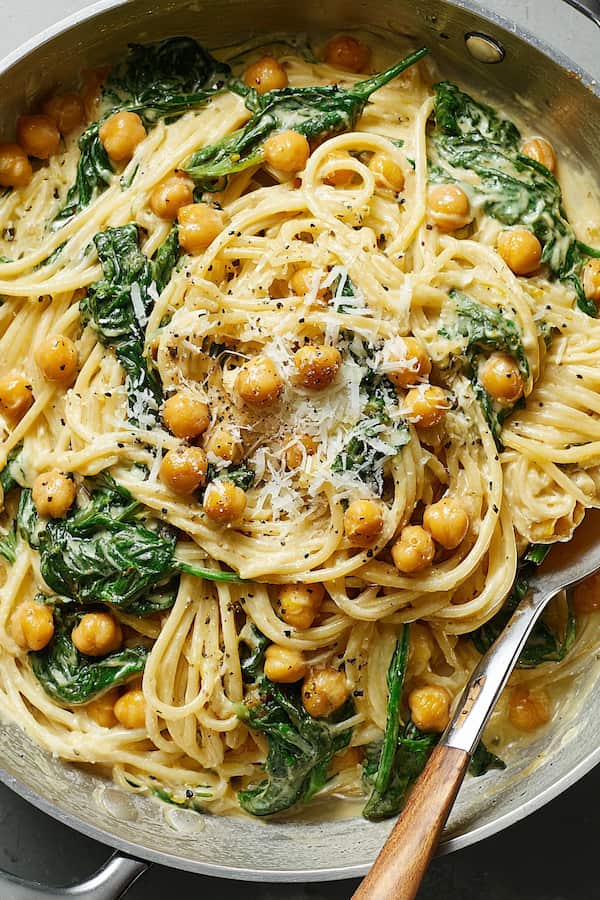
This chickpea pasta comes together in one pan in about 30 minutes and doesn’t require anything fancy.
The sauce is creamy, the chickpeas add texture and protein, and the whole thing is filling enough to work as a complete meal. It’s the kind of weeknight dinner you’ll stop thinking of as a backup plan and start making on purpose.
Ingredients
Serves: 4
For the pasta:
- 12 oz spaghetti or linguine
- 1 can (15 oz) chickpeas, drained and rinsed
- 2 tablespoons olive oil, divided
- 4 cloves garlic, minced
- 1/2 teaspoon red pepper flakes
- 1/2 cup reserved pasta water
- Salt and black pepper to taste
- 2 large handfuls fresh spinach
- Fresh parsley, chopped, to serve
For the creamy sauce:
- 1 cup heavy cream or full-fat coconut milk (for dairy-free)
- 1/2 cup grated parmesan, plus more to serve
- 1 teaspoon lemon zest
- 1 tablespoon lemon juice
- 1 teaspoon Dijon mustard
- 1/4 teaspoon nutmeg
Why You Must Try This Chickpea Pasta Recipe
Pasta with chickpeas is a combination that goes back centuries in Italian cooking — and for good reason. It’s satisfying, inexpensive, and comes together with things most people already have. But this version takes it a step further with a creamy, parmesan-laced sauce that makes the whole dish feel more complete than a basic pantry meal. Here’s why it works:
Chickpeas replace the need for meat. They add enough protein and substance that you won’t miss it, and when some of them get slightly golden in the pan, they bring a texture the sauce alone can’t.
The sauce uses pasta water to come together. The starchy water emulsifies the cream and parmesan into something silky rather than heavy. It’s a simple technique that makes a real difference.
Lemon and Dijon cut through the richness. Without them, a cream sauce can sit heavy. These two ingredients keep it balanced and make the flavors sharper.
It’s a one-pan meal after you cook the pasta. Everything finishes in the same skillet, which means less cleanup and more time sitting down.
Crisp the Chickpeas First
Drain and rinse your chickpeas, then spread them on a paper towel and pat them as dry as you can. Moisture is what stops them from crisping up, so don’t skip this step. Heat one tablespoon of olive oil in a large skillet over medium-high heat. Add the chickpeas in a single layer and cook without stirring for 3 to 4 minutes until the undersides are golden.
Toss them, cook for another 2 minutes, then season with salt, pepper, and a pinch of red pepper flakes. Remove them from the pan and set aside — you’ll add them back at the end.
Cook the Pasta
Bring a large pot of salted water to a boil. Cook the spaghetti or linguine until just al dente — usually one minute less than the package says. Before you drain it, scoop out at least a full cup of pasta water and set it aside.
The pasta water is essential here, not optional. It’s starchy and salty and it’s what helps the sauce coat the pasta evenly rather than pooling at the bottom of the pan.
Build the Sauce
In the same skillet you used for the chickpeas, add the remaining tablespoon of olive oil over medium heat. Add the minced garlic and cook for about 90 seconds — just until it smells fragrant and starts to turn golden at the edges.
Pour in the cream and stir in the Dijon mustard, lemon zest, and nutmeg. Let it simmer for 2 to 3 minutes until it thickens slightly. Lower the heat before adding the parmesan so it melts smoothly rather than clumping.
Bring It Together
Add the drained pasta to the skillet and toss it through the sauce. Pour in 1/4 cup of the reserved pasta water and keep tossing until the sauce clings to the noodles. If it looks too thick, add more pasta water a splash at a time.
If you’re adding spinach, stir it in now and let the heat of the pan wilt it — it takes about a minute. Add the lemon juice, taste for salt and pepper, then fold the crisped chickpeas back in. Serve straight from the pan.
Plate and Finish
Divide the pasta between bowls and finish each one with extra parmesan, a pinch of red pepper flakes, and fresh parsley if you have it. The parsley adds color and a slightly grassy note that works well against the richness of the sauce.
Serve with crusty bread on the side to catch the leftover sauce in the bowl — it’s worth it.
How To Make This Chickpea Pasta Recipe Better
This recipe is solid as written, but here are a few ways to push it further depending on what you’re working with:
- Toast the garlic longer than you think. Most people pull it off heat too early out of fear of burning it. Letting it get genuinely golden — not just pale — adds a deeper, nuttier flavor to the whole sauce.
- Add sun-dried tomatoes. A small handful stirred in with the garlic gives the sauce an underlying sweetness and a bit of acidity that makes everything taste more layered.
- Use coconut milk instead of cream. It keeps the dish dairy-free and adds a subtle sweetness that works surprisingly well with the lemon and garlic. Skip the parmesan or use a dairy-free alternative.
- Finish with a drizzle of chili oil. If you want heat without the sharpness of red pepper flakes, chili oil stirred in at the end gives a slower, more even warmth.
- Double the chickpeas. If you want the dish to feel heartier or you’re feeding people who eat a lot, using two cans instead of one doesn’t change the balance — it just makes the whole thing more substantial.
Storage
Store leftovers in an airtight container in the fridge for up to 3 days. The pasta will absorb the sauce as it sits, so when reheating, add a splash of water or broth to the pan and warm it over low heat, stirring until it loosens.
Avoid microwaving if you can — the sauce tends to separate with intense, uneven heat. The chickpeas will lose some of their crunch overnight, but the flavor of the dish holds up well.
Can You Make Chickpea Pasta Ahead of Time?
You can, with some adjustments. The sauce and chickpeas can be made ahead and stored separately in the fridge for up to 2 days.
Cook the pasta fresh when you’re ready to eat and toss everything together in the pan with a splash of pasta water to bring the sauce back to the right consistency.
If you store the full assembled dish, it reheats fine but the texture of the chickpeas changes and the pasta absorbs a lot of the sauce. For meal prep, keeping the components separate gives you a much better result.
What Pasta Shape Works Best for This Recipe?
Spaghetti and linguine work well because the long strands wrap around the chickpeas and hold a good amount of sauce. But this recipe isn’t locked into a specific shape. Short pasta like rigatoni, penne, or orecchiette also works — the tubes and ridges catch the sauce differently, which some people prefer.
Orecchiette is a traditional pairing with chickpeas in southern Italian cooking and holds up especially well. Avoid very thin pasta like angel hair, which tends to clump and doesn’t carry a cream sauce as effectively.
Chickpea pasta is one of those meals that earns a permanent spot in your weeknight rotation. It’s fast, uses mostly pantry ingredients, and tastes like something that took more effort than it did. Make it once and you’ll see why it keeps showing up on dinner tables.
Ingredients
Method
- Pat chickpeas dry with paper towels. Heat 1 tablespoon olive oil in a large skillet over medium-high heat. Cook chickpeas in a single layer for 3–4 minutes without stirring, then toss and cook 2 more minutes until golden. Season with salt, pepper, and red pepper flakes. Remove from pan and set aside.
- Bring a large pot of salted water to a boil. Cook pasta until just al dente, one minute less than package directions. Before draining, scoop out at least 1 cup of pasta water and set aside. Drain the pasta.
- In the same skillet over medium heat, add remaining 1 tablespoon olive oil. Cook garlic for 90 seconds until golden. Pour in cream, stir in Dijon mustard, lemon zest, and nutmeg. Simmer 2–3 minutes until slightly thickened. Lower heat and stir in parmesan until melted and smooth.
- Add drained pasta to the skillet and toss to coat. Add 1/4 cup pasta water and keep tossing until sauce clings to the noodles, adding more water as needed. Stir in spinach if using and let it wilt for 1 minute. Add lemon juice and taste for seasoning.
- Fold in crisped chickpeas. Divide between bowls and top with extra parmesan, parsley, and red pepper flakes. Serve immediately.
Notes
- Reserve pasta water before draining — it’s essential for the sauce
- Pat chickpeas completely dry for the best crispiness
- Swap heavy cream for coconut milk to make it dairy-free
- Leftovers keep in the fridge for up to 3 days — reheat on the stovetop with a splash of water
- Double the chickpeas for a heartier meal