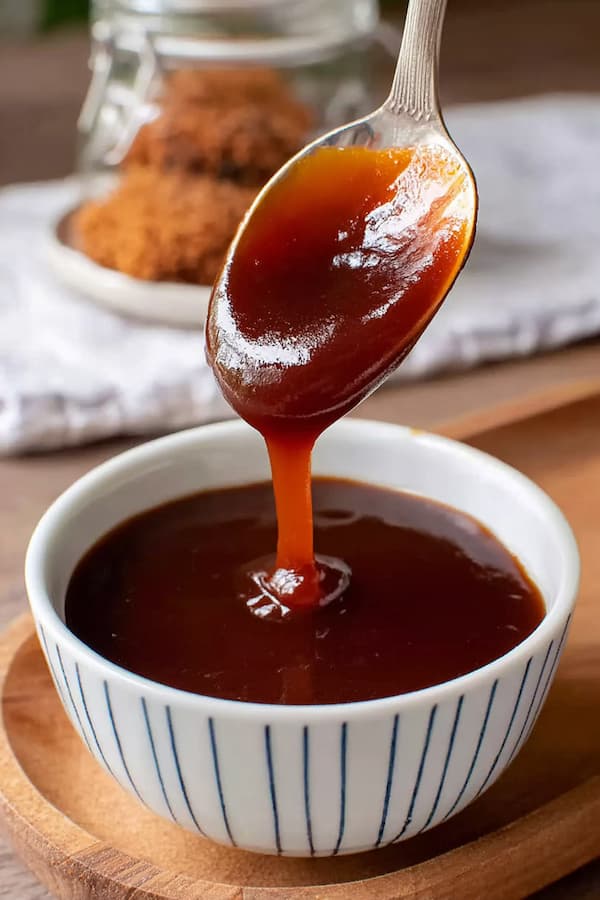
Katsu sauce is the thick, tangy, slightly sweet Japanese condiment that goes with tonkatsu, chicken katsu, and just about any fried food you put in front of it.
This homemade version uses ingredients you likely already have — Worcestershire sauce, ketchup, soy sauce, and a few others — and takes under five minutes to make. Once you’ve tried it fresh, going back to bottled sauce stops being something you want to do.
Ingredients
Makes: about 1/2 cup (serves 4–6 as a dipping sauce)
For the katsu sauce:
- 4 tablespoons Worcestershire sauce
- 2 tablespoons ketchup
- 1 tablespoon soy sauce
- 1 tablespoon oyster sauce
- 1 teaspoon Dijon mustard
- 1 teaspoon sugar (or to taste)
- 1/2 teaspoon garlic powder
- 1/4 teaspoon ground ginger (or 1/2 teaspoon fresh, finely grated)
- 1/4 teaspoon black pepper
Why You Must Try This Homemade Katsu Sauce Recipe
Store-bought katsu sauce works, but it’s often too sweet with a one-note flavor that sits on top of food rather than enhancing it. This homemade version gives you control over the balance — you can pull it sharper with more Worcestershire, sweeter with more sugar, or deeper with more oyster sauce depending on what you’re serving it with.
The Dijon and ginger add a faint sharpness that packaged sauce usually lacks. It takes five minutes, uses no unusual ingredients, and tastes noticeably closer to what you’d get at a proper Japanese restaurant.
Keep a jar in the fridge and you’ll find uses for it beyond just katsu.
Know Your Ingredients
Worcestershire sauce is the backbone of katsu sauce — it brings a fermented, slightly tangy depth that you can’t get from anything else in the list. Don’t substitute it. Oyster sauce adds sweetness and a thick, savory quality that pushes the sauce toward the consistency of the bottled version.
If you’re cooking for someone who avoids shellfish, you can use hoisin sauce in its place — the flavor shifts slightly but the result is still good. Ketchup brings both sweetness and acidity, and the soy sauce adds saltiness that ties everything together.
Dijon replaces the hot mustard that traditional tonkatsu sauce sometimes contains — it’s milder but still gives the sauce an edge.
Mix It Together
Combine all the ingredients in a small bowl and whisk until fully combined. That’s the entire process. There’s no cooking involved — the Worcestershire, soy, and oyster sauce are already deeply flavored and don’t need heat to activate.
Once everything is mixed, taste the sauce. It should have a balance of savory, sweet, and tangy — none of those three elements should completely dominate. If it tastes too sharp, add a little more sugar. If it tastes too sweet, a few more drops of Worcestershire brings it back.
If it needs more salt, a small splash more soy sauce is all it takes.
Let It Sit
Katsu sauce is good immediately but noticeably better after 30 minutes of resting. During that time the flavors from the individual ingredients blend together and the garlic powder and ginger stop tasting separate from the rest of the sauce.
If you’re making this ahead of time for a meal, mix it and refrigerate it for at least half an hour before serving.
The difference between freshly mixed and rested sauce is most obvious when you taste them side by side — the rested version tastes more cohesive and less like individual condiments stirred together.
How to Serve It
Pour the sauce into a small dipping bowl alongside whatever you’re serving. Katsu sauce works with chicken katsu, pork tonkatsu, fried tofu, tempura, and even as a condiment spread on a sandwich or burger. It also works as a dipping sauce for spring rolls or gyoza if you don’t have a specific Japanese dipping sauce on hand.
The flavor profile — savory, slightly sweet, tangy — is broad enough that it pairs with most fried and grilled foods without clashing. A small squeeze bottle kept in the fridge is the most practical way to store and use it regularly.
How To Make This Homemade Katsu Sauce Recipe Better
The base recipe is balanced and ready to use as written. These adjustments take it in different directions:
Add mirin. A tablespoon of mirin in place of the sugar adds sweetness with a subtle sake-like quality that makes the sauce taste more authentically Japanese. It’s the closest substitute to what goes into commercial katsu sauce in Japan.
Use fresh ginger instead of ground. Finely grate about half a teaspoon of fresh ginger into the mix. It gives the sauce a brighter, slightly spicier edge than ground ginger and makes the whole thing taste fresher.
Add a dash of hot sauce. A few drops of Tabasco or a small amount of sriracha stirred in gives the sauce a background heat that works well if you’re serving it with pork or chicken. Start small — the sauce already has Worcestershire and mustard doing some of that work.
Simmer it briefly for a thicker result. If you want a sauce that clings to food rather than pooling on the plate, pour everything into a small saucepan and simmer over medium-low heat for 5 minutes, stirring frequently. It thickens as it reduces and the flavors concentrate slightly.
Swap ketchup for tomato paste. Use one tablespoon of tomato paste instead of two tablespoons of ketchup for a sauce that’s less sweet and more deeply savory. Add a pinch of sugar to compensate since tomato paste doesn’t have the sweetness ketchup does.
Storage
Store katsu sauce in a sealed jar or airtight container in the fridge for up to 2 weeks. The flavor actually continues improving over the first couple of days as the ingredients fully meld together. Give it a quick stir before each use since the components can separate slightly after sitting.
There’s no need to bring it to room temperature before serving — it works straight from the fridge as a dipping sauce. Don’t freeze it — the texture and flavor of Worcestershire-based sauces don’t hold up well after freezing and thawing.
What Is Katsu Sauce Made Of?
Traditional Japanese katsu sauce — sold under brand names like Bulldog or Ikari — is made from a base of vegetables and fruits including tomatoes, onions, carrots, prunes, and apples, combined with vinegar, sugar, and spices.
The fruit gives it a natural sweetness and thickness that sets it apart from Western condiments. Homemade versions like this one replicate that flavor profile using Worcestershire sauce as the base, which is itself made from fermented anchovies, tamarind, vinegar, and spices — giving it a similar depth and complexity.
The ketchup and oyster sauce fill in for the fruit-based sweetness of the original. It’s not identical to the bottled Japanese version, but it’s close enough that most people can’t tell the difference once it’s on the plate.
Can You Use Katsu Sauce as a Marinade?
Yes, and it works particularly well with chicken and pork. The Worcestershire and soy sauce base is already acidic and salty enough to act as a marinade, and the sugar caramelizes on the surface of the meat when it hits heat.
For best results, marinate the protein for at least 30 minutes and up to 4 hours in the fridge — longer than that and the salt in the soy sauce starts to cure the meat rather than season it, which changes the texture. If you’re using it as a glaze rather than a marinade, brush it on in the last few minutes of cooking so the sugar doesn’t burn.
It works especially well brushed onto grilled chicken thighs or pork chops.
Homemade katsu sauce takes five minutes and keeps for two weeks in the fridge. Once you have a jar of it on hand, it ends up on more things than just katsu — and that’s never a problem.
Ingredients
Method
- Add all ingredients to a small bowl. Whisk until fully combined and smooth.
- Taste the sauce. If too sharp, add a little more sugar. If too sweet, add a few more drops of Worcestershire. If it needs salt, add a small splash of soy sauce.
- Cover and refrigerate for at least 30 minutes before serving. The flavors blend and mellow significantly during this time.
- Pour into a small dipping bowl and serve alongside chicken katsu, pork tonkatsu, fried tofu, or any fried food. Stir before each use if stored.
Notes
- No cooking required — this is a mix-and-rest sauce
- Resting for 30 minutes makes a noticeable difference — don’t skip it
- For a thicker sauce, simmer all ingredients in a small saucepan for 5 minutes over medium-low heat
- Swap oyster sauce for hoisin to make it shellfish-free
- Replace sugar with mirin for a more authentic Japanese flavor
- Keeps in the fridge for up to 2 weeks in a sealed jar
- Works as a marinade for chicken or pork — marinate up to 4 hours