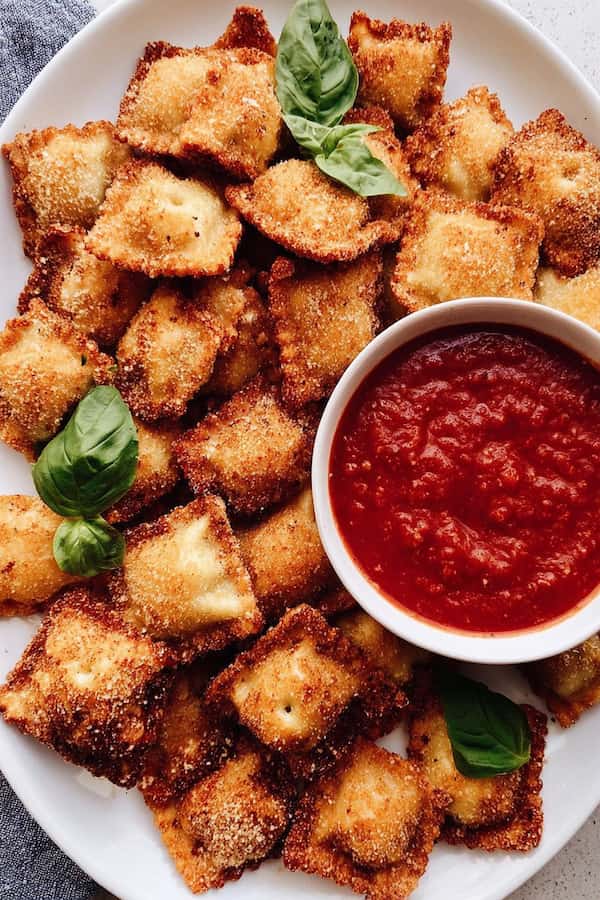
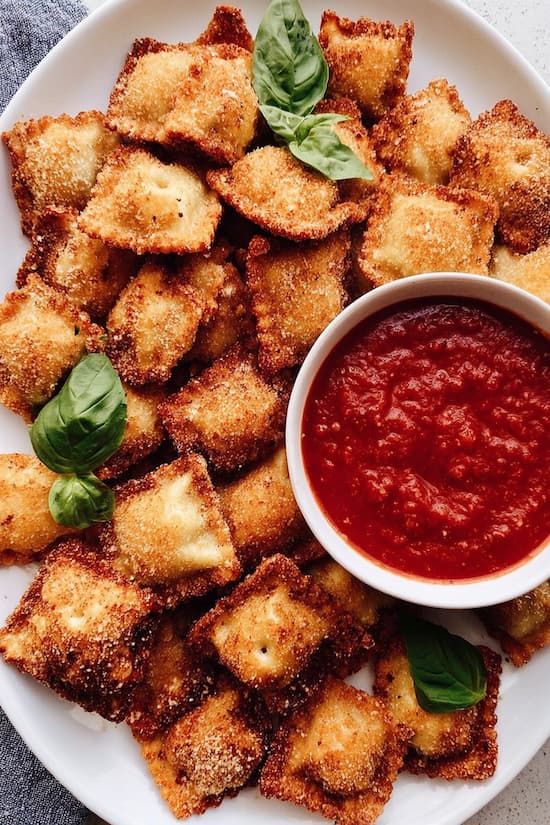
Toasted ravioli is a St. Louis original — cheese or meat-filled ravioli coated in seasoned breadcrumbs, fried until golden, and served with marinara for dipping.
It sounds like a restaurant-only dish but it’s one of the easier appetizers you can make at home, especially if you use store-bought ravioli. Once you put a plate of these on the table, they don’t last long.
Ingredients
Serves: 4–6 (makes about 24 pieces)
For the toasted ravioli:
- 1 package (about 24 pieces) fresh or frozen cheese ravioli
- 1 cup panko breadcrumbs
- 1/2 cup seasoned Italian breadcrumbs
- 1/2 cup grated parmesan, plus more to serve
- 1 teaspoon Italian seasoning
- 1/2 teaspoon garlic powder
- 1/2 teaspoon onion powder
- 1/4 teaspoon smoked paprika
- 2 eggs, beaten
- 1/4 cup whole milk
- Vegetable oil for frying (2–3 inches deep)
For the quick marinara:
- 1 can (14 oz) crushed tomatoes
- 2 cloves garlic, minced
- 1 tablespoon olive oil
- 1/2 teaspoon dried oregano
- 1/2 teaspoon dried basil
- 1/4 teaspoon red pepper flakes (optional)
- Salt and black pepper to taste
- 1 teaspoon sugar (optional, to balance acidity)
Why You Must Try This Toasted Ravioli with Marinara Sauce Recipe
Most people have had ravioli in pasta form but never thought to fry it. Toasted ravioli changes the whole experience — the pasta shell becomes a crunchy casing around a warm cheese filling, and when you dip it in marinara it eats more like a satisfying snack than a starter.
The recipe works with any filled ravioli you can find at the store, fresh or frozen, which means the prep time is mostly just coating and frying. It’s the kind of appetizer that converts people who claim they don’t care about starters, and it’s easy enough to make for a weeknight alongside a simple salad.
Make the Marinara First
The marinara comes together in about 15 minutes and can sit on the lowest heat setting while you fry the ravioli. Heat the olive oil in a small saucepan over medium heat and add the minced garlic. Cook for about 90 seconds until it just starts to turn golden — don’t let it brown or it will turn bitter and that flavor carries through the whole sauce.
Pour in the crushed tomatoes and add the oregano, basil, red pepper flakes if using, salt, and pepper. Let it simmer on medium-low for 12 to 15 minutes, stirring occasionally. Taste and add a teaspoon of sugar if it needs balancing. The sauce should be thick enough to coat a spoon before you serve it.
Set Up the Breading Station
Mix the panko, seasoned breadcrumbs, parmesan, Italian seasoning, garlic powder, onion powder, and smoked paprika together in a wide shallow bowl. In a second bowl, whisk the eggs with the milk until smooth.
The milk thins the egg wash slightly so it coats the ravioli more evenly and gives the breadcrumbs something to stick to across the whole surface.
If you’re using frozen ravioli, let them thaw completely and pat them dry before dipping — excess moisture creates steam in the fryer which can pop the ravioli open or make the coating slide off.
Coat Each Piece
Working one at a time, dip each ravioli into the egg wash and let the excess drip off before pressing it firmly into the breadcrumb mixture. Make sure to cover all sides — the edges and corners are the spots that get missed most often.
Press the crumbs in rather than just rolling the ravioli through them; the difference in crust adhesion is noticeable once they hit the oil. Place the coated ravioli in a single layer on a parchment-lined tray as you go.
For a thicker, crunchier crust, double coat — egg wash, breadcrumbs, egg wash again, breadcrumbs again. Refrigerate the coated ravioli for 15 minutes before frying if you have time.
Fry to Golden
Heat the oil in a deep heavy pot to 350°F. Fry the ravioli in batches of 4 to 6 pieces, turning once or twice, for 2 to 3 minutes total until the crust is deep golden and the filling is hot through. Don’t overcrowd the pot — too many pieces at once drops the oil temperature and the coating absorbs grease rather than crisping.
Remove each batch to a wire rack to drain rather than paper towels, which trap steam underneath and soften the bottom crust. Let the oil come back to 350°F between batches before adding the next round.
Finish and Serve
As soon as the ravioli come off the rack, dust them with extra grated parmesan while they’re still hot — it sticks to the surface and adds a salty, savory layer on the outside. Scatter fresh parsley over the top.
Serve immediately with the warm marinara in a bowl alongside for dipping. Toasted ravioli doesn’t hold well — the crust softens within 10 minutes of coming out of the oil, so get them to the table fast. If you’re frying in multiple batches for a larger group, keep the finished ravioli warm in a 200°F oven on a wire rack while the rest cook.
How To Make This Toasted Ravioli with Marinara Sauce Recipe Better
These changes take the recipe further without adding much extra work:
Use meat-filled ravioli. Cheese ravioli is the standard but beef or sausage-filled ravioli gives the bites more substance and a richer flavor that stands up to marinara better. Both work with the same coating and frying method.
Add lemon zest to the breadcrumb mix. Half a teaspoon mixed into the panko adds a brightness that stops the coating from tasting flat. It’s especially noticeable if you’re serving these alongside a lighter dipping sauce.
Make a vodka sauce instead of marinara. A quick vodka sauce — cream, crushed tomatoes, garlic, and a splash of vodka reduced in the pan — is a richer alternative that works particularly well with cheese ravioli.
Air fry for a lighter version. Spray the coated ravioli generously with cooking spray and air fry at 400°F for 6 to 8 minutes, flipping once halfway through. The crust won’t be quite as uniformly golden as deep frying, but the texture is still good and the filling heats through properly.
Serve with multiple dipping sauces. Marinara is traditional but alfredo sauce, pesto, or a simple garlic butter all work alongside it. Offering two or three options makes this more of an interactive appetizer and suits different tastes at the table.
Storage
Toasted ravioli is a make-and-eat dish. Once fried, it doesn’t store or reheat particularly well since the crust softens significantly as it cools. The better approach is to coat the ravioli ahead of time and freeze them unfried.
Arrange the coated pieces in a single layer on a tray, freeze until solid, then transfer to a zip-lock bag. They keep frozen for up to a month. Fry directly from frozen at 350°F for 3 to 4 minutes — the slightly longer time accounts for the frozen starting temperature.
The marinara sauce keeps in the fridge for up to 5 days and reheats easily on the stovetop.
Can You Use Frozen Ravioli for Toasted Ravioli?
Yes, and it works well. The key is thawing them completely before coating. Frozen ravioli that goes straight into the egg wash is still partially icy in the center, which means the filling doesn’t heat through in the time it takes the crust to cook.
Thaw them in the fridge overnight or at room temperature for 30 to 45 minutes before you start. Once thawed, pat them dry with a paper towel to remove surface moisture — wet ravioli makes the coating slide and creates steam pockets in the fryer.
Fresh ravioli from the refrigerated section of the store is the easiest to work with since it skips the thawing step entirely.
What’s the Best Ravioli Filling for This Recipe?
Cheese ravioli is the most versatile option and the one that works in the widest range of settings — it pairs with any dipping sauce and suits both vegetarians and non-vegetarians at the table. Beef or sausage-filled ravioli gives you more savory depth and holds up well if you’re serving this as a more substantial appetizer.
Spinach and ricotta is a good middle-ground option — it’s vegetarian and has more flavor than plain cheese. Avoid very delicate fillings like seafood, which can become rubbery when fried. Whatever filling you choose, make sure the ravioli are sealed properly at the edges before coating — any opening becomes a leak point in the hot oil.
Toasted ravioli is the kind of appetizer that earns its place at the table without requiring much from you. Store-bought ravioli, a simple coating, and a quick marinara is all it takes. Make them once and you’ll understand why this St. Louis staple has stuck around.
Ingredients
Method
- Heat olive oil in a small saucepan over medium heat. Add garlic and cook 90 seconds until just golden. Add crushed tomatoes, oregano, basil, red pepper flakes, salt, and pepper. Simmer on medium-low for 12–15 minutes until thickened. Add sugar if needed to balance acidity. Keep warm.
- Mix panko, seasoned breadcrumbs, parmesan, Italian seasoning, garlic powder, onion powder, and smoked paprika in a shallow bowl. Whisk eggs with milk in a second bowl. If using frozen ravioli, thaw completely and pat dry before coating.
- Dip each ravioli in the egg wash, let excess drip off, then press firmly into the breadcrumb mixture on all sides. Place on a parchment-lined tray. For a thicker crust, double coat. Refrigerate 15 minutes before frying if time allows.
- Heat oil to 350°F in a deep heavy pot. Fry in batches of 4–6 pieces for 2–3 minutes, turning once or twice, until deep golden. Drain on a wire rack. Return oil to 350°F between batches.
- Dust hot ravioli with extra parmesan immediately out of the fryer. Scatter fresh parsley on top. Serve straight away with warm marinara for dipping.
Notes
- Pat thawed frozen ravioli dry before coating — moisture makes the crust slide off
- Press breadcrumbs firmly onto all sides including edges and corners
- Drain on a wire rack not paper towels — it keeps the bottom crust crisp
- Air fryer option: spray well and cook at 400°F for 6–8 minutes, flipping once
- Freeze unfried coated ravioli for up to 1 month — fry from frozen at 350°F for 3–4 minutes
- Marinara keeps in the fridge for up to 5 days — make it ahead and reheat