
Labneh is strained yogurt that’s been left to drain long enough to become thick and spreadable — somewhere between Greek yogurt and cream cheese in texture, with a tangy flavor that works in both savory and sweet contexts.
It’s a staple across the Middle East and one of the easiest things you can make at home with two ingredients and a little patience. Once you have a batch in the fridge, you’ll find yourself reaching for it more than almost anything else.
Ingredients
Makes: about 1.5 cups (serves 6–8 as a spread or dip)
For the labneh:
- 4 cups (32 oz) whole milk plain yogurt (not Greek yogurt — see notes)
- 1 teaspoon fine salt
To serve (the classic way):
- 2–3 tablespoons extra virgin olive oil
- 1 teaspoon za’atar
- Pinch of flaky sea salt
- Fresh mint leaves (optional)
- Warm pita bread or flatbread
Equipment:
- Cheesecloth or a thin clean kitchen towel
- Fine mesh sieve or colander
- Large bowl (tall enough for liquid to drip without touching the bottom)
Why You Must Try This Homemade Labneh Recipe
Store-bought labneh exists and it’s fine, but homemade is a different experience. When you make it yourself, you control the saltiness, the thickness, and how long it strains — which gives you everything from a pourable yogurt dressing to something firm enough to roll into balls.
The process is almost entirely hands-off: mix salt into yogurt, tie it in cheesecloth, and leave it in the fridge. The result is something you can use as a dip, a spread, a sauce base, a dessert topping, or a substitution for cream cheese or ricotta in a dozen different recipes.
Two ingredients and 12 to 24 hours is all it takes.
Start With the Right Yogurt
The yogurt you choose determines the flavor and texture of the finished labneh. Whole milk plain yogurt gives the best result — it has enough fat to produce a creamy, rich labneh after straining.
Low-fat yogurt produces a thinner, slightly grainier result that doesn’t have the same texture or flavor. Greek yogurt is already partially strained, which means it produces labneh faster but the flavor is slightly different and often more sharp.
If that’s what you have, it works — just reduce the straining time to 8 to 12 hours. Whatever yogurt you use, check that it contains live active cultures and no added thickeners or stabilizers, which can affect how well it strains.
Salt and Set Up the Strain
Stir the salt into the yogurt until completely dissolved. This is the only seasoning the labneh gets, so taste the yogurt mixture before straining — it should taste noticeably salty, saltier than you’d eat plain yogurt.
The flavor mellows as moisture drains out and the labneh thickens. Line a fine mesh sieve or colander with two layers of cheesecloth or a thin, clean kitchen towel. Pour the salted yogurt into the cloth. Bring the corners of the cloth together and tie them with kitchen twine or a rubber band.
Set the sieve over a tall bowl — the liquid needs to drip freely without the cloth sitting in the collected whey.
Into the Fridge It Goes
Place the whole setup — bowl, sieve, and cloth — in the refrigerator. Straining at room temperature is possible but refrigerating is safer and produces a better texture. Let it drain for a minimum of 12 hours.
After 12 hours you’ll have a spreadable labneh similar in consistency to thick cream cheese. After 24 hours it will be firmer and denser. After 48 hours it will be firm enough to roll into balls. Check it once or twice during straining and pour off the collected whey from the bowl if it gets close to the bottom of the sieve.
The whey is useful — save it for adding to bread dough, smoothies, or soups.
Check the Texture
When the labneh has reached the consistency you want, unwrap it and transfer it to a container or serving dish. It should be smooth, thick, and hold its shape when scooped.
Taste it now and adjust the salt if needed — add a small pinch and stir through if it tastes flat. If it seems too thick for your intended use, stir in a tablespoon of the collected whey or a small drizzle of olive oil to loosen it slightly.
The flavor at this stage is tangy and clean — noticeably different from the yogurt you started with.
Serve the Classic Way
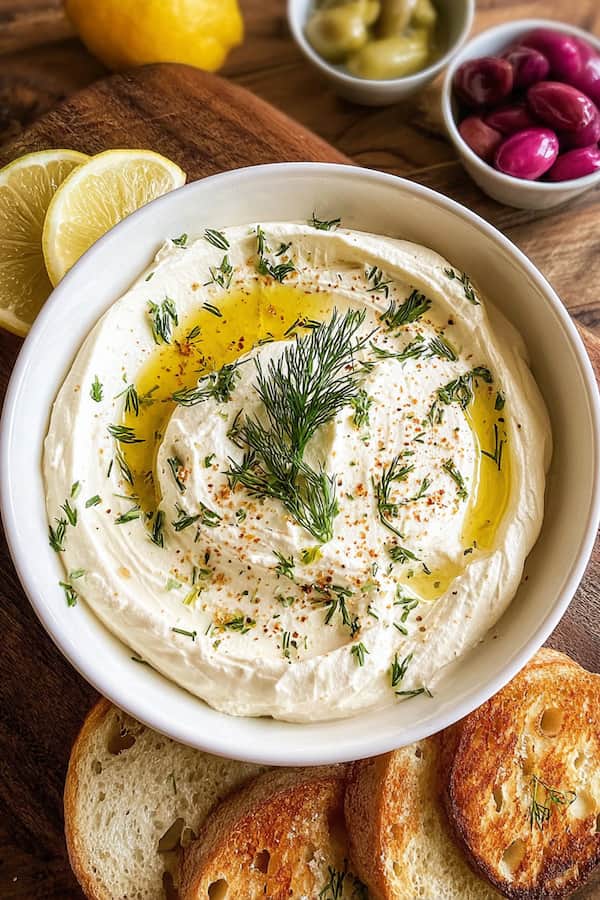
Spread the labneh onto a plate using the back of a spoon, creating a slight well in the center. Drizzle olive oil generously over the top — don’t be conservative here, the oil is part of the dish, not a garnish.
Sprinkle za’atar over the olive oil. Add a pinch of flaky salt and a few fresh mint leaves if you have them. Serve with warm pita or flatbread alongside. This is the traditional way to eat labneh across the Levant and it’s the version that converts most people immediately.
The combination of tangy labneh, grassy olive oil, and herby za’atar is one of those flavor combinations that tastes complete — nothing feels missing.
How To Make This Homemade Labneh Recipe Better
The base recipe is two ingredients and needs nothing else to be good. These additions change the direction depending on how you’re using it:
Make labneh balls. After 48 hours of straining, roll the firm labneh into small balls using lightly oiled hands. Place them in a clean jar and cover with olive oil. Add dried chili, fresh thyme, or garlic cloves to the jar. They keep for two weeks in the fridge and look impressive on a cheese board.
Make herbed labneh. Stir finely chopped parsley, mint, chives, and one grated garlic clove into the finished labneh. This version works as a dip for vegetables, a sandwich spread, or a sauce for grilled chicken or fish.
Top with roasted cherry tomatoes. Roast a cup of cherry tomatoes with olive oil, garlic, and thyme at 400°F for 20 minutes until blistered. Spoon them over a plate of labneh while still warm. The tomato juices run into the labneh and the combination with bread is one of the best things you can put on a table.
Use it as a pasta sauce. Toss hot drained pasta with labneh, a splash of pasta water, garlic, olive oil, and za’atar. The heat of the pasta loosens the labneh into a sauce. It’s fast, filling, and requires almost no extra work.
Serve it sweet. Spread labneh on toast and top with honey, sliced fruit, and a small handful of crushed pistachios. It works as a breakfast or a light dessert. The tanginess of the labneh plays well against the sweetness of the honey and fruit.
Storage
Store labneh in an airtight container in the fridge for up to 2 weeks. A thin layer of olive oil poured over the top before sealing helps preserve it and prevents the surface from drying out.
Stir before each use. Labneh balls stored submerged in olive oil keep for up to 3 weeks. Don’t freeze plain labneh — the texture breaks down when thawed. The collected whey from straining keeps in the fridge for up to a week and can be used in bread dough, soup bases, smoothies, or as a marinade liquid for chicken.
What Is the Difference Between Labneh and Greek Yogurt?
Both are strained yogurt, but labneh is strained significantly longer. Greek yogurt is typically strained for a few hours to remove some whey, resulting in a thick but still pourable yogurt.
Labneh is strained for 12 to 48 hours, removing far more whey and producing something that’s closer to cream cheese in texture — firm, spreadable, and dense rather than spoonable. The flavor difference is also notable.
Greek yogurt tastes like a thicker version of plain yogurt. Labneh has a more concentrated tang and a slightly salty quality that makes it taste more like a cheese than a dairy product.
In terms of uses, Greek yogurt sits naturally with fruit and granola while labneh belongs on a mezze table or a cheese board.
What Is Za’atar and Where Do You Find It?
Za’atar is a Middle Eastern spice blend made from dried thyme or oregano, sesame seeds, sumac, and salt.
The exact ratio varies by region and family, but the overall flavor is herby, nutty, and slightly tangy from the sumac. It’s one of the most useful spice blends to have in a kitchen — it works on labneh, eggs, roasted vegetables, bread, and grilled meat.
In the US, za’atar is widely available at Middle Eastern grocery stores, Whole Foods, specialty food shops, and online. If you can’t find it, a rough substitute is a mix of dried thyme, toasted sesame seeds, a pinch of sumac if you have it, and a small pinch of salt — it won’t be identical but it captures the general character. Once you have a jar of za’atar, you’ll find uses for it beyond just labneh.
Homemade labneh is one of the most useful things you can have in your fridge. It takes two ingredients, requires almost no active work, and opens up more recipe possibilities than most people expect from something that’s essentially just strained yogurt. Make a batch this week and see how many different ways you end up using it.
Ingredients
Method
- Stir salt into the yogurt until fully dissolved. Taste — it should be noticeably salty. The flavor mellows as the labneh strains and thickens.
- Line a fine mesh sieve or colander with two layers of cheesecloth. Pour in the salted yogurt. Bring the corners of the cloth together and tie with kitchen twine. Set the sieve over a tall bowl so the liquid drips freely without the cloth touching the collected whey.
- Place the whole setup in the refrigerator. Let it strain for 12 hours for a soft, spreadable labneh — or 24 hours for a firmer texture. For labneh balls, strain for 48 hours. Pour off collected whey if it nears the bottom of the sieve.
- Unwrap the labneh and transfer to a bowl or serving dish. Taste and add a small pinch more salt if needed. Stir in a tablespoon of collected whey or olive oil if you want a slightly looser texture.
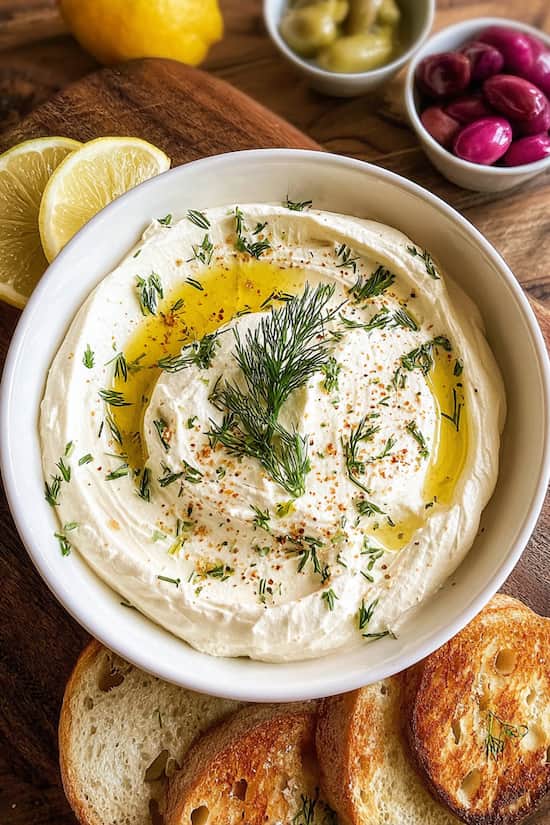
- Spread onto a plate, drizzle generously with olive oil, sprinkle za’atar and flaky salt on top, and add fresh mint if using. Serve with warm pita or flatbread.
Notes
- Use whole milk plain yogurt for the creamiest result — not Greek yogurt (already partially strained)
- If using Greek yogurt, reduce strain time to 8–12 hours
- The labneh should taste saltier than you expect before straining — flavor mellows as it thickens
- Save the collected whey — use in bread dough, smoothies, soups, or marinades
- Store in an airtight container with a thin layer of olive oil on top for up to 2 weeks
- For labneh balls: strain 48 hours, roll into balls, store submerged in olive oil for up to 3 weeks
- Do not freeze — texture breaks down when thawed