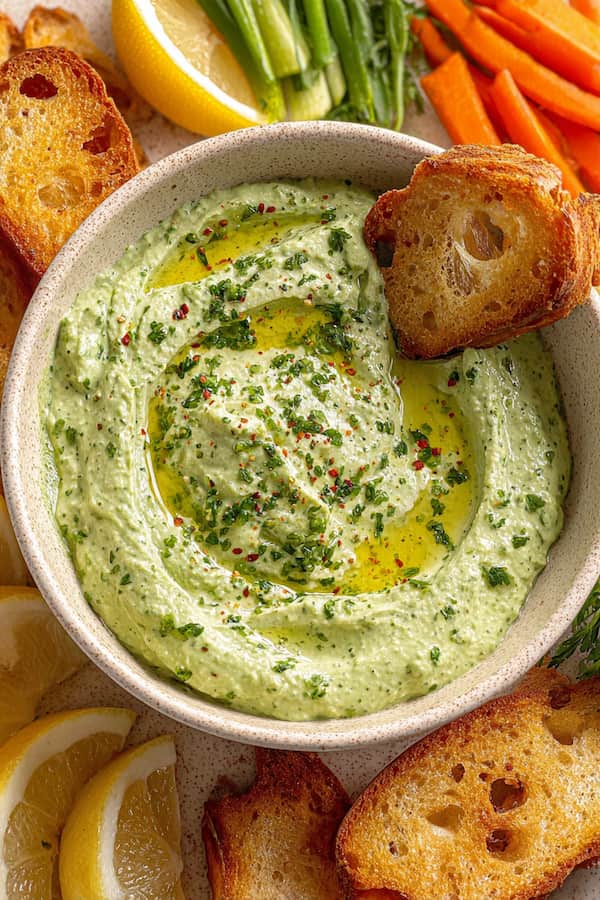
This creamy avocado dip is smoother and more versatile than guacamole — it uses Greek yogurt or sour cream blended with ripe avocado, garlic, lime, and fresh herbs to create something that works as a dip, a sauce, a sandwich spread, or a dressing thinned with a little water.
It takes about five minutes and holds its color longer than plain mashed avocado because the dairy and acid slow the browning process. Once you’ve made it, you’ll use it for more than just chips.
Ingredients
Serves: 6–8 as a dip
For the dip:
- 2 ripe avocados, halved and pitted
- 1/2 cup Greek yogurt or sour cream
- 2 cloves garlic, roughly chopped
- 3 tablespoons fresh lime juice (about 2 limes)
- 1 teaspoon lime zest
- 1/4 cup fresh cilantro leaves (or parsley if you prefer)
- 1 jalapeño, seeded and roughly chopped (optional)
- 2 tablespoons olive oil
- 1/2 teaspoon cumin
- 1/2 teaspoon salt
- 1/4 teaspoon black pepper
- 2–3 tablespoons water (to adjust consistency)
To serve:
- Tortilla chips or pita chips
- Sliced vegetables — cucumber, carrot, bell pepper
- Warm flatbread
Why You Must Try This Creamy Avocado Dip Recipe
The difference between this and standard guacamole comes down to texture and staying power. Blending the avocado with Greek yogurt and olive oil produces a smooth, even consistency that doesn’t separate or turn watery the way mashed guacamole can.
The Greek yogurt adds protein and a mild tang without changing the flavor direction — you still taste the avocado and lime as the main notes. The cumin adds depth that most guacamoles skip, and the garlic is blended in rather than minced, which means it disperses evenly rather than hitting you in one bite.
It’s a dip that works cold from the fridge or at room temperature and holds up for a day longer than plain avocado.
Pick the Right Avocados
Ripe avocados are the only thing that matters at this stage. An underripe avocado will blend into something grainy and slightly bitter, and no amount of lime or seasoning fixes that. Press the avocado gently near the stem end — it should give slightly but not feel mushy.
If it’s rock hard, leave it at room temperature for a day or two. If it’s very soft with dark patches under the skin, it’s overripe and will taste slightly off in the finished dip. A ripe Hass avocado should have dark, nearly black skin and yield to light pressure.
Scoop the flesh out cleanly with a large spoon and discard any brown spots near the skin.
Into the Blender
Add the avocado flesh, Greek yogurt, garlic, lime juice, lime zest, cilantro, jalapeño if using, olive oil, cumin, salt, and pepper to a blender or food processor. Blend on high until completely smooth — stop and scrape down the sides once halfway through.
Add water one tablespoon at a time with the blender running until you reach the consistency you want. For a thick dip, two tablespoons is usually enough. For a sauce or dressing, add a third or even a fourth tablespoon.
Taste after blending — this is your only chance to adjust before serving. Add more lime if it needs brightness, more salt if it tastes flat, or more jalapeño if you want heat.
Taste and Adjust
Dip a chip or a piece of vegetable into the finished dip and taste it the way it’s meant to be eaten — not on a spoon. That gives you a truer sense of the balance. If it tastes too rich, a little more lime juice cuts through it.
If it’s too sharp, a small extra spoonful of Greek yogurt rounds it out. If the avocado flavor isn’t coming through clearly, check that you didn’t over-add the garlic or cumin — both can overwhelm avocado quickly.
A well-balanced avocado dip should taste primarily of avocado and lime, with the garlic, cumin, and cilantro as supporting notes rather than the main event.
Serve or Store
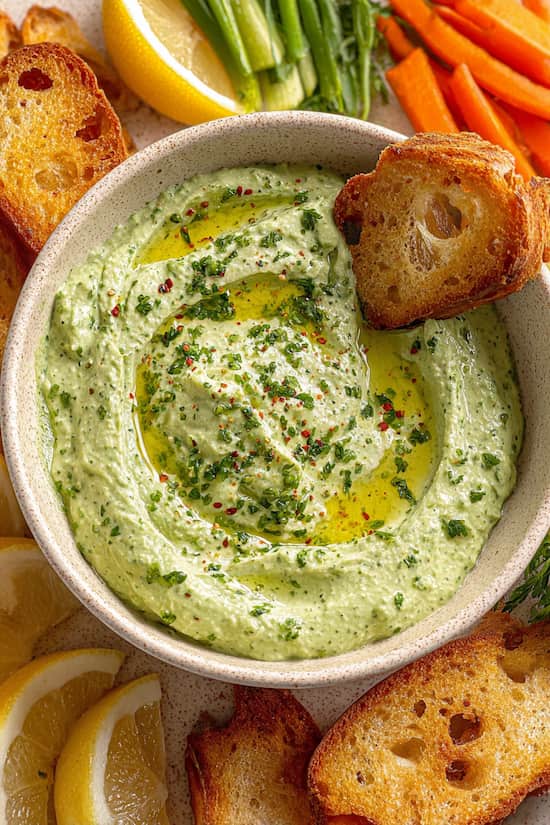
Transfer to a serving bowl and drizzle olive oil over the top. Scatter a few cilantro leaves and a pinch of flaky salt on the surface.
Serve immediately with chips, vegetables, or flatbread. If you’re not serving right away, press a piece of plastic wrap directly onto the surface of the dip before refrigerating — direct contact with the plastic limits air exposure and slows the browning significantly.
The lime juice in the recipe also helps, but the plastic wrap is the most effective method. This dip holds its color well for up to 24 hours when stored this way.
How To Make This Creamy Avocado Dip Recipe Better
These variations move the dip in different directions depending on what you’re using it for:
Add tahini. A tablespoon of tahini blended in adds a nutty, slightly bitter undertone that makes the dip taste more complex. It also helps the dip emulsify more smoothly and adds healthy fat. This version works especially well as a sauce for grain bowls or roasted vegetables.
Use it as a salad dressing. Add an extra tablespoon each of water and lime juice and blend again. The looser consistency works well tossed through a simple green salad or drizzled over a grain bowl. It coats leaves evenly without making them soggy.
Add roasted garlic instead of raw. Roast a whole head of garlic at 400°F for 35 minutes, squeeze out the cloves, and use them in place of raw garlic. It gives the dip a deeper, sweeter garlic flavor that’s less sharp and more mellow.
Stir in diced mango or roasted corn at the end. Don’t blend these in — fold them through after blending for texture. Mango adds sweetness and works well at a summer cookout. Roasted corn adds a smoky-sweet bite that pairs well with the cumin.
Swap cilantro for basil. If you’re using this as a sauce for pasta or pizza, swapping cilantro for fresh basil and lime for lemon moves the dip into Italian flavor territory. It works well as a cold pasta sauce or spread on a flatbread pizza base.
Storage
Store the dip in an airtight container in the fridge for up to 2 days. Press plastic wrap directly onto the surface before sealing to minimize browning.
Some surface darkening is normal — just scrape off the top layer and the bright green dip underneath is still good. Stir before serving.
Don’t freeze avocado dip — the texture turns grainy when thawed and the flavor suffers. Make it fresh or no more than a day ahead for the best result.
What Is the Difference Between Avocado Dip and Guacamole?
Guacamole is traditionally made by mashing avocado with lime, salt, onion, cilantro, and sometimes tomato and jalapeño — the texture is chunky and the avocado is the entire base with no dairy.
Avocado dip is blended smooth and uses Greek yogurt or sour cream as part of the base, which changes both the texture and the flavor. The dairy makes the dip lighter, slightly tangier, and more stable over time. Guacamole is typically served as a Mexican condiment alongside chips, tacos, or burritos.
Avocado dip is more versatile — it works as a sauce, spread, or dressing in addition to being a dip. Neither is better than the other; they serve slightly different purposes.
How Do You Keep Avocado Dip From Turning Brown?
Browning in avocado happens when the flesh is exposed to oxygen — it’s a natural oxidation process that doesn’t affect the flavor, only the color. There are a few practical ways to slow it down. First, use plenty of lime juice — the acid slows the oxidation reaction.
Second, press plastic wrap directly onto the surface of the dip with no air gaps between the wrap and the dip. Third, a thin layer of water or olive oil poured over the surface before covering acts as a physical barrier between the dip and the air. Of these, the plastic wrap method is the most reliable.
The Greek yogurt in this recipe also helps — the dairy creates a slight protective coating across the surface. Even with all these steps, some browning after 24 hours is normal and expected.
Creamy avocado dip is one of those recipes that earns its place beyond the snack table. Make it once and you’ll find yourself using it as a sauce, a spread, and a dressing long after the chips are gone.
Ingredients
Method
- Use ripe avocados only — they should give slightly when pressed near the stem. Scoop the flesh out and discard any brown spots near the skin.
- Add avocado, Greek yogurt, garlic, lime juice, lime zest, cilantro, jalapeño if using, olive oil, cumin, salt, and pepper to a blender or food processor. Blend on high until completely smooth, scraping down the sides once halfway through.
- Add water one tablespoon at a time with the blender running until you reach your preferred texture. 2 tablespoons for a thick dip, 3–4 for a sauce or dressing.
- Taste the dip. Add more lime juice for brightness, more salt if flat, or more jalapeño for heat. The avocado should be the main flavor — garlic and cumin are supporting notes.
- Transfer to a serving bowl. Drizzle with olive oil and scatter cilantro leaves on top. Serve immediately with chips, vegetables, or flatbread. If storing, press plastic wrap directly onto the surface before refrigerating.
Notes
- Use whole ripe avocados only — underripe avocados blend grainy and bitter
- Press plastic wrap directly onto the surface to prevent browning
- Lime juice in the recipe slows browning — don’t reduce it
- Keeps in the fridge for up to 2 days — scrape off any brown surface layer before serving
- For a dressing: add an extra tablespoon each of water and lime juice and blend again
- Add tahini for a nuttier, more complex flavor
- Swap cilantro for basil and lime for lemon to use as an Italian-style sauce
- Do not freeze — texture turns grainy when thawed