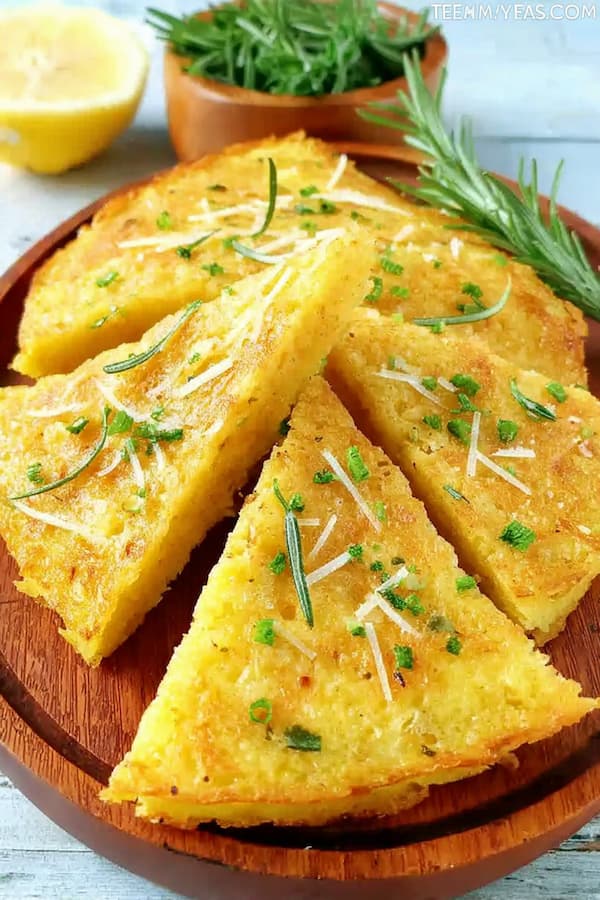
Socca is a thin chickpea flour flatbread from Nice in southern France — made from chickpea flour, water, olive oil, and salt, poured into a hot pan and baked or broiled until the top is spotted with char and the inside stays slightly soft and creamy.
It’s naturally gluten-free, vegan, high in protein, and takes about five minutes of active work plus a 30-minute batter rest.
Once you’ve made it, it becomes one of those recipes you rely on more than you expected to.
Ingredients
Makes: one 10–12 inch flatbread (serves 2–4)
For the socca:
- 1 cup chickpea flour (also called gram flour or besan)
- 1 cup warm water
- 3 tablespoons olive oil, divided (2 for the batter, 1 for the pan)
- 1/2 teaspoon salt
- 1/4 teaspoon black pepper
- 1/4 teaspoon cumin (optional but traditional)
To finish:
- Fresh rosemary, finely chopped
- Flaky sea salt
- Red pepper flakes
- Fresh parsley or spring onions
Why You Must Try This Socca Recipe
Socca fills a specific gap that no other flatbread covers in quite the same way. It’s made from four ingredients, has no gluten, requires no yeast, no kneading, and no rising time.
The chickpea flour gives it a slightly nutty, earthy flavor that’s more interesting than plain wheat flour flatbreads, and the texture — crispy and slightly charred on the edges, soft and almost creamy in the center — is something you don’t get from baked or pan-cooked flatbreads made with regular flour.
It works as a base for toppings the way pizza does, as a side alongside dips and salads, or eaten plain with just olive oil and salt. The fact that it happens to be vegan and gluten-free is secondary — the reason to make it is that it tastes good.
Mix the Batter and Rest It
Whisk the chickpea flour, salt, pepper, and cumin if using together in a bowl. Add the warm water gradually, whisking as you go to prevent lumps.
Add two tablespoons of olive oil and whisk until the batter is completely smooth. It should be thin — somewhere between a crepe batter and a pancake batter.
Cover the bowl and let it rest at room temperature for at least 30 minutes — longer is fine and an hour produces a slightly better result.
The rest time allows the chickpea flour to fully hydrate and the batter to relax, which makes the finished socca less grainy and gives it a smoother, more cohesive texture.
Get the Pan Very Hot
Set your oven to broil and place a 10 to 12 inch cast iron skillet inside to heat for at least 10 minutes.
The pan needs to be very hot before the batter goes in — this is what creates the crispy bottom and the characteristic slightly charred spots on the surface. A cold pan produces a pale, soft socca with no texture on the outside.
If you don’t have a cast iron skillet, a heavy oven-safe stainless steel pan works. Don’t use a non-stick pan for broiling — the high heat can damage the coating.
Pour and Broil
Remove the hot pan from the oven carefully using oven mitts. Add the remaining tablespoon of olive oil directly to the hot pan and swirl to coat — it will smoke slightly, which is correct. Pour the rested batter into the center of the pan and tilt to spread it evenly to the edges.
The batter should sizzle on contact with the hot pan. Slide immediately back under the broiler and cook for 5 to 8 minutes. The socca is done when the top is golden with darker spots in places and the edges have pulled away from the sides of the pan slightly.
The center should look set, not wet or jiggly.
Slide Out and Finish
Remove the pan from the oven and let the socca rest for 2 minutes before sliding it out onto a cutting board. It should release easily from the well-oiled pan. If it sticks slightly at the edges, run a thin spatula underneath and it will come free.
Scatter flaky sea salt and chopped fresh rosemary over the surface while it’s still hot — the heat draws the herb aroma up as it lands on the bread.
Add red pepper flakes if you want heat, or fresh parsley and a drizzle of olive oil for a cleaner finish. Cut into wedges with a sharp knife or pizza cutter and serve immediately.
Serve Warm
Socca is at its best within 10 minutes of coming out of the oven — the crispy edges soften as it cools and the texture changes.
Eat it as a flatbread with dips like muhammara, labneh, or the creamy avocado dip on this site. Use it as a base and top it with roasted vegetables, a fried egg, or a smear of goat cheese and sliced tomato.
In Nice it’s traditionally eaten plain from paper as a street food. That version — just olive oil, salt, and black pepper — is still the best way to understand what socca is before you start adding toppings.
How To Make This Socca Recipe Better
These changes improve the flavor or expand how you can use it:
Add caramelized onion to the batter. Cook one thinly sliced onion slowly in butter over low heat for 20 to 25 minutes until golden and sweet, then spread it over the batter in the pan before broiling. The onion adds sweetness and texture that makes the socca feel more like a complete dish.
Add za’atar to the batter. Stir a teaspoon of za’atar into the batter before resting. The herby, sesame, and sumac notes in za’atar pair naturally with the chickpea flour and make the socca work better alongside Middle Eastern dips and spreads.
Top with a fried egg after baking. Slide the socca onto a plate and immediately top it with a fried egg. The egg yolk breaks over the warm socca and the combination is one of the best quick breakfasts you can make from minimal ingredients.
Make it on the stovetop instead of the broiler. Pour the batter into a very hot oiled cast iron pan on the stove, cover with a lid, and cook over medium-high heat for 4 to 5 minutes until the top looks set. This method gives a softer top than broiling and is useful if your oven broiler isn’t reliable.
Rest the batter overnight in the fridge. After mixing, cover and refrigerate overnight instead of resting at room temperature. A cold, slow rest produces a more developed flavor — the socca tastes slightly less raw and more complex than the same-day version.
Storage
Socca is best eaten immediately — the texture deteriorates noticeably within 30 minutes of baking as the edges soften and the interior cools. The raw batter keeps very well in the fridge for up to 3 days — whisk before using since the chickpea flour settles.
This is the most practical make-ahead approach: mix the batter the night before and bake fresh when needed. Leftover baked socca can be stored at room temperature for up to a day and reheated in a dry pan or under the broiler for 2 to 3 minutes — it won’t fully recover its original texture but is still edible.
What Is Chickpea Flour and Where Do You Buy It?
Chickpea flour — also called gram flour, besan, or garbanzo bean flour — is made from dried chickpeas ground into a fine, pale yellow powder. It’s one of the most widely used flours in Indian, Middle Eastern, and Mediterranean cooking and has a slightly nutty, earthy flavor that’s noticeably different from wheat flour.
In the US it’s available at Indian and Middle Eastern grocery stores under the name besan, at natural food stores under the name garbanzo flour, and increasingly in the health food section of regular supermarkets.
Online retailers also carry it widely. It’s inexpensive and keeps for several months in a sealed container. Beyond socca, it’s used for pakoras, farinata, chickpea crepes, and as a binding agent in vegetarian patties and fritters.
What Is the Difference Between Socca and Farinata?
Socca and farinata are the same dish by different names — socca is what it’s called in Nice and the surrounding French Riviera, and farinata is the Italian name used in Genoa and Liguria across the border.
Both are made from exactly the same batter — chickpea flour, water, olive oil, and salt — and both are cooked in a very hot oven in a wide, shallow pan. The technique and result are identical. The name difference is purely regional and reflects the fact that the flatbread exists on both sides of the French-Italian border where it’s been a staple for centuries. Some sources also use the term cecina in parts of Tuscany.
TradIn North Africa, a similar dish called karantika is made with the same base ingredients. All of them produce the same golden, slightly creamy chickpea flatbread.
Socca is one of those recipes that earns more respect the more you understand what it is. Four ingredients, half an hour of rest, and a very hot pan — and the result is something that works as a flatbread, a side, a base, or a snack in its own right. Mix the batter tonight and bake it tomorrow.
Ingredients
Method
- Whisk chickpea flour, salt, pepper, and cumin together in a bowl. Add warm water gradually, whisking to prevent lumps. Add 2 tablespoons olive oil and whisk until completely smooth. Cover and rest at room temperature for at least 30 minutes — up to 1 hour for best results.
- Set oven to broil. Place a 10–12 inch cast iron skillet inside and heat for at least 10 minutes until very hot.
- Remove the hot pan carefully using oven mitts. Add remaining 1 tablespoon of olive oil and swirl to coat — it will smoke slightly. Pour the rested batter into the center and tilt the pan to spread evenly. The batter should sizzle on contact.
- Slide immediately back under the broiler. Cook 5–8 minutes until the top is golden with darker charred spots and the edges have pulled away from the sides of the pan. The center should look set, not wet.
- Rest 2 minutes in the pan. Slide onto a cutting board. Scatter flaky salt, fresh rosemary, and red pepper flakes over the surface while still hot. Cut into wedges with a sharp knife or pizza cutter. Serve immediately.
Notes
- The pan must be very hot before the batter goes in — this is what creates the crispy base and charred spots
- Don’t use a non-stick pan for broiling — high heat can damage the coating; use cast iron or heavy stainless steel
- Batter keeps in the fridge for up to 3 days — whisk before using as chickpea flour settles
- Overnight batter rest in the fridge produces a more developed, less raw flavor
- Stovetop method: cook in a hot oiled cast iron pan covered with a lid over medium-high for 4–5 minutes
- Add za’atar or fresh rosemary directly to the batter before resting for extra flavor
- Serve with muhammara, labneh, or creamy avocado dip alongside
- Also called farinata (Italy) or cecina (Tuscany) — same dish, different name