Ingredients
Method
Prepare the Ingredients
- Start by preparing your ingredients. Trim and cut the asparagus into 1-inch pieces. Slice the mushrooms and set them aside. Make sure to have your vegetable broth warmed in a separate pan.
- Keeping the broth warm ensures that it blends smoothly with the risotto as it cooks, helping to maintain the creamy texture.
Sauté the Aromatics
- Heat the olive oil in a large pan over medium heat. Once hot, add the finely chopped onion and cook for about 3–4 minutes until it softens and becomes translucent. This step is crucial, as the onion provides a sweet, subtle base that enhances the risotto’s flavor.
- Next, stir in the minced garlic and cook for an additional 1 minute until fragrant. Garlic quickly adds depth to the dish, so avoid overcooking it, as it can turn bitter if left on the heat for too long.
Cook the Mushrooms
- Once the onion and garlic are ready, add the sliced mushrooms to the pan. Cook them for about 5–7 minutes, stirring occasionally, until they soften and release their juices.
- The mushrooms should start to turn golden brown as they absorb the flavors of the garlic and onion. If you prefer a richer mushroom flavor, cremini and shiitake mushrooms work wonderfully, but any variety will do.
- Once the mushrooms are cooked and their liquid has evaporated, season them with a pinch of salt and pepper. This step draws out more moisture from the mushrooms and enhances their natural umami flavor.
Toast the Arborio Rice
- Now that the mushrooms are cooked, it’s time to add the Arborio rice to the pan. Stir it into the mushroom mixture, making sure the rice is evenly coated with oil and juices. Toast the rice for about 2 minutes until the edges of the grains turn slightly translucent.
- This step allows the rice to absorb the rich flavors in the pan and prepares it for the slow absorption of the broth.
Deglaze with White Wine
- After toasting the rice, pour in the white wine. Stir continuously until the wine has mostly evaporated. This adds a slightly acidic note that balances the richness of the risotto. If you’re not using wine, you can skip this step and move directly to adding the broth. However, the wine enhances the overall flavor, so it’s worth including if possible.
Add the Warm Broth Gradually
- Begin adding the warm vegetable broth to the rice, one ladle at a time. Stir constantly and wait until most of the liquid is absorbed before adding the next ladle of broth.
- This gradual process allows the rice to slowly release its starches, which creates the creamy texture risotto is known for. It should take around 20 minutes for all the broth to be absorbed, and the rice to reach an al dente texture.
- Keep in mind that stirring is key to developing the creamy consistency. While it may seem time-consuming, stirring ensures that the rice cooks evenly and doesn’t stick to the bottom of the pan.
Cook the Asparagus
- While the rice is absorbing the broth, heat a separate small pan with a bit of olive oil. Add the asparagus pieces and sauté them for about 3–4 minutes until they turn bright green and slightly tender.
- Season with salt and pepper. Asparagus cooks quickly, so avoid overcooking it; you want the pieces to retain some crunch.
Finish the Risotto
- When the rice is just about done, stir in the cooked asparagus. Remove the risotto from the heat and add the butter and grated Parmesan cheese. Stir everything together until the butter and cheese melt, creating a creamy, rich finish.
- Taste the risotto and adjust the seasoning with salt and pepper, if necessary. The cheese will add a salty, nutty flavor, so go light on additional salt.
Serve and Garnish
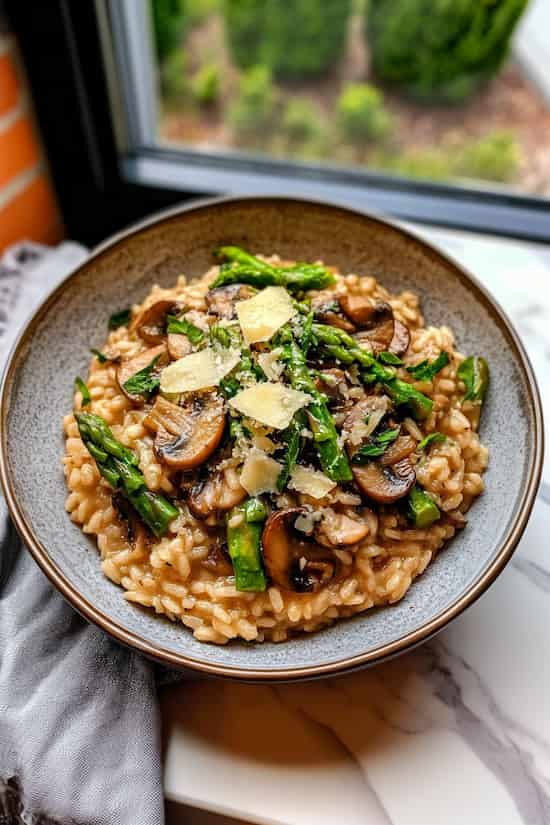
- Serve the mushroom and asparagus risotto immediately. Risotto is best enjoyed fresh when it’s hot and creamy. For a finishing touch, garnish with freshly chopped parsley or thyme, and add a sprinkle of extra Parmesan cheese on top. The herbs add a pop of color and a fresh, fragrant element to the dish.