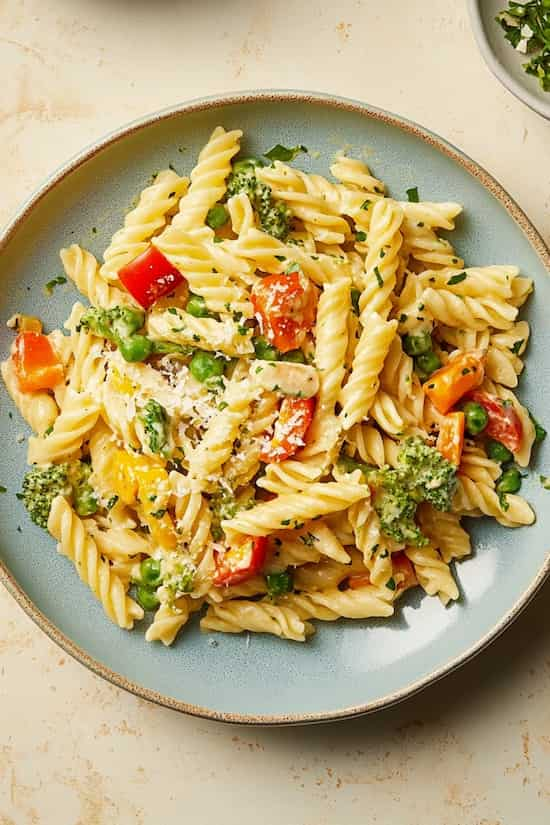
Ingredients
Method
- Chop and slice the vegetables into uniform pieces to ensure even cooking. Bring a large pot of salted water to a boil.
- Once the water is boiling, blanch the broccoli, carrots, and snap peas (or frozen peas) for 2–3 minutes. Drain and set aside.
- Cook for 3–4 minutes until they’re slightly softened but still vibrant.
- In the same pot of boiling water, cook the pasta according to the package instructions until al dente. Reserve 1/4 cup of pasta water before draining.
- Drizzle the pasta with a touch of olive oil to prevent sticking while you finish the sauce.
Make the Garlic Olive Oil Sauce
- In a large skillet, heat the olive oil over medium heat. Add the minced garlic and sauté for 30 seconds, stirring constantly to prevent burning. For a touch of heat, sprinkle in the red chili flakes.
- Add the blanched and sautéed vegetables to the skillet, tossing them in the garlic-infused oil.
- Stir in the lemon juice and zest, which brighten the dish with a hint of acidity. Season with salt and pepper to taste.
- Add the cooked pasta to the skillet with the vegetables and sauce. Toss everything together until the pasta is well-coated in the light, garlicky oil.
- Use the reserved pasta water, a tablespoon at a time, to adjust the consistency if needed.
Notes
- Use Fresh, Seasonal Vegetables: The beauty of Pasta Primavera lies in its adaptability. Feel free to swap the listed vegetables for whatever is in season — such as asparagus, cherry tomatoes, or mushrooms.
- Cook Vegetables Just Right: Overcooking vegetables can dull their color and texture. Aim for a crisp-tender bite to keep the dish vibrant.
- Choose the Right Pasta: Long pasta like spaghetti or linguine works well for light sauces, but penne or farfalle are great options if you prefer shorter pasta shapes.