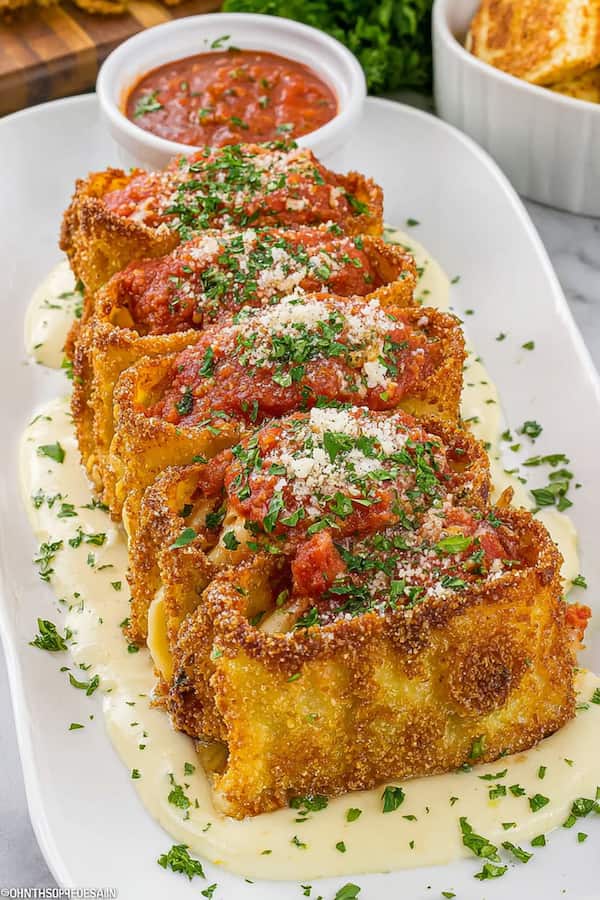
Olive Garden’s fried lasagna — also known as lasagna fritta — is a vegetarian appetizer made from rolled lasagna noodles stuffed with a three-cheese filling, coated in seasoned panko, and fried until golden, then finished with marinara and parmesan.
This copycat version skips all-purpose flour in the coating and keeps the filling simple with ricotta, mozzarella, and parmesan — exactly how the restaurant does it.
It takes some hands-on time upfront, but the steps are straightforward and the result is worth every bit of it.
Ingredients
Serves: 4–6 (makes about 10–12 rolls)
For the lasagna rolls:
- 12 lasagna noodles, cooked al dente and cooled
- 1 1/2 cups whole milk ricotta cheese
- 1 cup shredded mozzarella
- 1/2 cup grated parmesan, plus more to serve
- 1 teaspoon Italian seasoning
- 1/2 teaspoon garlic powder
- 1/4 teaspoon salt
- 1/4 teaspoon black pepper
- 1/4 teaspoon nutmeg
- 1 egg, beaten
- 1 cup marinara sauce, warmed
- Alfredo sauce on the side (optional, as served at Olive Garden)
For the coating:
- 1 1/2 cups panko breadcrumbs
- 1/2 cup grated parmesan
- 1 teaspoon Italian seasoning
- 1/2 teaspoon garlic powder
- 1/2 teaspoon smoked paprika
- 2 eggs, beaten
- Vegetable oil for frying (2–3 inches deep)
Why You Must Try This Olive Garden Fried Lasagna Recipe
Lasagna fritta is one of those dishes that takes a familiar comfort food and makes it into something you can pick up and dip. The three-cheese filling is creamy and well-seasoned on its own, and the panko crust adds a crunch that baked lasagna can never get close to.
It’s completely vegetarian, needs no flour in the coating, and the whole process comes down to mixing, rolling, chilling, and frying. Serve it as a starter before pasta, bring it to a gathering, or make a full tray for dinner — it works in any setting and disappears quickly every time.
Mix the Cheese Filling
Combine the ricotta, mozzarella, parmesan, Italian seasoning, garlic powder, salt, pepper, nutmeg, and beaten egg in a bowl. Mix until everything is evenly incorporated. The egg binds the filling so it holds its shape inside the roll during frying rather than oozing out.
The nutmeg is a small addition but it lifts the ricotta and makes the filling taste more complete — don’t skip it.
Taste the mixture before rolling. It should be well seasoned on its own because once it’s inside the noodle and coated in panko, you can’t adjust the flavor. Add a little more salt or garlic powder if it needs it.
Cook and Lay Flat
Boil the lasagna noodles in well-salted water until just al dente — slightly firmer than you’d want for a baked dish since they’ll go into hot oil later. Drain them and lay each one flat on a lightly oiled baking sheet to cool.
Don’t stack them or they’ll stick together, and don’t rinse them with cold water — the surface starch is what helps the filling grip the noodle as you roll. Let them cool fully to room temperature before you start filling.
A warm noodle is more fragile and the filling will slide rather than stay in place.
Fill and Roll
Lay one noodle flat on a clean surface. Spoon about 2 to 3 tablespoons of filling along the length of the noodle, spreading it evenly and leaving a small gap at each end so it doesn’t squeeze out when you roll. Starting from one end, roll the noodle up firmly and place it seam-side down on the baking sheet. Work through all the noodles the same way. Once they’re all rolled, slide the tray into the freezer for 20 to 30 minutes. This step is what holds everything together — chilled rolls stay tight through the coating and frying process. Don’t skip it.
Coat Without Flour
Set up two shallow dishes side by side — one with the beaten eggs and one with the panko mixed with parmesan, Italian seasoning, garlic powder, and smoked paprika. Take the rolls out of the freezer a few at a time and keep the rest cold while you work.
Dip each roll in the egg first, letting the excess drip off, then press it firmly into the panko on all sides including the ends. The key is pressing — don’t just roll it through the crumbs, actually press so the panko adheres and stays on in the fryer.
For a thicker crust that’s closer to the restaurant version, go back into the egg and panko a second time.
Into the Oil
Pour enough vegetable oil into a deep heavy pot to reach about 2 to 3 inches. Heat it to 350°F — use a thermometer to be sure. Oil below 350°F will make the coating absorb grease and go soft; oil above 375°F will brown the outside too fast before the inside is warm.
Lower 2 to 3 rolls in gently using tongs or a slotted spoon. Fry for 3 to 4 minutes, turning carefully so all sides get even color. You’re looking for a deep, even golden brown across the whole surface.
Remove them to a wire rack to drain — a rack keeps the bottom crisp better than paper towels.
Finish and Plate
Let the oil come back to 350°F between each batch before adding more rolls. Once all the rolls are fried, arrange them in a serving dish and spoon warm marinara straight down the center.
Add a generous amount of grated parmesan and scatter fresh parsley on top. Olive Garden serves lasagna fritta with both marinara on top and alfredo sauce on the side — if you have a batch of homemade alfredo ready, put it in a small bowl alongside. Serve immediately while the crust is still crisp.
How To Make This Olive Garden Fried Lasagna Recipe Better
The recipe works exactly as written, but these adjustments are worth knowing:
Add fresh basil to the filling. A tablespoon of finely chopped fresh basil stirred into the ricotta mixture adds a brightness that dried Italian seasoning alone doesn’t give you. It makes the filling taste noticeably fresher.
Use fresh mozzarella instead of shredded. Drain and pat it completely dry before chopping it into small pieces. It melts differently inside the roll — creamier and more cohesive — and the texture is better than the bagged shredded version.
Make your own marinara. A simple sauce with canned San Marzano tomatoes, garlic, olive oil, and a pinch of sugar takes 20 minutes and makes everything around it taste better. It’s worth the extra step when the rest of the dish is already this good.
Air fry for a lighter result. Spray the coated rolls well on all sides with cooking spray and air fry at 400°F for 10 to 12 minutes, flipping once halfway through. The crust comes out less deeply golden than deep frying but still has a good crunch and the filling heats through properly.
Add red pepper flakes to the panko. A pinch mixed into the breadcrumb coating adds a low-level heat to every bite of the crust without changing the flavor of the filling. It’s subtle but makes the whole thing taste a little more interesting.
Storage
Fried lasagna rolls are best eaten right away. The crust softens quickly once the marinara goes on top, so serve them as soon as they come out of the oil. If you’re frying in batches, keep the finished rolls on a wire rack in a 200°F oven to stay warm and crisp while the rest cook.
Unfried coated rolls can be refrigerated for up to 24 hours before frying. For longer storage, freeze the coated unfried rolls on a flat tray until solid, then transfer to a bag — they keep for up to a month.
Fry directly from frozen at 325°F for 5 to 6 minutes so the inside heats through before the coating gets too dark.
Why Does the Coating Fall Off During Frying?
There are two main reasons this happens. The first is skipping the freezer step — if the rolls aren’t cold and firm before coating, they can shift or open slightly in the hot oil, which breaks the crust away from the surface. Always chill the rolls for at least 20 minutes before you coat them.
The second reason is not pressing the panko firmly enough. Rolling a piece through the crumbs isn’t the same as pressing it in. You want the breadcrumbs to grip the egg-coated surface, and that only happens with firm, even pressure on all sides.
If the coating is still falling off, try the double coat method — egg, panko, egg again, panko again — which gives the crust more grip and thickness.
Can You Make Fried Lasagna Ahead of Time?
Yes, and this recipe is well suited to it. The best make-ahead approach is to prepare the rolls, coat them, and freeze them before frying. Once frozen solid, transfer them to a zip-lock bag and store for up to a month.
When you’re ready to serve, fry them straight from frozen at 325°F — the lower temperature gives the inside time to heat through before the outside gets too dark. You can also prep the rolls and keep them in the fridge, uncoated and unfried, for up to a day before coating and frying.
What doesn’t work well is frying them ahead — the crust softens quickly and doesn’t reheat back to the same crunch.
Olive Garden fried lasagna is the kind of recipe that looks impressive on the table but follows a simple process once you’ve done it once. Get the filling right, chill the rolls properly, press the coating in firmly, and keep the oil at the right temperature. Do those four things and the rest takes care of itself.
Ingredients
Method
- Mix ricotta, mozzarella, parmesan, Italian seasoning, garlic powder, salt, pepper, nutmeg, and beaten egg in a bowl until fully combined. Taste and adjust seasoning before rolling.
- Cook lasagna noodles in salted water until al dente. Drain and lay flat on a lightly oiled baking sheet. Do not rinse. Cool completely to room temperature before filling.
- Spread 2–3 tablespoons of cheese filling along each noodle, leaving a small border at each end. Roll firmly from one end and place seam-side down on the tray. Repeat with remaining noodles. Freeze for 20–30 minutes until firm.
- Set up two dishes: beaten eggs and seasoned panko mixed with parmesan, Italian seasoning, garlic powder, and paprika. Dip each chilled roll in egg, let excess drip off, then press firmly into panko on all sides. For a thicker crust, repeat egg and panko a second time.
- Heat oil to 350°F in a deep heavy pot. Fry 2–3 rolls at a time for 3–4 minutes, turning gently, until deep golden on all sides. Drain on a wire rack. Return oil to 350°F between each batch.
- Arrange rolls in a dish. Spoon warm marinara down the center. Add grated parmesan and fresh parsley on top. Serve with alfredo sauce on the side if desired. Serve immediately.
Notes
- No flour in the coating — egg and double panko is enough to hold the crust
- Always freeze rolls before coating — this is what keeps them intact during frying
- Press the panko firmly onto all sides — rolling through crumbs is not enough
- Air fryer option: spray well and cook at 400°F for 10–12 minutes, flipping halfway
- Freeze unfried coated rolls for up to 1 month — fry from frozen at 325°F for 5–6 minutes