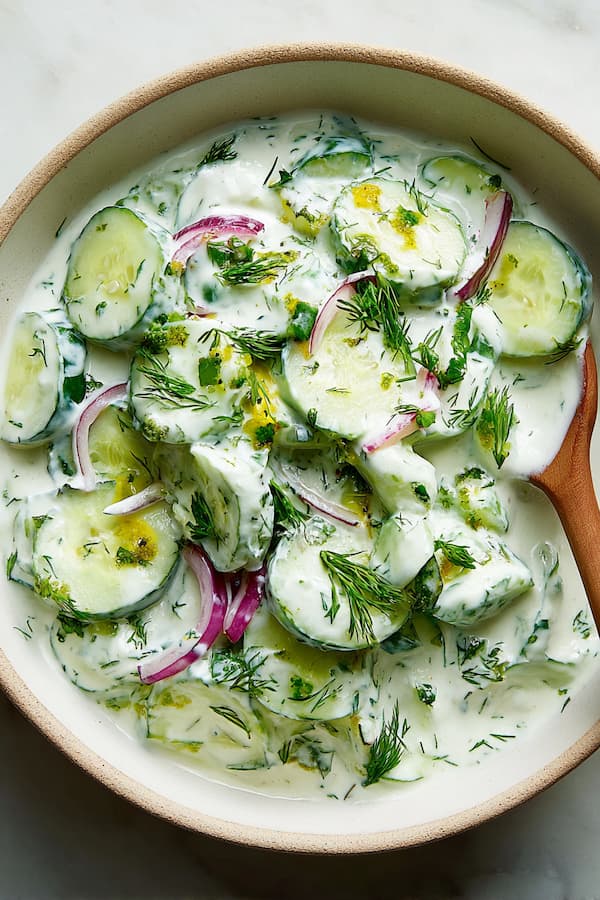
Cucumber yogurt salad is one of those dishes that takes almost no time to put together and works with nearly any meal you’re already making.
Thinly sliced cucumbers, creamy yogurt, fresh dill, and a little lemon — that’s the core of it, and it doesn’t need much else. It’s the kind of side dish that earns a permanent spot in your regular rotation once you’ve made it a few times.
Ingredients
Serves: 4
For the salad:
- 2 large English cucumbers (or 4 Persian cucumbers)
- 1 teaspoon salt (for drawing out moisture)
- 1/2 small red onion, thinly sliced
- 3 tablespoons fresh dill, roughly chopped
- 1 tablespoon fresh mint leaves (optional but shown in photos)
For the dressing:
- 1 cup plain full-fat Greek yogurt
- 1 clove garlic, finely grated
- 2 tablespoons lemon juice (about 1 lemon)
- 1 tablespoon olive oil, plus more to drizzle
- 1/2 teaspoon salt
- 1/4 teaspoon black pepper
- 1/4 teaspoon cumin (optional)
Why You Must Try This Cucumber Yogurt Salad Recipe
Most salads at a barbecue or weeknight dinner are an afterthought. This one isn’t. The yogurt dressing does two things at once — it acts as a sauce and a dressing, coating the cucumbers in something creamy and tangy that tastes far more involved than it is.
The salting step removes the water from the cucumbers first, which stops the dressing from going watery and keeps the whole thing together even after sitting in the fridge for a day. It pairs well with grilled meats, roasted vegetables, rice dishes, or just eaten straight from the bowl with flatbread. And it takes about ten minutes.
Salt the Cucumbers First
Slice the cucumbers thinly — about 1/8 inch thick. A mandoline makes this faster and more even, but a sharp knife works fine. Place the slices in a colander or large bowl and toss with one teaspoon of salt.
Leave them for 15 to 20 minutes. During that time they’ll release a significant amount of water. This step is what separates a cucumber yogurt salad that holds together from one that turns into a watery mess within an hour.
After the resting time, squeeze the cucumber slices gently with your hands or press them with a clean towel to remove as much liquid as possible before adding the dressing.
Mix the Dressing
Combine the Greek yogurt, grated garlic, lemon juice, olive oil, salt, pepper, and cumin if using in a bowl. Stir until smooth. Taste it before it goes anywhere near the cucumber — the dressing should be well seasoned on its own since it needs to carry the flavor of the whole salad. If it tastes flat, add more lemon juice.
If it’s too sharp, a little more yogurt pulls it back. Full-fat Greek yogurt gives a thicker, creamier result than low-fat. The fat also helps the dressing cling to the cucumber slices rather than sliding off.
Bring It Together
Add the drained cucumber slices and thinly sliced red onion to the dressing and toss gently until everything is evenly coated. Add most of the fresh dill and mint if using and fold them through. Don’t overmix — you want the cucumber slices to stay intact rather than breaking up.
Taste again at this stage and adjust the salt or lemon if needed. The onion will mellow slightly as it sits in the yogurt, so don’t be concerned if it tastes a little sharp right after mixing. It softens within 10 to 15 minutes.
Chill Before Serving
Cover the bowl and refrigerate for at least 20 to 30 minutes before serving. The chilling time lets the garlic mellow, the dill infuse into the yogurt, and the flavors come together. It’s good immediately but noticeably better after resting.
When you’re ready to serve, give it a quick stir, taste one more time, and transfer to a serving bowl. Drizzle a little olive oil over the top and scatter the reserved dill and mint on the surface. The olive oil adds a subtle richness and makes the bowl look finished.
How To Make This Cucumber Yogurt Salad Recipe Better
The base recipe works well every time, but these additions shift it depending on what you’re serving it with:
Add toasted cumin seeds. Toast a pinch of whole cumin seeds in a dry pan for about a minute until they smell fragrant, then scatter them over the top before serving.
They add a slight crunch and a warmth that dried cumin powder doesn’t quite match.
Swap lemon for white wine vinegar. If you want a sharper, more tangy dressing, white wine vinegar in place of lemon juice works well.
Use about half the amount since vinegar is more acidic than lemon juice — start with one tablespoon and taste.
Use labneh instead of Greek yogurt. Labneh is strained yogurt with an even thicker, creamier texture and a slightly tangier flavor. The salad becomes more substantial and works well as a mezze dish rather than a side salad.
Add thinly sliced radishes. They bring color and a mild peppery bite that cuts through the creaminess of the yogurt. Slice them as thin as the cucumber and add them at the same time.
Finish with Aleppo pepper or sumac. A pinch of either spice over the top adds a fruity heat or citrusy tang respectively — both work well with the yogurt and dill base and change the flavor profile without requiring any extra work.
Storage
Store the salad in an airtight container in the fridge for up to 2 days. Some liquid will pool at the bottom as it sits — just stir it back through before serving. The salting step reduces how much this happens but doesn’t eliminate it entirely.
The flavor actually improves overnight as the garlic and dill have more time to infuse. Don’t freeze cucumber yogurt salad — both the cucumber and the yogurt change texture when frozen and the result is not worth eating. Make only what you’ll use within two days.
What’s the Difference Between Cucumber Yogurt Salad and Tzatziki?
They use similar ingredients but serve different purposes and have different textures. Tzatziki is a Greek dip or sauce — the cucumber is usually grated and squeezed very dry so it blends into the yogurt, creating a thick, smooth mixture that holds its shape on a plate.
Cucumber yogurt salad keeps the cucumber sliced rather than grated, so the texture is completely different — you’re eating pieces of cucumber coated in yogurt dressing rather than a uniform dip. Tzatziki is also typically more garlicky and used as a condiment, while cucumber yogurt salad functions as a standalone side dish.
Both are good, just used differently.
Which Cucumber Works Best for This Salad?
English cucumbers and Persian cucumbers are both good choices. English cucumbers are long and thin-skinned with small seeds — you don’t need to peel or seed them, and they slice cleanly. Persian cucumbers are shorter, slightly crunchier, and hold up well after salting.
Both stay firm enough after the salting step to hold their shape in the dressing. Standard garden cucumbers work too, but they have thicker skin and larger seeds that can make the salad watery and slightly bitter.
If that’s all you have, peel them and scoop out the seeds before slicing. Avoid any cucumber that feels soft or hollow when you cut into it — those release too much water regardless of how long you salt them.
Cucumber yogurt salad is one of the simplest things you can make and one of the most consistently useful. It goes with grilled chicken, lamb, fish, rice, flatbread, or anything that benefits from something cool and tangy alongside it. Make it ahead, keep it in the fridge, and it’s ready whenever you need it.
Ingredients
Method
- Slice cucumbers thinly (about 1/8 inch). Place in a colander, toss with 1 teaspoon salt, and leave for 15–20 minutes. Squeeze or press with a clean towel to remove as much liquid as possible.
- Combine Greek yogurt, grated garlic, lemon juice, olive oil, salt, pepper, and cumin in a bowl. Stir until smooth. Taste and adjust seasoning before adding cucumber.
- Add drained cucumber slices and red onion to the dressing. Fold in most of the dill and mint. Toss gently until everything is evenly coated. Taste and adjust salt or lemon as needed.
- Cover and refrigerate for 20–30 minutes before serving. Stir before plating. Transfer to a serving bowl, drizzle with olive oil, and scatter reserved dill and mint on top.
Notes
- Don’t skip the salting step — it stops the dressing from going watery
- Full-fat Greek yogurt gives the best texture — low-fat versions are too thin
- Flavor improves after sitting overnight in the fridge
- Keeps well for up to 2 days — stir before serving as some liquid will pool
- Add Aleppo pepper or sumac on top for extra flavor with no extra work
- Swap lemon for white wine vinegar for a sharper, tangier dressing