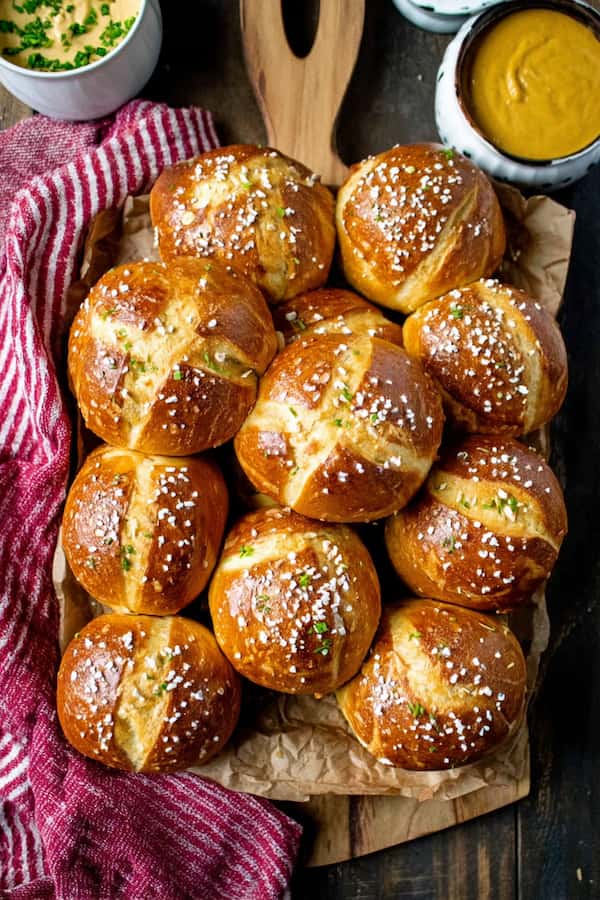
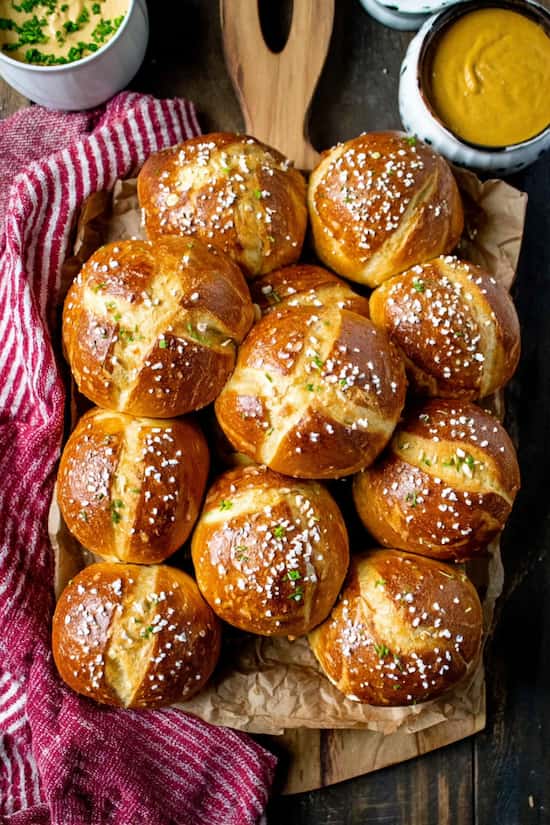
Pretzel rolls have that dark, slightly chewy crust and soft interior that regular dinner rolls can’t get close to, and the difference comes down to one step — dipping them in a baking soda bath before they go into the oven.
This recipe walks you through the whole process clearly, from mixing the dough to getting that deep mahogany crust with coarse salt on top. Once you make them, they’ll replace standard rolls at your table for good.
Ingredients
Makes: 10–12 rolls (serves 5–6)
For the dough:
- 1 1/2 cups warm water (110°F)
- 2 1/4 teaspoons active dry yeast (1 packet)
- 1 tablespoon sugar
- 3 3/4 cups bread flour, plus more for dusting
- 1 1/2 teaspoons fine salt
- 2 tablespoons unsalted butter, softened
- 1 tablespoon neutral oil (for greasing)
For the baking soda bath:
- 8 cups water
- 1/3 cup baking soda
To finish:
- 1 egg yolk mixed with 1 tablespoon water (egg wash)
- Coarse or flaky sea salt, for topping
- 2 tablespoons unsalted butter, melted (optional, for brushing after baking)
Why You Must Try This Pretzel Rolls Recipe
Most homemade rolls are soft all the way through. Pretzel rolls are different — the baking soda bath creates a chemical reaction on the surface of the dough that gives the crust its color, chew, and that faint, distinctive tang that sets pretzel bread apart from everything else.
It’s the same process used for traditional soft pretzels, just applied to a roll shape. The inside stays pillowy and soft while the outside develops something closer to a shell. They work as sandwich rolls, dinner rolls, or something to pull apart and eat warm with butter — and they’re made entirely from scratch with basic ingredients.
Start the Dough
Combine the warm water, sugar, and yeast in a large bowl. Give it a quick stir and leave it for 5 to 10 minutes until the surface is foamy. This tells you the yeast is active and ready. If nothing happens, the water temperature is likely off — too hot kills the yeast, too cold keeps it dormant.
Aim for 110°F, which feels warm on your wrist but not hot. Once the yeast is foamy, add the softened butter and salt, then stir in the flour one cup at a time until a rough dough forms. Bread flour gives the rolls more chew than all-purpose — it’s worth using if you have it.
Knead and Rise
Turn the dough onto a lightly floured surface and knead for 8 to 10 minutes until it’s smooth and elastic. It should feel slightly tacky but not sticky — if it clings to your hands, work in a little more flour. If you’re using a stand mixer, 6 minutes with the dough hook on medium does the same job.
Shape the dough into a ball, place it in a lightly oiled bowl, and cover with plastic wrap. Leave it in a warm spot for 1 hour to 1 hour 30 minutes until it’s doubled. A turned-off oven with the light on is a reliable warm spot if your kitchen runs cool.
Shape the Rolls
Punch the dough down and turn it out onto a clean surface. Divide it into 10 to 12 equal pieces — a kitchen scale is helpful here if you want them uniform.
To shape each roll, flatten a piece slightly, then pull the edges toward the center and pinch them together at the bottom, creating a smooth, tight surface on top. Place each one seam-side down on a parchment-lined baking sheet.
The tighter the surface tension, the better the roll holds its shape through the baking soda bath and oven. Loose, uneven shaping leads to rolls that spread flat rather than rise up. Cover the shaped rolls loosely and let them rest for 20 minutes.
The Baking Soda Bath
This is the step that makes pretzel rolls what they are. Bring 8 cups of water to a boil in a large pot, then add the baking soda carefully — it will foam up briefly. Reduce the heat to a gentle boil. Working in batches of 2 to 3 at a time, use a slotted spoon or spider strainer to lower each roll into the water.
Let them sit for 30 seconds on each side, then lift them out and place them back on the baking sheet. Don’t skip or shorten this step. The alkaline water changes the surface chemistry of the dough, which is what creates the dark color and chewy crust in the oven.
Score, Salt, and Bake
Preheat your oven to 425°F. Once all the rolls have been through the baking soda bath, brush each one with the egg wash and use a sharp knife or bread lame to score an X or two parallel cuts across the top. The scoring lets the rolls expand in the oven without cracking randomly.
Sprinkle coarse salt over each roll immediately after scoring — it sticks to the egg wash. Bake for 18 to 22 minutes until the crust is a deep mahogany brown. Pale pretzel rolls haven’t fully developed their flavor or texture, so let them go until they look genuinely dark. Brush with melted butter as soon as they come out if you want a softer finish.
How To Make This Pretzel Rolls Recipe Better
The base recipe produces a solid pretzel roll every time. These changes take it further:
Use lye instead of baking soda. Food-grade lye is the traditional alkaline bath used for authentic German pretzels. It produces a darker, shinier, more intense crust than baking soda. It requires careful handling — gloves and eye protection — but the result is noticeably different and closer to what you get from a proper pretzel bakery.
Add brown butter to the dough. Brown the butter until it smells nutty before adding it to the flour mixture. It adds a depth to the crumb that plain butter doesn’t give you — subtle but noticeable in the finished roll.
Stuff the rolls before shaping. Flatten each dough piece, add a small cube of sharp cheddar or gruyere in the center, then pull the dough up around it and seal tightly. The cheese melts into the center as the roll bakes. Make sure the seal is completely closed or the cheese will leak out during baking.
Refrigerate overnight after shaping. After shaping the rolls and before the baking soda bath, cover the tray and refrigerate overnight. A slow, cold rise develops more flavor in the dough. Take them out 30 minutes before bathing and baking to take the chill off.
Try everything bagel seasoning instead of plain salt. Brush the rolls with egg wash and top with everything bagel seasoning instead of coarse salt. The sesame, poppy seed, dried garlic, and onion combination works well with the pretzel base and makes the rolls more versatile as sandwich buns.
Storage
Pretzel rolls are at their best on the day they’re made. The crust starts to soften overnight as moisture from the crumb migrates outward. Store them at room temperature in a paper bag rather than a plastic one — plastic traps moisture and accelerates softening.
To refresh day-old rolls, place them in a 350°F oven for 5 to 8 minutes. They’ll crisp back up almost as well as fresh. For longer storage, freeze the fully baked and cooled rolls in a zip-lock bag for up to 2 months. Reheat from frozen at 350°F for 12 to 15 minutes, and they’ll come out as close to fresh as reheated bread can get.
What Makes Pretzel Rolls Different From Regular Rolls?
The difference is entirely in the baking soda bath. When dough is dipped in an alkaline solution before baking, the surface pH changes significantly. This affects how the crust browns in the oven — the Maillard reaction happens faster and at a lower temperature, which produces the deep, dark color and develops flavor compounds that regular bread browning doesn’t create.
The same reaction also affects texture, making the crust firmer and chewier than a standard roll crust. Without the bath, you’d have a soft, pale roll that tastes like plain bread. The bath is the whole reason pretzel bread tastes and feels the way it does.
Can You Make Pretzel Rolls Without a Stand Mixer?
Yes, completely. The dough is straightforward to make by hand and doesn’t require any special equipment. Mix the ingredients in a large bowl until a shaggy dough forms, then turn it out and knead by hand for 8 to 10 minutes. The dough is ready when it’s smooth and springs back when you poke it.
The only thing a stand mixer does is make the kneading less tiring — the end result is the same either way. A bench scraper is helpful for hand kneading if the dough sticks to the surface, but it’s not essential. Everything else in the recipe — the bath, shaping, scoring, and baking — is hands-on regardless.
Pretzel rolls take longer than a standard dinner roll recipe, but none of the individual steps are difficult. The baking soda bath sounds like the complicated part, but it takes about five minutes and makes all the difference. Make a batch once and you’ll have the process down for every time after.
Ingredients
Method
- Combine warm water, sugar, and yeast in a large bowl. Stir and leave 5–10 minutes until foamy. If no foam forms, start over with fresh yeast.
- Add softened butter and salt to the yeast mixture. Add bread flour one cup at a time, stirring between additions until a rough dough forms. Turn onto a lightly floured surface and knead 8–10 minutes until smooth and elastic. Alternatively, use a stand mixer with dough hook on medium for 6 minutes.
- Place dough in a lightly oiled bowl and cover with plastic wrap. Leave in a warm spot for 1 to 1.5 hours until doubled in size.
- Punch dough down and divide into 10–12 equal pieces. Flatten each piece, pull edges to the center, and pinch to seal at the bottom. Place seam-side down on parchment-lined baking sheets. Cover loosely and rest 20 minutes.
- Bring 8 cups of water to a boil. Add baking soda carefully — it will foam briefly. Reduce to a gentle boil. Working in batches, lower each roll in with a slotted spoon and cook 30 seconds per side. Return to the baking sheet.
- Preheat oven to 425°F. Brush each roll with egg wash. Score an X or two parallel cuts across the top with a sharp knife. Sprinkle generously with coarse salt. Bake 18–22 minutes until deep mahogany brown. Brush with melted butter immediately out of the oven if desired.
Notes
- Don’t shorten the baking soda bath — it’s what creates the crust color and chew
- Score the rolls right after egg washing so the salt sticks properly
- Let rolls go until genuinely dark — pale pretzel rolls lack flavor and texture
- Store in a paper bag, not plastic, to keep the crust from going soft
- Freeze baked rolls for up to 2 months — reheat from frozen at 350°F for 12–15 minutes
- For cheese-stuffed rolls, seal a cube of cheddar or gruyere inside before shaping